


Walking down a lighting aisle or peering into an empty lamp socket can feel surprisingly confusing when confronted with dozens of technical labels. Many homeowners and apartment dwellers frequently ask what is e26 base lighting after unscrewing an expired bulb and noticing alphanumeric markings stamped near the contact points. This standard screw fitting serves as the foundational mounting format for the vast majority of residential fixtures throughout North America. Understanding how this specific socket format operates ensures that replacement bulbs seat correctly, maintain safe electrical contact, and function properly without posing a fire hazard.
Every bulb base format relies on standardized dimensions established by engineering standards to keep residential lighting interchangeable and safe. Sockets built for an E26 connection accept an extensive variety of bulb designs, ranging from classic household globes to specialized decorative filaments used in accent pieces. Whether you are arranging a proper reading lamp setup or swapping out utilitarian bulbs in a hallway flush mount, recognizing this mounting standard prevents frustrating buying mistakes. Matching the base correctly to the fixture is the first step toward getting dependable brightness, efficient energy use, and long-lasting illumination across your living spaces.


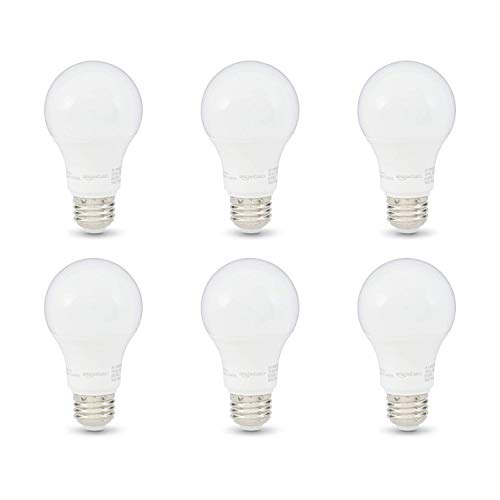
Pros
- Energy-saving 9W draw significantly lowers electricity consumption compared to standard 60W incandescent bulbs
- Warm 2700K soft white appearance provides a relaxing, non-glaring domestic light quality
- Dimmable capability offers adjustable ambient lighting across compatible household circuits
- Standard A19 profile and E26 medium base ensure wide compatibility with existing table lamps and fixtures
- Multi-pack bundle offers immediate value for whole-room or multi-fixture upgrades
Cons
- Manufacturer does not specify a list of tested dimmer models or the exact dimming range
- Rated 10,000-hour lifespan is modest compared to some LED models rated for 15,000 to 25,000 hours
- Product specifications do not state suitability for fully enclosed fixtures or damp locations
The Amazon Basics A19 LED light bulb 6-pack is designed as an economical, direct replacement for standard 60-watt incandescent lamps in American homes. Fitted with a standard E26 medium screw base and drawing just 9 watts of electrical power, these bulbs target budget-conscious homeowners, renters, dorm residents, and property managers seeking an effortless lighting upgrade. Whether you are outfitting table lamps, living room floor fixtures, or hallway ceiling pendants, this multi-pack provides a quick way to transition everyday fixtures to energy-efficient LED technology without complex setups.
Lighting performance centers on a classic Soft White 2700K color temperature, generating a warm, golden-tinged glow that feels natural in residential living spaces. According to product specifications, each 9-watt bulb provides the illumination of a traditional 60-watt incandescent bulb. Dimmable functionality enables users to alter light output to suit daytime tasks, casual reading, or softer evening relaxation. Because the manufacturer focuses on general 60-watt equivalence and warm color rendition rather than detailed photometric metrics, performance is tailored toward comfortable ambient illumination rather than specialized high-output task requirements.
Each bulb adheres to standard A19 dimensions, measuring approximately 2.37 inches wide by 4.13 inches tall, with a listed weight of 0.068 pounds. This traditional profile ensures that the bulbs slip comfortably inside existing lamp harps, clip-on shades, and standard decorative sconces without awkward protruding or fitment issues. The integrated E26 base is made for standard North American light sockets, threading in smoothly. While the bulb utilizes an understated construction typical of value-focused consumer LEDs, the build is sufficiently sturdy for regular household handling and socket installations.
Installation requires no tools, special wiring, or smart-home configuration; you simply screw each bulb into a compatible E26 socket. The manufacturer rates each bulb for a 10,000-hour operational life, which translates to over 9 years of illumination based on 3 hours of daily usage. In terms of power economy, the 9-watt draw reduces energy demands dramatically against incandescent predecessors, with the product data noting an estimated lifetime savings of $55.87 in energy costs per bulb compared to a 60-watt incandescent lamp.
Before purchasing, consider a few practical boundaries inherent to basic household LEDs. While the bulbs are dimmable, the manufacturer does not provide an explicit list of compatible wall dimmers, meaning performance may vary across older mechanical or electronic dimmer switches. Additionally, a 10,000-hour rating, while substantial compared to incandescents, is on the lower end of modern LED lifespans that frequently reach 15,000 or 25,000 hours. The specifications also do not state ratings for fully enclosed fixtures or damp outdoor environments, so using them in open, dry indoor fixtures remains the safest practice.
For buyers seeking an affordable, warm, and dependable pack of standard replacement bulbs, the Amazon Basics A19 6-pack offers practical everyday utility. It delivers the familiar warm glow of 2700K soft white, reduces power consumption to 9 watts, and provides dimming flexibility for living rooms, bedrooms, and home offices. If you need straightforward lighting for common E26 sockets without the added cost and app setup of smart lighting, this pack represents a dependable, budget-friendly household choice.
These Amazon Basics A19 bulbs feature a standard E26 medium screw base, which is the most widely used socket size across residential fixtures in the United States. Measuring 2.37 inches in diameter and 4.13 inches in height, the physical dimensions match standard incandescent A19 bulbs, ensuring physical clearance inside table lamps, reading lamps, flush-mount ceiling fixtures, and wall sconces.
Always verify socket threading and fixture voltage requirements before installation. These bulbs thread directly into standard line-voltage E26 sockets without adapters or special tools. Ensure the fixture is switched off prior to screwing in the bulb, and avoid forcing the base into mismatched candelabra (E12) or mogul (E39) sockets.
Rated at a 2700K Soft White color temperature, these bulbs emit a warm, relaxing light well suited for bedrooms, living rooms, and casual family spaces. The 2700K tone closely resembles the familiar warm appearance of standard incandescent bulbs, avoiding the harsh blue tones often associated with daylight LEDs.
Supported dimmability allows you to adjust the bulb's illumination to match quiet evenings or brighter daytime needs. Because specific wall dimmer model compatibility is not outlined in the product specifications, pairing with a standard modern LED-rated dimmer switch will generally yield the smoothest dimming performance and help prevent buzz or flutter.
Operating at just 9 watts, each bulb matches the brightness of a traditional 60-watt incandescent bulb while consuming substantially less electricity. According to manufacturer data, this efficiency can save up to $55.87 in energy costs over the lifetime of a single bulb when compared directly to an incandescent equivalent.
The bulbs carry a manufacturer-rated lifespan of 10,000 hours. When operated for an average of 3 hours per day, this lifespan provides over 9 years of useful lighting, significantly minimizing maintenance and the frequency of bulb changes across your home.


Pros
- High 2600-lumen brightness makes it ideal for garages, workshops, basements, and large living spaces
- Draws just 20 watts of electricity, providing notable energy savings over 150-watt incandescent bulbs
- Damp-rated and UL Listed for dependable safety in standard and moisture-prone indoor fixtures
- Seamless dimming range from 10% to 100% on compatible traditional dimmers
Cons
- Larger A21 form factor (5.43 inches tall) may not fit compact lamp harps or tightly enclosed fixtures
- Not compatible with smart dimmers or 3-way touch lamps
- Not eligible for shipment to California due to state energy regulations
The E ENERGETIC LIGHTING 150W Equivalent A21 LED Bulb is a high-output, screw-in replacement bulb tailored for environments that demand clear, powerful illumination. Engineered to replace power-hungry 150-watt incandescent bulbs while consuming only 20 watts of power, this two-pack provides a functional lighting upgrade for workshops, basements, garages, utility rooms, and large living areas. For homeowners, renters, and DIY enthusiasts looking to brighten dark spaces using standard sockets, this high-lumen bulb offers an immediate and noticeable boost.
Regarding illumination performance, each bulb outputs 2600 lumens at a 5000K daylight color temperature. This cool, daylight-toned spectrum is well suited for detail-oriented tasks, reading, crafting, and workshop projects where clarity is paramount. Featuring an 80 Color Rendering Index (CRI), the light reveals natural colors with dependable accuracy for daily activities. The bulb powers on instantly without hesitation, providing steady, non-flickering light designed to minimize visual fatigue. Additionally, the bulb supports smooth dimming from 10% to 100% on standard dimmers, giving you full control over ambient brightness.
The physical design features a standard A21 profile measuring 2.76 inches in diameter and 5.43 inches in overall height. It incorporates an eye-care, environmentally conscious construction with no breakable glass parts, zero mercury, and no hazardous lead or infrared emissions. Safety is verified through its official UL listing, confirming compliance with rigorous North American electrical safety standards. Furthermore, the damp-location rating ensures safe operation in spaces with higher humidity, such as laundry rooms, covered patios, and well-ventilated bathrooms, provided the bulb is kept away from direct exposure to water.
Installing the bulb requires simply threading the standard medium E26 base into any compatible residential socket. However, buyers should check physical fixture clearances prior to installation. Because the A21 bulb shape is slightly wider and taller than a standard A19 household bulb, it may fit tightly inside smaller lamp harps, enclosed globes, or compact task fixtures. For electrical compatibility, keep in mind that while it functions smoothly on most traditional wall dimmers, the manufacturer explicitly notes it is not compatible with smart dimmers or 3-way touch lamps.
Prospective buyers in certain regions should also note that this specific 150W equivalent bulb cannot be shipped to California due to state efficiency restrictions. For shoppers outside of California who need dependable, high-output daylight lighting without running up electrical costs, the E ENERGETIC LIGHTING A21 LED bulb serves as an effective, budget-friendly lighting choice backed by a 15,000-hour rated lifespan and a 2-year service plan.
Generating 2600 lumens of light output while using only 20 watts, these bulbs replace 150-watt incandescent alternatives while lowering power usage by up to 86%. The 5000K daylight color profile creates an alert, energetic lighting environment that helps improve visibility in task-heavy areas such as utility rooms, basements, and home offices.
The bulb features an integrated dimming circuit that supports a 10% to 100% range when connected to compatible standard wall dimmers. To ensure optimal performance and avoid buzzing or erratic dimming, make sure not to use this bulb with smart dimmers or 3-way touch lamp fixtures.
Equipped with a standard E26 medium screw base, these bulbs easily twist into everyday household sockets, floor lamps, and hanging utility fixtures. However, because they utilize the slightly larger A21 envelope measuring 2.76 inches wide and 5.43 inches long, checking shade clearance and fixture dimensions is recommended before purchase.
With a damp-location rating and UL safety listing, these bulbs can safely operate in humid indoor environments or covered exterior locations shielded from rain. Note that these bulbs are restricted from shipping to addresses within the state of California.
Understanding the E26 Base and Bulb Compatibility
An electrical base serves as both the mechanical anchor and the electrical conduit connecting a light bulb to your home circuit. When you identify an E26 fitting, you are looking at the most common medium screw base used across residential construction in the United States and Canada. Getting the right base guarantees that the bulb sits flush, establishes reliable electrical contact, and prevents hazards caused by loose connections. Navigating the nuances of sizing, thread spacing, and electrical specifications helps you select the right components for any lighting project.
What the E26 Designation Actually Means
The letters and numbers used in lighting nomenclature follow standardized definitions created by the American National Standards Institute and the International Electrotechnical Commission. In the code E26, the letter E stands for Edison screw, named in honor of Thomas Edison who developed the threaded mounting system in the late nineteenth century. The number 26 indicates the outer diameter of the threaded metal base measured precisely in millimeters. Because metric measurements dictate the standard, an E26 base measures roughly 1.02 inches across its threaded cylinder.
In everyday trade terminology, retailers and electricians frequently refer to the E26 format as a standard base or a medium Edison screw base. This standardized size allows lighting manufacturers to design fixtures with total confidence that consumers can easily purchase compatible bulbs at any general store. The base design features two primary points of electrical contact that complete the circuit safely. The threaded metal side shell acts as the neutral path, while a small metal contact tab on the bottom tip conducts the hot electrical current.
Exact Dimensions and Physical Anatomy of the Socket
Beyond the primary 26 millimeter thread crest diameter, an E26 base relies on specific thread pitch and height tolerances to ensure a snug fit. The thread pitch is standardized at approximately seven threads per inch, which equates to roughly 3.63 millimeters between adjacent thread peaks. The overall metal base cap typically stands around 26 to 27 millimeters in total height from the base rim to the contact point. These exacting dimensions ensure that when you turn the bulb into the socket, the threads guide the bulb smoothly without jamming or wobbling.
The receiving socket installed inside lamp bodies and ceiling mounts mirrors these structural specifications with extreme precision. Quality sockets, such as keyless replacement holders, often combine a heat-resistant phenol formaldehyde plastic exterior with a solid aluminum or brass interior shell. This durable construction prevents melting, warping, and electrical tracking when bulbs generate warmth during extended operation. Inside the receptacle, a spring-tensioned copper or brass tab sits at the base center, designed to press firmly against the bottom terminal of the light bulb.
E26 Versus E27: Key Differences in Voltage and Standards
A frequent point of confusion occurs when shoppers encounter bulbs or imported fixtures labeled with an E27 base designation. The E27 format features a 27 millimeter outer thread diameter, making it only one single millimeter wider than the standard E26 medium base. While an E26 bulb can often physically screw into an E27 socket without immediate mechanical resistance, the two standards were engineered for distinct regional electrical systems. North America operates primarily on a 120-volt grid, whereas Europe and many other continents utilize a 220 to 240-volt electrical standard.
Because 240-volt electrical systems pose higher risks of electrical arcing, the E27 standard specifies slightly deeper threads and increased clearance between live components. In an E27 socket, the distance between the center contact and the threaded shell is engineered to handle greater electrical stress. Using an E26 bulb inside a high-voltage European socket can create an unsafe clearance gap, increasing the risk of short circuits. Conversely, imported fixtures brought to North America require careful voltage verification before you thread a standard 120-volt E26 bulb into place.
Distinguishing Bulb Shapes From Base Sizes
Many consumers mistake the overall shape of a glass or plastic bulb for its base type, but the two designations refer to completely independent dimensions. A bulb code generally consists of a letter describing the profile shape and a number indicating the maximum diameter in eighths of an inch. For example, a classic pear-shaped household bulb is classified as an A19, where A indicates the arbitrary pear shape and 19 represents nineteen eighths of an inch. An A19 bulb almost universally mounts on an E26 base, but other bulb shapes frequently use the exact same medium screw format.
Larger residential fixtures often require bulbs with expanded profiles to disperse light over wider areas, such as A21 bulbs that provide extra volume for heat dissipation. Decorative fixtures can also pair unusual bulb shapes with the standard medium screw base. Specialty candle bulbs, such as slender B11 designs, are frequently manufactured with an E26 base so they can fit medium sockets rather than traditional small candelabra receptacles. Wide floodlights, including PAR38 and BR30 formats, also rely heavily on standard E26 bases for outdoor spotlights and indoor recessed ceiling cans.
Socket Components and Mechanical Replacement
Over years of continuous use, the physical socket holding an E26 bulb can suffer from mechanical wear, heat degradation, or broken switch components. Replacing a damaged lamp socket is a straightforward task when you understand the assembly parts of a standard medium base holder. A typical keyless replacement socket consists of a bottom cap, an interior electrical core, a threaded outer housing, and an optional shade ring. Many replacement assemblies are rated for substantial electrical demands, with manufacturer specifications frequently listing capacities up to 250 volts and 250 watts.
Before performing any socket repair, you must completely disconnect the lamp cord from the wall outlet or switch off the dedicated circuit breaker. When wiring a replacement E26 socket, the incoming hot wire with smooth insulation wraps around the brass terminal screw connecting directly to the bottom tab. The neutral wire, often marked with ridges or white insulation, connects to the silver terminal screw wired directly to the threaded outer shell. If you are updating overhead lighting, our practical guide on hanging a pendant light fixture details secure suspension techniques and wiring safety protocols.
Securing the shade ring onto the socket housing allows you to clamp decorative glass or metal shades firmly without causing vibration. Threaded cable grips integrated into the socket cap provide essential strain relief, preventing tension from pulling the bare wire ends loose from their screw terminals. Once the components snap securely together, the outer housing protects users against incidental contact with energized metal surfaces. Verifying that the replacement socket carries independent safety certification, such as a UL listing, provides added confidence in its construction durability.
Wattage Ratings, Heat Dissipation, and LED Equivalencies
Every lighting fixture designed for an E26 base displays a safety label specifying the maximum permissible wattage. This rating was historically created to manage the extreme thermal heat generated by incandescent tungsten filaments, which convert roughly ninety percent of their energy into heat rather than visible light. In older fixtures, exceeding a 60-watt threshold could dry out wire insulation, melt plastic socket components, and ignite surrounding materials. Modern solid-state lighting technology fundamentally transforms how we evaluate these thermal and electrical operating limitations.
Modern LED bulbs draw only a fraction of the electricity required by incandescent predecessors while producing equivalent or superior light output. For instance, an LED bulb consuming only 9 watts of electricity can generate illumination comparable to an old 60-watt incandescent model. Similarly, heavy-duty LED units drawing 15 to 20 watts can easily match the output of traditional 100-watt or 150-watt incandescent lamps. Because energy draw remains well below the maximum socket rating, these high-output LED bulbs remain thermally safe for fixtures designed for lower incandescent levels.
Enclosed fixtures, however, still require careful consideration regarding internal heat accumulation. Although LEDs do not emit intense infrared heat forward, their delicate internal driver electronics produce localized heat at the base that must escape into surrounding air. Placing high-wattage LED bulbs inside tightly sealed, unventilated glass globes can shorten their operating lifespan significantly. When choosing an E26 bulb for an enclosed or damp-rated outdoor luminaire, always check that the packaging explicitly certifies the bulb for enclosed or damp environments.
Dimming Controls and Circuit Compatibility
Mechanical compatibility between a bulb base and a socket does not guarantee that the light will dim smoothly or function with automated wall switches. In an alternating-current electrical circuit, dimming performance depends entirely on the electronic driver circuit board installed within the base of the bulb itself. Standard non-dimmable LED bulbs are engineered to run strictly on full line voltage, and placing them on a dimmer circuit causes severe flickering, buzzing, or premature component failure. Dimmable LED bulbs incorporate specialized circuitry that interprets modulated electrical signals to adjust output smoothly.
Compatibility issues can also arise depending on the exact design of your existing wall control. Older rotary or sliding wall switches were engineered for resistive incandescent loads and often fail to regulate low-draw LED circuits properly. Modern electronic low-voltage or trailing-edge dimmers provide much cleaner current regulation for dimmable E26 LED products. Some advanced high-output LED bulbs specify that they are compatible with standard phase-cut dimmers, yet not designed for smart wireless dimmer switches or three-way touch lamps. Reviewing the manufacturer compatibility documentation prevents frustrating buzzing sounds and uneven light fades.
Choosing Lumens and Color Temperature for Your Space
Evaluating brightness based on wattage is an outdated habit, because wattage solely measures electrical power consumption rather than visible light output. The metric of lumens provides the only true measurement of how much illumination an E26 bulb actually casts across a living space. A delicate candelabra-style bulb producing around 450 lumens works beautifully for ambient dining room accents or bedtime reading. Conversely, utility tasks in home workshops, kitchens, or laundry rooms frequently demand bulbs generating 1500 to 2600 lumens to deliver vibrant, shadow-free clarity.
Color temperature, measured in kelvins, establishes the visual warmth or coolness of the emitted beam without changing total lumen output. A 2700K soft white bulb mimics the warm, amber glow of traditional incandescent filaments, creating an inviting atmosphere ideal for living rooms, dining areas, and bedrooms. In contrast, a 5000K daylight bulb emits a crisp, cool white light that sharpens visual contrast in work areas and home offices. If your fixtures highlight fine architectural metals, our tutorial on maintaining a brass chandelier fixture shows how light quality enhances polished metal accents.
Color rendering index, commonly designated as CRI, represents another critical specification determining how faithfully objects appear under artificial illumination. Premium E26 bulbs with a CRI rating of 80 to 85 or higher render interior fabrics, natural wood, and artwork with realistic color saturation. Furthermore, beam angles dictate how light scatters outward from the glass envelope. Bulbs offering an ultra-wide 280-degree beam angle illuminate entire rooms uniformly, whereas directional reflector bulbs concentrate their output across targeted surfaces.
Diagnosing Common E26 Socket and Connection Issues
Even though the E26 medium screw base is remarkably dependable, mechanical and electrical faults can occasionally disrupt normal household operation. A very frequent problem occurs when a newly installed bulb refuses to turn on despite the circuit switch receiving active power. Over time, repeatedly screwing bulbs tightly into a socket can flatten the spring-loaded copper contact tab at the base interior. When this tab flattens completely against the socket floor, it fails to touch the bottom contact terminal of new bulbs.
Fixing a flattened tab requires strict electrical safety measures before touching any internal socket metal. Always turn off the fixture at the wall switch and completely disconnect the lamp plug or flip the main circuit breaker. Once you confirm power is entirely absent, gently pry the metal tab upward roughly one-eighth of an inch using a thin wooden stick or small screwdriver. This restores adequate spring tension so that when you thread the bulb in gently, reliable contact is reestablished. Avoid over-tightening bulbs in the future, as excessive torque will simply flatten the tab again.
Corrosion or carbon arcing represents another physical issue that can compromise an E26 socket over decades of service. If a bulb was run loose in its socket for months, microscopic electrical arcs can pit the metal threads and leave dark soot marks. This buildup creates electrical resistance, leading to intermittent flickering and localized heat build-up. In damp utility areas or outdoor porch lights, moisture exposure can oxidize aluminum shells, causing bulbs to seize firmly in place. Applying a tiny drop of electrical contact cleaner or replacing an aged socket assembly resolves these persistent connection problems.
Essential Verification Steps Before Replacing Fixtures and Bulbs
Before purchasing replacement bulbs or embarking on lighting upgrades, taking a few moments to verify key fixture requirements saves substantial time. First, confirm the physical dimensions of the socket by measuring the base diameter across the screw threads if markings have faded. Next, assess the physical clearance inside the fixture shade or glass enclosure to ensure that larger A21 or globe bulbs will fit comfortably without touching surrounding surfaces. Checking the manufacturer label inside the fixture socket confirms both voltage limits and maximum permissible wattage.
Finally, inspect the control circuit to decide whether your application requires dimmable capability, non-dimmable simplicity, or specialized smart home integration. Choosing the right color temperature and lumen output tailored to the specific room completes your preparation. Understanding how the E26 medium screw base operates allows you to select, install, and maintain your residential lighting components with complete peace of mind. By matching base dimensions, electrical limits, and control compatibility properly, your home fixtures will deliver dependable illumination for years to come.




Write Your Review
No reviews yet. Be the first to share your experience!