


A dim living room lamp or a sudden bulb burnout often leaves homeowners squinting at tiny, faded markings on glass. Learning how to determine wattage of a light bulb prevents common household hazards like overheating delicate lamp shades or installing an underpowered replacement that leaves workspaces dark. Wattage measures electrical power consumption rather than raw illumination, which creates confusion now that efficient LED models use far fewer watts to produce equivalent brightness. Checking both the physical markings on the bulb and the safety labels inside the lamp fixture ensures you select an appropriate replacement without risking socket damage.
Whether you are inspecting an existing incandescent bulb or shopping for smart sensor lights, identifying true operating power takes only a few straightforward steps. Fixture safety labels establish the maximum electrical load a socket can handle safely, while modern bulb packages highlight both actual power draw and traditional output equivalents. If you are already positioning bedside reading lamps or updating outdoor security fixtures, matching the right power rating keeps your spaces properly illuminated and electrically secure. Understanding these electrical details helps you navigate modern lighting upgrades with total confidence.


Pros
- Built-in light sensor provides automatic exterior illumination without requiring phone apps, timers, or Wi-Fi
- High 90+ CRI rating ensures clear, vivid color accuracy across driveways, porches, and outdoor walkways
- Standard E26 base allows for quick, tool-free installation into existing household light fixtures
- Low 11-watt power draw delivers substantial 1200-lumen output to replace inefficient 100-watt traditional bulbs
Cons
- Fixed 5000K daylight white color profile cannot be adjusted to warm or soft white tones
- Internal sensor requires unobstructed exposure to ambient light and may misread daylight inside heavily tinted or shielded fixtures
- Operates on standard continuous electrical power and is not designed for traditional dimmer switches
The Brightever 4-Pack Dusk to Dawn LED Light Bulbs provide an automated lighting solution designed to replace standard 100-watt incandescent bulbs in exterior and interior fixtures. Built in the standard A19 profile with a standard E26 screw base, each bulb integrates a smart ambient light sensor directly into its housing. This design is particularly well suited for homeowners, renters, and property managers who want reliable porch, driveway, and patio security lighting without the hassle of setting up Wi-Fi networks, hubs, or mechanical timers.
In terms of real-world visibility, these bulbs deliver a manufacturer-rated 1200 lumens of light output while drawing only 11 watts of power. Emitting a 5000K daylight white color temperature, the light produced is crisp, cool, and alert, making it effective for illuminating dark perimeters, driveways, and entry points. The manufacturer specifies a high color rendering index of 90+ CRI, which helps outdoor colors, structures, and steps appear clear and distinct. The lighting design is also engineered to avoid flicker, flash, and distracting glare during normal operation.
The build centers around everyday residential convenience and environmental durability. Each bulb houses an automatic light sensor that reads ambient lighting conditions, switching the light on when dusk arrives and shutting it off when morning daylight returns. The components are manufactured without mercury, lead, ultraviolet, or infrared emissions, ensuring dependable operation across damp or dry residential outdoor fixtures such as porch lanterns, carriage lights, garage sconces, and courtyard mounts.
Installation is as straightforward as replacing any conventional household bulb. Users simply screw the E26 base into an existing light socket and leave the controlling wall switch turned on continuously so the internal sensor can manage power delivery. Because operation is completely self-contained within the bulb, there are no companion apps to configure, no pairing sequences, and no external photocell wiring required.
Prospective buyers should be aware of a few practical limitations inherent to photocell bulbs. Because the automatic functionality depends on detecting surrounding light levels, positioning these bulbs inside deeply recessed, heavily tinted, or fully enclosed opaque fixtures can interfere with the sensor, causing the bulb to stay on during daytime hours. In addition, the 5000K daylight white tone is crisp and cool, which may feel stark for users seeking a warm, soft white ambient glow, and these bulbs are not compatible with wall dimmers.
For homeowners and property owners seeking hands-free perimeter illumination, the Brightever Dusk to Dawn A19 LED pack offers a practical combination of bright 1200-lumen output, high CRI clarity, and automated convenience. It is an efficient, set-and-forget option for anyone wanting to maintain a well-lit home exterior without investing in smart switches or complex lighting automation systems.
The Brightever dusk-to-dawn bulbs utilize a built-in optical sensor that measures ambient illumination levels in the surrounding environment. When ambient light fades at sunset, the internal sensor automatically activates the LED array, and when morning sunlight returns, it powers down without user intervention.
To ensure proper automatic cycling, the wall switch supplying the fixture must remain in the on position. Users should also ensure that the bulb is placed in a clear or semi-clear fixture where daylight can reach the sensor, avoiding overlapping beams from neighboring fixtures that might accidentally cause the sensor to turn off at night.
Each bulb in this 4-pack is rated to produce 1200 lumens, providing robust illumination suitable for exterior security, entryways, and task areas. The listed 5000K daylight white color temperature delivers a clean, modern aesthetic with a cool, vibrant cast that aids in spatial recognition after dark.
With a rated Color Rendering Index of 90+ CRI, these bulbs render colors more accurately and vividly than standard 80 CRI utility bulbs. This makes outdoor paths, landscaping details, house numbers, and entry features noticeably easier to identify in nighttime conditions.
Operating at 11 watts, these bulbs serve as a direct energy-efficient alternative to traditional 100-watt incandescent lamps. With a manufacturer-rated lifespan exceeding 25,000 hours, they provide long-lasting performance that reduces the frequency of ladder climbs and exterior maintenance.
The standard E26 medium base ensures compatibility with the vast majority of standard household outdoor lanterns, post lights, and wall sconces. However, because the internal light sensor requires constant, stable line voltage, these bulbs are not designed for use on dimmer circuits or with rheostat wall controls.
Pros
- Built-in dusk-to-dawn sensor eliminates the need for manual switch flipping, external timers, or smart hubs.
- Low 9W electrical consumption delivers noticeable power savings while replacing 60W incandescent bulbs.
- Warm 2700K soft white output offers a comfortable, glare-free ambiance for residential entryways.
- Standard A19 profile and E26 base make installation as simple as screwing in a traditional bulb.
Cons
- Non-dimmable design makes it unsuitable for fixtures connected to wall dimmers or variable-power switches.
- Fixed 2700K color temperature cannot be adjusted to daylight or cool white tones.
- Sensor performance requires adequate ambient light exposure, which may be affected by heavily tinted or deep enclosed fixtures.
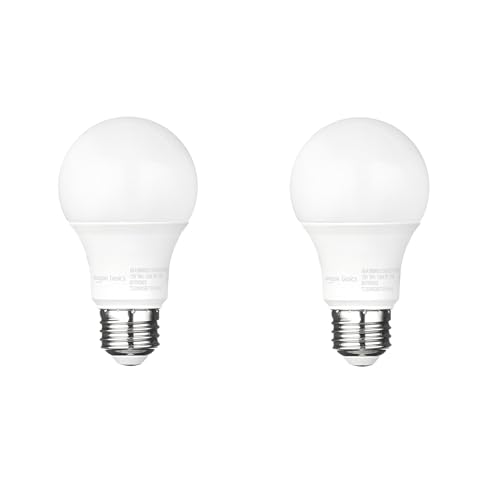
The Amazon Basics A19 Dusk to Dawn Sensor LED Light Bulb 2-Pack is an automated exterior lighting solution designed for homeowners, renters, and property managers seeking reliable outdoor illumination without daily switch toggling. Built around a standard A19 profile and an E26 medium screw base, these bulbs are tailored for porch lights, garage exteriors, patio lanterns, and pathway fixtures.
In terms of lighting output, this model operates as a 60-watt incandescent equivalent while consuming only 9 watts of electrical power. The bulb emits a 2700K soft white color temperature, producing a warm, welcoming light distribution that suits residential entryways and cozy outdoor entertaining areas. It is non-dimmable, meaning it delivers a steady, consistent output whenever ambient darkness triggers the internal daylight sensor.
Physical construction reflects a classic light bulb design, with dimensions of 2.37 by 2.37 by 4.13 inches and a lightweight 0.07-pound build. The primary feature is the built-in photocell sensor, which detects ambient light levels to automatically switch the LED on at dusk and off at dawn. The manufacturer rates the bulb for a 10,000-hour operational lifetime, equating to over 9 years of dependable use when operated for an average of 3 hours per day.
Installing the bulb requires no complex wiring, smart hubs, or programming apps. Users simply screw the E26 base into a compatible, non-dimming standard light socket and leave the main wall switch in the ON position. Daily operation is completely automatic, eliminating the need to set manual timers or remember to flip outdoor switches before nightfall.
While highly convenient, this model has specific operational limitations buyers should keep in mind. Because the bulb is strictly non-dimmable, pairing it with wall dimmers or smart dimmer switches can cause operational faults or premature failure. In addition, the photocell requires adequate exposure to natural daylight to distinguish day from night; placing the bulb inside deeply tinted, opaque, or fully covered fixtures could hinder proper sensor switching. The color temperature is also locked at 2700K soft white, leaving no option for daylight or cool white adjustments.
For anyone searching for an affordable, set-and-forget outdoor lighting upgrade, the Amazon Basics Dusk to Dawn LED 2-pack offers an excellent balance of energy savings and hands-free utility. It is an especially practical pick for porch fixtures and garage posts where dependable, warm evening illumination is needed without paying for smart-bulb complexity.
The integrated photocell sensor is calibrated to monitor ambient light levels continuously, turning the bulb on as daylight fades and shutting it off when dawn breaks. For proper operation, the controlling wall switch must remain powered on at all times so the sensor can manage current delivery to the LED elements.
To achieve reliable light detection, fixtures should allow ambient outdoor light to reach the bulb body. Highly frosted glass, solid enclosure covers, or nearby competing floodlights could occasionally cause erratic sensor switching or false daytime activation.
Consuming only 9 watts to produce the equivalent output of a traditional 60-watt incandescent lamp, this bulb significantly reduces energy usage for fixtures left running overnight. The manufacturer estimates a total lifetime savings of $55.87 per bulb compared to incandescent options over its 10,000-hour rated lifespan.
Operating at a fixed 2700K soft white temperature, the bulb is strictly non-dimmable. Buyers should install it only on standard, toggle-switched E26 fixtures to prevent electrical buzzing or component damage associated with dimmer circuits.

Practical Methods for Determining Light Bulb Wattage and Fixture Safety
Determining the exact wattage of a light bulb requires looking at two distinct specifications: the actual electrical power the bulb draws and the maximum safe wattage rating of the fixture. Power ratings determine electrical safety, operating costs, and thermal output inside enclosed or shaded lamps. Finding this information takes only a brief visual check of the bulb glass or the fixture socket label. When markings have faded away, simple electrical formulas and household measuring tools can reveal the bulb’s operational profile without guesswork.
Reading Markings on the Bulb Glass and Base
Manufacturers imprint vital electrical data directly onto the bulb body, though the exact placement varies by technology and brand. On older incandescent bulbs, you will usually find faint white or gray lettering etched across the crown of the glass bulb. Holding the glass under direct light at a slight angle often makes these worn letters visible. Traditional stamps list the manufacturer name alongside the rated voltage and operating wattage, typically appearing as a number followed by the letter W.
Compact fluorescent and modern LED bulbs position their electrical specifications differently due to their construction. Because LED and CFL bulbs feature plastic or ceramic bases that house internal driver electronics, manufacturers print regulatory text around this lower collar. Rotating the bulb in your fingers reveals the model number, input voltage, frequency, and rated power consumption. If the text seems cramped or faded, using your smartphone camera with the zoom function provides a clear, magnified view of the fine print.
Interpreting alphanumeric stamp codes requires recognizing standard lighting terminology. A marking that reads 120V 60Hz 9W indicates a bulb that operates on standard household current and consumes nine watts of electricity. Some manufacturers also include base sizing codes such as E26, which denotes a standard medium screw base common in North American homes. When you see two different wattage numbers separated by an equivalence label, the smaller number represents the actual electrical power drawn from your wall circuit.
Actual Power Draw Versus Incandescent Wattage Equivalents
The shift from incandescent filaments to solid-state LED lighting created widespread confusion regarding how wattage relates to illumination. Wattage strictly measures electrical energy consumption rather than visible brightness. For decades, consumers associated a sixty-watt bulb with moderate brightness and a one-hundred-watt bulb with high brightness because traditional filaments converted energy into light at predictable ratios. LEDs generate light using semiconductors that produce equivalent brightness while consuming eighty to ninety percent less electrical energy.
Evaluating brightness accurately requires checking luminous output, which is measured in lumens. A traditional sixty-watt incandescent bulb emits roughly eight hundred lumens of light, while an LED bulb achieves that same light output using roughly nine watts. High-output options like a one-hundred-watt equivalent LED typically consume between eleven and twelve watts while producing between one thousand and twelve hundred lumens. For instance, sensor-equipped models like the Aukora dusk-to-dawn bulb draw twelve watts to provide one thousand lumens, whereas Brightever LED bulbs draw eleven watts to deliver twelve hundred lumens.
Understanding this distinction protects fixtures from unnecessary heat exposure while ensuring you achieve adequate illumination. Lower-power accent lights, such as the ProPOW five-watt dusk-to-dawn bulb, produce four hundred and fifty lumens to replace a standard forty-watt incandescent bulb for porch steps or hallways. Packaging labels display the equivalent rating prominently to help shoppers find familiar brightness levels. You should always reference the true electrical wattage when calculating circuit loads and evaluating fixture safety limits.
Locating the Maximum Wattage Label on Light Fixtures
Every certified household light fixture includes a factory safety label specifying the maximum allowable bulb wattage. Underwriters Laboratories and other safety standards require manufacturers to affix these warnings near the lamp socket or on the interior frame. On table lamps and floor lamps, look directly on the metal socket housing or underneath the felt base pad. Chandeliers and multi-arm fixtures often place a silver or white sticker on the socket cup where the bulb screws into place.
Recessed ceiling cans and track lighting heads position their warning labels inside the housing canister. You can unscrew the trim ring or look directly past the socket with a flashlight to read the manufacturer label. The rating frequently reads Caution: Risk of Fire, followed by text specifying the maximum wattage and bulb shape, such as Max 60W Type A. In semi-flush mounts or enclosed ceiling domes, removing the glass shade exposes the interior pan where the thermal rating label resides.
Regular maintenance checks offer a convenient opportunity to inspect these critical rating labels before replacing spent bulbs. When you are cleaning a brass chandelier or dusting pendant fixtures, wipe away accumulated grime around the socket cups so the original text remains legible. If a fixture contains multiple sockets, the label dictates the maximum power per individual socket rather than the total fixture sum. Installing three forty-watt bulbs in a fixture rated for sixty watts per socket remains well within safety thresholds.
The Risks of Overlamping and Exceeding Socket Limits
Installing a bulb with a higher electrical wattage than a fixture allows is known in the electrical trade as overlamping. Incandescent and halogen bulbs convert approximately ninety percent of their consumed energy directly into heat. When excessive wattage generates heat inside a compact fixture, temperatures around the socket can climb high enough to damage materials. Socket insulators, plastic retaining rings, and internal wire insulation can become brittle and degrade over time under extreme heat.
Thermal breakdown of internal conductor insulation represents a serious hidden danger in residential wiring. As wiring insulation hardens and cracks from prolonged overheating, bare copper wires can touch metal fixture housings or spark against each other. This electrical arcing poses severe fire risks within ceiling cavities and wall boxes. Enclosed fixtures like flush mounts and outdoor jelly-jar lanterns trap heat aggressively, accelerating thermal deterioration if an overpowered incandescent bulb is installed.
Modern LED technology offers an effective solution to overlamping risks when higher light levels are required. Because a one-hundred-watt equivalent LED draws only nine to twelve watts of electricity, it produces far less thermal energy than an incandescent equivalent. You can safely install a bright twelve-watt LED bulb into a socket rated for a maximum of sixty watts. The critical rule is that the actual electrical wattage drawn by the new bulb must never exceed the maximum wattage stamped on the fixture.
How to Test and Identify Wattage When Markings Are Rubbed Off
Old bulbs frequently lose their printed labels due to heat exposure, handling, and environmental dust. When you cannot read the print on an intact bulb, simple testing techniques can determine its electrical properties. A plug-in electricity usage monitor, commonly known as a kill-a-watt meter, provides the quickest and safest measurement for portable lamps. You simply plug the monitor into a standard wall outlet, plug the lamp into the monitor, and read the real-time wattage display when switched on.
For bare incandescent bulbs disconnected from any fixture, a digital multimeter can measure the filament cold electrical resistance. Ensure the bulb is completely cool and unpowered before touching the multimeter test probes to the center contact and threaded base shell. Cold tungsten filaments exhibit much lower resistance than operating filaments, but standard baseline formulas provide a reliable estimate. A standard sixty-watt one-hundred-twenty-volt incandescent bulb typically displays a cold resistance between sixteen and nineteen ohms, while a one-hundred-watt bulb measures around ten to twelve ohms.
Physical inspection of the filament and glass envelope also helps narrow down unreadable incandescent lamps. Bulbs with thick, heavy filaments and wider glass envelopes generally consume more electrical power than delicate decorative varieties. Tubular appliance bulbs, decorative flame bulbs, and nightlight bulbs have distinct shapes matched to narrow wattage bands. When measuring unknown LED bulbs, checking the physical size and driver base weight against documented models helps approximate their power profile.
Calculating Wattage Requirements Room by Room
Determining how many watts you need for a specific living space starts with defining the lighting purpose of each room. Ambient lighting provides general overall illumination, while task lighting concentrates bright light on food preparation counters, reading desks, or vanity mirrors. Lighting designers calculate necessary illumination in foot-candles or lumens per square foot to determine total light requirements. Multiplying room square footage by target foot-candles reveals the total lumens required, which you then convert into practical LED wattage.
Living rooms and bedrooms generally require moderate ambient lighting of ten to twenty lumens per square foot. A two-hundred-square-foot living room needs roughly two thousand to four thousand total lumens, which equals three to four nine-watt LED bulbs distributed across floor lamps and ceiling fixtures. In kitchens and home workshops, task lighting targets climb to forty or fifty lumens per square foot to ensure safe food prep and tool handling. Meeting these higher targets with eleven-watt or twelve-watt LED bulbs delivers clear, vibrant illumination without overloading residential lighting circuits.
Proper fixture placement works alongside wattage calculation to eliminate dark corners and uncomfortable glare. When installing decorative pendant lights over a dining table or kitchen island, spacing multiple lower-wattage bulbs creates a balanced visual spread. Accent lighting fixtures like wall sconces and art spotlights require even lower power, often using five-watt to seven-watt bulbs to draw gentle attention to architectural details. Balancing multiple light sources creates layered, adaptable illumination throughout your home.
Matching Replacement Bulbs with Controls and Enclosed Fixtures
Selecting the correct wattage involves evaluating the environmental conditions and electrical controls attached to the socket. Wall dimmer switches possess their own internal wattage ratings that must accommodate the combined power of all connected lamps. Older incandescent dimmer switches often require a minimum electrical load of forty watts to function smoothly without humming or flickering. When switching multiple sockets to low-power LED bulbs, you may need an LED-compatible dimmer to prevent control flutter.
Outdoor fixtures present unique operational demands that influence bulb selection and thermal management. Specialized outdoor sensor bulbs, such as the Amazon Basics nine-watt soft white sensor bulb or the Gonhom ten-watt amber bug light, integrate photocells to automate dusk-to-dawn operation. Enclosed porch lanterns restrict airflow around the bulb base, requiring bulbs engineered to dissipate driver heat without air circulation. Using bulbs rated for enclosed fixtures prevents premature electronic failure in security lights and garage lanterns.
Color temperature and specialized spectral output also alter how wattage translates into visual effectiveness outdoors. The Gonhom ten-watt bug light produces an amber yellow glow that deters flying insects around doorways while drawing ten watts of power to replace a one-hundred-watt incandescent source. Cool white and daylight bulbs, such as the Aukora six-thousand-kelvin or Brightever five-thousand-kelvin options, provide crisp security visibility across driveways and yards. Choosing the appropriate wattage, sensor type, and color temperature ensures your outdoor lighting performs reliably season after season.
Checking bulb markings, reading fixture safety stickers, and understanding modern LED equivalence removes all uncertainty from household lighting maintenance. Always prioritize the maximum wattage specification stamped on your lamp socket to protect household wiring from thermal damage. When upgrading to modern energy-saving bulbs, use lumens to choose your desired brightness and use actual wattage to verify electrical safety. Taking a few moments to inspect these ratings ensures safe, efficient, and beautifully balanced lighting in every corner of your home.






Write Your Review
No reviews yet. Be the first to share your experience!