


Every functional living space relies on a balanced combination of illumination sources to ensure comfort, safety, and visual appeal throughout the day. When homeowners evaluate what gives you light, the practical answer extends far beyond a single ceiling bulb to encompass layered ambient fixtures, focused task lamps, and subtle accent illumination. Exploring traditional concepts like decorative fairy lamp designs reveals how personal lighting preferences have evolved from simple flame containers into versatile modern electrical hardware. Understanding the physical mechanisms behind modern illumination helps anyone configure a room with appropriate brightness levels while eliminating unwanted shadows.
Different living zones demand distinct types of visual energy, ranging from bright kitchen task counters to relaxing bedroom reading corners. Practical layout decisions often involve positioning a dedicated reading lamp to prevent eye strain or integrating versatile accent strings to create a warm background glow. By examining the fundamental technologies and fixtures that generate usable lumens, you can select hardware that matches your architectural layout, energy priorities, and daily routines. Proper planning ensures that every fixture functions effectively within an integrated home lighting plan.


Understanding What Gives You Light: Sources, Fixtures, and Illumination Principles
At the most fundamental physical level, what gives you light in any residential environment is the release of visible photons triggered by thermal radiation or electrical excitation. Modern residential settings derive usable illumination from two primary categories: natural daylight admitted through windows and artificial sources powered by electrical current. While historical residences relied almost exclusively on thermal radiation from open flames or heated tungsten filaments, contemporary spaces depend predominantly on solid-state light-emitting diodes. Understanding how these diverse illumination sources produce, distribute, and control light allows occupants to create functional, efficient, and visually comfortable indoor environments.
The Fundamental Physics of Residential Light Sources
Artificial illumination operates through specific scientific processes that determine energy efficiency, heat generation, and color stability. Incandescent and halogen sources produce light through thermal incandescence, heating a physical filament until it glows brightly inside an inert gas envelope. This process creates a continuous spectral output that feels naturally warm to human eyes, but it converts the vast majority of consumed electrical energy directly into waste heat. Because resistive filaments degrade rapidly under elevated operating temperatures, conventional incandescent bulbs demand frequent replacement and present noticeable thermal loads in enclosed spaces.
In contrast, solid-state lighting relies on electroluminescence to produce illumination directly from semiconductor materials. When direct current passes through a diode junction, electrons recombine with electron holes, releasing energy in the form of discrete light photons. This solid-state architecture generates negligible direct radiant heat along the beam path, transferring thermal energy instead through internal conduction plates. Because modern LEDs bypass the fragile filaments and glass envelopes of traditional bulbs, they provide exceptional physical resilience, compact form factors, and dramatic reductions in power consumption.
Gas-discharge sources, including fluorescent tubes and compact fluorescent lamps, represent an intermediate technology that relies on excited mercury vapor to generate ultraviolet radiation. An internal phosphor coating along the glass tube absorbs this ultraviolet emission and re-radiates it as visible white light. While fluorescent hardware improved upon traditional incandescent electrical efficiency, these lamps require ballasts to regulate electrical current and often suffer from noticeable warm-up times. Today, semiconductor LED technology has largely superseded gas-discharge options across residential applications due to instant illumination, silent operation, and superior dimming flexibility.
Primary Ambient Lighting Systems in Living Spaces
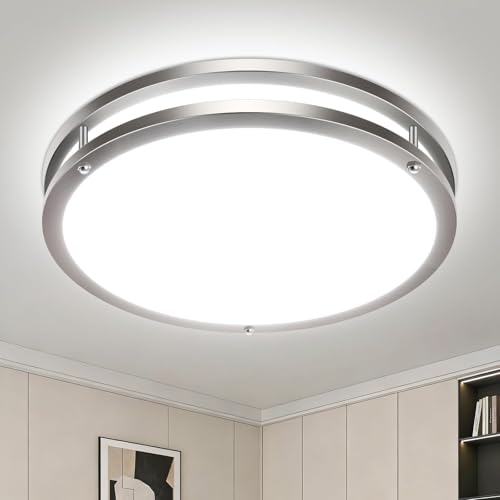
Ambient illumination serves as the foundational light layer in any interior environment, establishing a uniform baseline of visibility across an entire room. This base layer allows occupants to navigate rooms safely, recognize architectural boundaries, and perform general household activities without strained vision. Standard ambient lighting hardware includes ceiling surface mounts, recessed can fixtures, semi-flush chandeliers, and indirect cove uplights. Selecting the right ambient fixture depends heavily on room dimensions, ceiling height, and surface reflectance characteristics across walls and floors.
Central ceiling fixtures and chandeliers spread lumens omnidirectionally, utilizing reflective ceiling surfaces to bounce softened illumination downward. Maintaining these primary fixtures is essential for preserving steady light output over years of continuous operation. When dust, grease, and airborne debris accumulate on decorative metal arms and glass crystal shades, overall room brightness can decrease substantially. Homeowners planning regular fixture care can learn about cleaning a metal chandelier safely to ensure that delicate reflective surfaces maintain their original optical clarity without risking electrical component damage.
Recessed downlights provide an alternative ambient strategy, distributing narrow or wide cones of light across a floor plane from concealed ceiling apertures. Achieving balanced illumination with recessed fixtures requires careful grid planning to prevent the harsh visual patterns known as the spotlight effect. Designers often space recessed cans according to ceiling height, calculating beam overlap to generate seamless visual coverage without cast shadows. When paired with compatible wall dimmers, ambient downlight arrays transition smoothly from bright daytime cleaning illumination to subdued evening entertaining levels.
Directional Task Lighting for Everyday Focus
While ambient lighting blankets a room uniformly, task lighting provides concentrated, high-intensity illumination focused directly onto dedicated work surfaces. Reading tables, kitchen preparation countertops, home office desks, and crafting benches all require higher localized lumen levels than general hallways or living rooms. Dedicated task illumination eliminates distracting bodily shadows that form when a person sits or stands between an overhead ambient fixture and their working materials. By concentrating light where hands and eyes interact, task lighting enhances visual acuity and reduces occupational fatigue.
Pendant lights suspended directly over kitchen islands and dining tables deliver practical task illumination while contributing architectural presence. Selecting appropriate drop lengths and shade styles ensures that light beams cover the tabletop without creating uncomfortable bare-bulb glare in seated eyes. For readers interested in installation best practices, our guide on hanging decorative pendant fixtures covers key considerations for suspension heights, junction box alignment, and aesthetic balance. Proper cord adjustment ensures that focused task illumination falls exactly where work occurs while preserving clear sightlines across the room.
Under-cabinet linear fixtures provide another critical form of task lighting, illuminating countertop prep zones that overhead ceiling fixtures leave in deep shadow. These low-profile strips or individual puck units direct lumens straight down onto food prep zones, slicing boards, and recipe books. Modern LED under-cabinet hardware frequently features integrated diffusers, which eliminate individual diode reflections on polished granite or quartz countertops. Installing dedicated switching or proximity sensors for task fixtures allows homeowners to illuminate work stations independently without energizing entire room circuits.
Accent and Decorative Illumination Sources
Accent lighting adds visual depth, texture, and emotional resonance to an interior environment by spotlighting specific architectural features, artwork, or decorative vignettes. While ambient lighting ensures basic navigation and task lights support focus, accent lights create contrast by drawing the eye toward focal points. Standard design principles often recommend that accent lighting maintain a three-to-one brightness ratio against surrounding ambient light to establish noticeable visual emphasis. Without accent sources, interior spaces can appear visually flat, monotonous, and uninviting.
Flexible string lights and decorative micro LEDs represent an accessible, highly customizable accent option for residential bedrooms, home offices, and entertainment zones. Hardware like the JMEXSUSS Smart RGB Fairy Lights utilizes flexible insulated copper wiring populated with miniature multi-color diodes, allowing users to mold the light line around shelving, headboards, or decorative mirrors. These compact decorative lights introduce delicate, point-source sparkle that softens hard room corners and provides gentle secondary orientation lighting. Because the structural wire can bend repeatedly, users can reconfigure the display across seasonal themes without installing permanent wall anchors.
Track lights and adjustable wall sconces provide directional accent illumination for framing framed art, textured stone fireplaces, or architectural alcoves. Wall-washing lenses spread light smoothly across vertical surfaces, making compact rooms feel visually wider and more expansive. Wall grazing, another specialized accent technique, places directional fixtures close to textured masonry or timber walls to cast dramatic high-contrast shadows. Layering decorative accent sources alongside functional task and ambient fixtures completes a balanced, three-dimensional lighting plan.
Light Quality Metrics: Lumens, Kelvins, and Color Rendering
Evaluating what gives you light requires an understanding of standardized optical metrics rather than relying on legacy wattage ratings. For decades, consumers selected light bulbs based on wattage, which simply measures the electrical energy consumed rather than the visual brightness produced. Modern lighting packages display light output in lumens, providing an objective measurement of total visible light emitted by a source. Comparing lumen values allows buyers to match appropriate brightness levels to specific room dimensions regardless of whether the light uses LED or legacy filament technology.
Correlated Color Temperature, measured in kelvins, defines the visual warmth or coolness of emitted white light. Lower kelvin ratings, such as 2200K to 2700K, produce a rich amber hue reminiscent of candlelight and traditional incandescent filaments, ideal for relaxing bedrooms and dining areas. Intermediate ratings between 3000K and 3500K offer crisp, neutral white light well-suited for living rooms, hallways, and retail displays. Higher kelvin ratings reaching 4000K to 5000K produce cool daylight tones that encourage alertness and visual clarity in workshops, commercial kitchens, and utility laundry rooms.
Color rendering represents another vital quality metric, measured using the Color Rendering Index scale from zero to one hundred. CRI evaluates how accurately an artificial light source reveals surface colors compared to a standardized natural reference light. Light sources with high CRI scores of ninety or above render wood finishes, food ingredients, and skin tones with vibrant, lifelike fidelity. Inferior low-CRI light sources often impart dull, washed-out, or greenish tints to room surfaces, which can cause subtle eye fatigue and distorted color perception during detailed tasks.
Power Delivery and Low-Voltage Lighting Systems
Residential illumination hardware operates across distinct electrical distribution formats, divided broadly into standard line voltage and low-voltage configurations. Standard line-voltage systems in North American homes supply alternating current at 120 volts directly to fixed junction boxes, wall sconces, and ceiling luminaires. These permanent installations require robust building wiring, grounded metallic or non-metallic conduit, and dedicated circuit breaker protection. Handling line-voltage connections demands strict safety protocols, including turning off main breakers before touching exposed conductors.
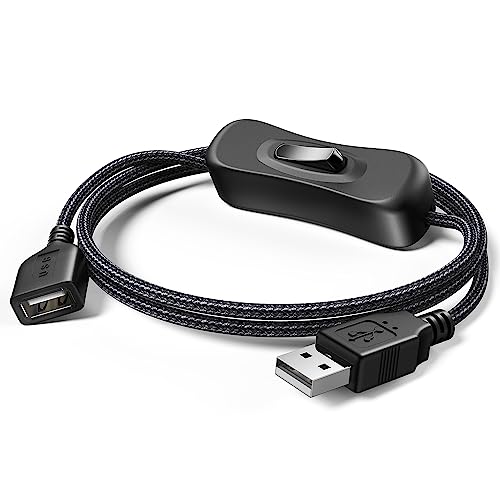
Low-voltage lighting setups utilize integrated or external power adapters to step down 120-volt alternating current to five, twelve, or twenty-four volts direct current. Step-down transformers and electronic drivers make low-voltage systems exceptionally safe for under-cabinet runs, landscape garden fixtures, and decorative string displays. Miniature decorative systems, including flexible LED copper strings, frequently utilize five-volt USB power interfaces. This universal connector allows users to draw power from existing phone chargers, television USB ports, portable power banks, or computer monitors without running permanent branch circuitry.
Operating lights from low-voltage DC supplies also reduces electrical shock risks and minimizes thermal stress on surrounding mounting materials. When planning extensive low-voltage runs, however, users must account for potential voltage drop along extended thin conductors. If wire resistance is too high over long distances, distant diodes can experience reduced brightness or color shifting compared to those near the power source. Selecting appropriate wire gauges and avoiding excessive daisy-chaining helps maintain uniform illumination throughout an entire low-voltage installation.
Smart Controls and Dynamic Lighting Automation
The transition from mechanical wall switches to digital smart control platforms has fundamentally expanded how users interact with artificial light. Smart illumination systems allow occupants to modulate brightness, change spectral hues, and program automated schedules directly through wireless networks. Advanced smart string lights, such as the JMEXSUSS Smart RGB Fairy Lights, incorporate Bluetooth and Wi-Fi connectivity to support full color-changing spectrums across millions of shade combinations. Pairing these devices with voice assistants like Amazon Alexa or Google Assistant enables hands-free operation and routine automation.
Sound synchronization represents an entertaining extension of modern digital lighting controllers. By utilizing embedded microphone sensors or mobile device audio streaming, smart controllers analyze rhythmic acoustic frequencies and pulse LED colors in real time. This dynamic interaction suits gaming spaces, family home theaters, and festive seasonal gatherings by turning static lighting into an active atmospheric element. Users can also configure gradual wake-up routines that simulate sunrise, easing the morning waking process through biological circadian support.
Multi-device grouping within companion mobile applications streamlines lighting management across sprawling residential properties. Grouping protocols allow homeowners to synchronize several independent light strings, lamps, and architectural sconces under a single command. Creating saved scene profiles ensures that an entire open-concept floor plan transitions instantly from bright work lighting to cozy dinner mood illumination. Reliable wireless performance requires an adequate home network signal and careful adherence to manufacturer pairing instructions.
Safety Considerations, Thermal Management, and Fixture Care
Operating residential lighting fixtures safely demands ongoing attention to heat dissipation, electrical load ratings, and environmental exposure limits. Even highly efficient solid-state LEDs produce internal heat at the semiconductor junction that must transfer safely away via aluminum heat sinks. Enclosing high-output LED bulbs inside tightly sealed, unventilated luminaires can cause excessive heat buildup, leading to premature driver failure and color degradation. Always verify that replacement bulbs carry specific ratings for enclosed fixtures before sealing them inside tight glass globes.
Moisture protection is equally crucial when positioning light sources near plumbing fixtures, damp basements, or outdoor covered patios. Underwriters Laboratories and similar safety organizations classify luminaires as dry, damp, or wet location rated based on housing ingress protection. Installing a dry-rated indoor string light or fixture in an unprotected exterior space invites moisture intrusion, corrosion, and short circuits. Checking manufacturer specification labels ensures that hardware matches the moisture exposure, ambient temperature, and physical demands of its installation environment.
Routine inspection of electrical cords, plugs, and junction points helps identify wear before hazardous failure conditions arise. Frayed insulation, loose socket terminals, and scorched plug blades indicate dangerous electrical resistance that requires immediate component replacement. While swapping plug-in low-voltage fixtures remains an accessible DIY task, modifications to residential branch wiring, panel circuits, or recessed ceiling housings should always involve a licensed electrician. Adhering to manufacturer guidelines and local electrical codes protects both your property and household members.
Building a successful home illumination plan requires understanding the distinct roles played by ambient, task, and accent light sources. By pairing reliable baseline fixtures with adaptable task units and expressive smart accents, you can establish an environment that accommodates every daily activity comfortably. Paying close attention to lumen output, color temperature, and proper electrical ratings ensures that each fixture delivers lasting visual value. Thoughtful light layering transforms ordinary living areas into welcoming, functional spaces tailored precisely to your lifestyle needs.




Write Your Review
No reviews yet. Be the first to share your experience!