


A dim living space often feels uninviting, especially when single ceiling fixtures leave deep shadows across seating areas and corners. Many homeowners struggle with how to get more light in living room arrangements because standard builder fixtures rarely deliver sufficient lumens or balanced illumination for multi-use spaces. Addressing poor visibility requires more than just installing the highest-wattage bulb available, as mismatched brightness can easily introduce uncomfortable glare. Balanced illumination relies on understanding how general ambient fixtures interact with task fixtures and accent elements to brighten the perimeter evenly.
Proper illumination balances overall room brightness while offering flexible control for evening relaxation, entertaining guests, or working from home. Simple adjustments such as upgrading to tunable ambient ceiling units, adding perimeter floor lamps, and positioning dedicated reading lights near seating zones can transform dark corners. Exploring options like modern flush mounts or smart surface fixtures allows residents to dial in appropriate brightness and color temperatures for every hour of the day. Evaluating your current layout and electrical setup provides the foundation for building an effective, layered illumination plan.

Strategies for Increasing Illumination in Dark Living Rooms
The most reliable method for increasing light in a living room involves building a balanced, three-layer lighting scheme rather than relying on a single central fixture. Distributing illumination across ambient, task, and accent sources brightens shadowy corners and eliminates dark ceilings while preventing harsh visual glare. Introducing versatile fixtures such as flush-mount ceiling lights with tunable white spectrums, paired with strategic floor lamps and directional accent lights, creates an adaptable environment suitable for both daytime activities and relaxed evening gatherings.
Establishing the Three Core Lighting Layers
Ambient lighting serves as the primary base layer, replacing natural daylight when the sun goes down or supplementing dim windows during overcast afternoons. In living rooms, this foundation typically comes from flush mounts, semi-flush ceiling lights, or recessed downlights distributed across the ceiling plane. Without adequate ambient output, living areas develop high-contrast zones where bright spots sit directly next to heavy shadows, creating eye strain. Selecting an ambient fixture that disperses light evenly across the ceiling and downward into the room helps establish a welcoming baseline.
Task and accent lighting build essential depth on top of that ambient baseline. Focused task lamps placed beside sofas or reading chairs direct clear illumination exactly where family members need visual clarity for reading, crafting, or using laptops. Meanwhile, accent fixtures such as wall sconces, uplights behind houseplants, and bookshelf illumination highlight vertical boundaries, which visually expands the perceived footprint of the room. Combining all three layers ensures your living room feels balanced, functional, and visually inviting throughout the day.
Calculating Lumens and Selecting Light Output
Determining proper brightness begins with calculating total lumens rather than relying on wattage ratings from older incandescent technology. A typical living room generally requires between ten and twenty lumens per square foot for comfortable ambient coverage, depending on wall color and natural window access. For example, a living room measuring two hundred square feet typically benefits from a combined baseline of two thousand to four thousand lumens across all active fixtures. If your room features dark walls, high ceilings, or heavy window treatments, aiming toward the higher end of that range helps overcome light absorption.
Distributing your calculated lumen total across multiple fixtures yields far greater visual comfort than concentrating all brightness into one central bulb. Placing an intensely bright source in the center of a ceiling often produces downward glare and harsh perimeter shadows. In contrast, dividing four thousand total lumens among a ceiling fixture, two table lamps, and a perimeter floor lamp creates an even blanket of light. High-efficiency light-emitting diode fixtures generate this substantial output while drawing minimal electrical wattage from your home circuits.
Managing Color Temperature and Visual Comfort
Light appearance is measured on the Kelvin scale, which dictates whether a room feels warm, neutral, or cool. Living rooms traditionally benefit from warm white lighting between 2700K and 3000K, which fosters a cozy, relaxing environment that complements wood furniture and soft fabrics. However, relying exclusively on warm 2700K lighting during dark afternoons can make a living room feel drowsy and dim when active tasks require alert focus. Introducing fixtures with adjustable color temperatures allows you to adapt the room environment dynamically as natural daylight shifts.
Neutral and daylight white settings ranging from 4000K to 5000K mimic natural midday sun, making them practical for daytime work, cleaning, or lively family activities. Cooler color temperatures enhance visual contrast and can make dimly lit spaces feel noticeably crisper and brighter. When hanging pendant light fixtures or installing modern surface mounts, having the ability to adjust kelvin values prevents the room from feeling permanently locked into one rigid tone. Selecting sources with a high color rendering index of 80 or above further guarantees that furniture, rugs, and wall colors appear true to life.
Upgrading Overhead Fixtures and Surface Mounts
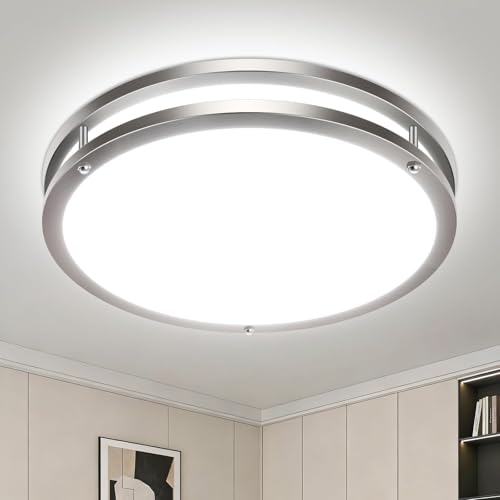
Replacing an outdated or dim central fixture with a modern, high-output flush mount provides an immediate increase in baseline illumination. Units like the TALOYA 15.8“ Smart Ceiling Light,Main Light offer substantial flexibility by combining a twenty-watt tunable front light with dedicated ambient features. The front light adjusts seamlessly from warm white to daylight white, allowing users to dial in anywhere from ten percent to one hundred percent brightness via connected controls. Selecting a wide, low-profile fixture with broad light diffusion ensures that output spreads horizontally across the ceiling rather than beaming straight down like a spotlight.
Fixture housing materials and internal construction also influence long-term safety and ease of use in residential installations. The TALOYA model uses a fire-resistant plastic shell engineered to reduce electrical shock risks and short-circuit hazards, alongside internal short-circuit protection circuits. The manufacturer provides installation guidance online, noting that the fixture installs easily using a standard screwdriver and mounts securely to residential junction boxes. Reviewing product specifications and installation instructions before beginning any electrical project ensures your existing ceiling junction box can accommodate the new hardware.
Keeping light fixtures free of dust and debris is another simple way to maximize actual light transmission over time. Accumulated dust on glass diffusers, acrylic lenses, or fabric shades can reduce usable lumen output by twenty percent or more. While cleaning brass light fixtures requires gentle metal polishes, smooth acrylic and plastic ceiling diffusers usually require only a dry microfiber wipe down to restore clear optical clarity. Establishing a seasonal cleaning routine keeps all ceiling mounts operating at their maximum designed light output.
Deploying Floor Lamps and Secondary Fixtures
Floor lamps provide one of the simplest remedies for bringing light into dark corners and seating nooks without hiring an electrician. Torchiere-style floor lamps direct powerful illumination upward toward the ceiling, utilizing the ceiling surface as a giant reflector to bounce soft, indirect light back down. This upward bounce dramatically increases ambient brightness across the room without causing direct eye glare from exposed bulbs. Pairing an upward torchiere with an attached flexible reading arm provides both ambient elevation and focused task lighting in a single footprint.
Arc floor lamps and traditional table lamps round out mid-level illumination across sofas, consoles, and end tables. An arc lamp stands in a corner or behind a couch while suspending a shade over a central coffee table, simulating an overhead chandelier without ceiling wiring. Meanwhile, table lamps positioned on credenzas and side tables cast horizontal light that eliminates unflattering vertical facial shadows. Selecting lampshades with translucent white or pale linen fabrics maximizes outward light transmission compared to dense, dark-colored shades that trap lumens inside.
Integrating Smart Lighting Controls and Schedules
Smart controls allow homeowners to regulate brightness levels dynamically without rewiring walls for expensive multi-gang dimmer switches. The TALOYA 15.8“ Smart Ceiling Light,Main Light connects to 2.4GHz Wi-Fi networks and integrates with the Smart Life mobile application on iOS and Android devices, as well as Alexa voice commands. This connectivity enables granular dimming, automated scheduling, and individual or group control alongside other compatible smart bulbs in your home. Maintaining constant line power via standard wall toggle switches ensures the internal Wi-Fi receiver stays connected and ready for automated routines.
In addition to full white illumination, some modern surface fixtures provide secondary color channels for specialized ambiance. The TALOYA ceiling model incorporates a four-watt RGB backlight that operates independently from the main twenty-watt white light, offering variable colors and dedicated brightness adjustments. While the front white light and rear RGB light do not illuminate simultaneously, the colored backlighting functions as a gentle evening accent or calming nightlight. Connecting table lamps to smart plugs creates a synchronized system where entire room lighting scenes adjust with a single voice command.
Illuminating Shadowed Corners and Architectural Alcoves
Dark corners often occur where standard overhead fixture beams fail to reach due to wide room angles or deep structural alcoves. Placing small, discreet uplights on the floor behind armchairs, potted plants, or large decorative vases casts gentle vertical light up the wall. This subtle wash softens corner boundaries, banishes dark shadows, and adds rich architectural depth to the entire living area. Plug-in floor can lights equipped with warm LED spotlight bulbs require zero permanent installation and take up negligible floor space.
Plug-in wall sconces and rechargeable cabinet puck lights resolve perimeter darkness without invasive drywall work. Many contemporary sconces feature long decorative cords with inline switches and plug directly into standard wall outlets behind furniture. Inside deep bookcases or entertainment centers, battery-powered pucks or low-voltage LED strip tape illuminate dark shelves that would otherwise absorb ambient room light. These low-profile additions ensure that every architectural boundary contributes to the overall brightness of the living room.
Optimizing Reflective Surfaces and Room Finishes
The physical surfaces, paint colors, and materials inside your living room significantly influence how effectively light travels throughout the space. Matte, dark-colored walls and heavy velvet draperies absorb a high percentage of both natural and artificial lumens, making even well-lit rooms feel dark. Repainting with lighter shades such as soft off-white, warm cream, or pale gray with an eggshell or satin finish allows light to bounce freely between surfaces. Satin and eggshell sheens reflect noticeably more light than flat matte paints without causing blinding surface reflections.
Large wall mirrors placed strategically across from windows or near secondary lamp sources multiply visible light across the floor plan. A mirror captures incoming natural daylight during the day and reflects light from table lamps at night, virtually doubling the perceived illumination of that zone. Furthermore, swapping heavy curtains for sheer, light-filtering panels preserves privacy while allowing diffused daylight to enter throughout morning and afternoon hours. Keeping window glass clean and trim unobstructed ensures you capture every available bit of natural light before switching on electrical fixtures.
Safe Installation and Circuit Layout Guidelines
Upgrading fixtures or adding multiple plug-in lamps requires paying careful attention to household electrical safety and circuit capacity. Most residential living room lighting circuits operate on fifteen-amp or twenty-amp breakers shared across several outlets and ceiling junction boxes. Because modern LED bulbs and fixtures draw only a fraction of the power required by legacy incandescent bulbs, you can generally operate multiple LED lamps without approaching breaker limits. However, always calculate combined wattage if you plan to share outlets with high-draw consumer electronics like space heaters or home theater amplifiers.
When replacing an existing hardwired ceiling fixture, verify that the wall switch and main electrical service breaker are completely switched off before removing any hardware. Use a reliable non-contact voltage tester to confirm that no live current reaches the junction box wires before loosening mounting brackets. Always follow manufacturer wiring instructions, matching hot, neutral, and ground conductors properly using UL-listed wire connectors. If your home features older wiring without a clear ground wire, or if you feel uncertain at any stage of installation, consulting a licensed electrician is the safest path forward.
Finalizing your lighting layout involves testing each layer independently and together across different times of the day. Adjust dimmer levels, refine lamp placements, and experiment with color temperature settings until the space feels consistently bright, welcoming, and free of harsh contrast. By combining a reliable central fixture with layered perimeter lamps, reflective design choices, and intuitive controls, you can completely banish dark shadows and enjoy a vibrant living room year-round.






Write Your Review
No reviews yet. Be the first to share your experience!