


Morning routines often reveal the subtle flaws of poor bathroom illumination. Shadows cast across the jawline or glare bouncing off the glass can make shaving, grooming, or makeup application frustrating. Determining how high to mount bathroom vanity light hardware correctly eliminates these harsh contrasts and establishes balanced, flattering illumination across the entire mirror zone. Standard guidelines suggest placing a wall sconce or horizontal bar between 75 and 80 inches from the finished floor to the center of the fixture. Just as measuring ceiling height matters when hanging overhead pendant fixtures, vanity placement requires balancing user eye level, mirror frame dimensions, and ceiling clearances.
Mounting a wall bracket too low creates blinding glare directly in your field of vision, while mounting it too high throws deep shadows under the eyes and nose. Many homeowners choose modern multi-light fixtures, such as horizontal LED bars or multi-shade wall brackets, to cast wide illumination over single or double sinks. Factoring in junction box placement, glass shade orientation, and overall fixture height ensures your setup delivers clear task lighting without overcrowding the wall. A thoughtful installation balances practical functionality with clean visual symmetry across your bathroom vanity area.

Pros
- Each light head rotates up to 350 degrees for customizable task or ambient angle adjustment
- Crisp 1,600-lumen output powered by efficient 24-watt integrated LEDs
- Sleek chrome and acrylic design fits comfortably above compact mirrors and vanity sinks
- Comes with a standard US mounting plate designed for pre-installed household wiring
Cons
- Fixed 6000K cool white color temperature cannot be adjusted to warmer lighting tones
- Hardwired setup requires pre-existing wall wiring and provides no built-in switch or plug
- Dimming support is not listed in product specifications, so wall dimmer compatibility is unconfirmed
The JZEKVN Modern LED Bathroom Vanity Light is a dedicated 3-light wall fixture engineered for small-to-medium vanity stations, powder rooms, and half-baths. Measuring approximately 16 inches in total length with a sleek chrome and acrylic aesthetic, this fixture is tailored for homeowners and apartment renovators who want a modern look without the bulk of oversized traditional vanity bars. Its integrated LED configuration means there are no individual bulbs to purchase, seat, or replace over time.
In terms of lighting output, the fixture draws 24 watts of electrical power to generate a listed 1,600 lumens. The color temperature is fixed at 6,000K cool white, producing a vivid, daylight-style illumination designed to enhance visibility during morning routines, makeup application, and grooming. A key mechanical feature is the 350-degree independent rotation on each of the three light heads, allowing users to angle light downward toward the basin, forward onto the face, or upward for indirect ambient reflection.
The build combines chrome-finished stainless steel and acrylic diffusers, offering a minimalist profile that measures roughly 1.7 inches deep and 5.9 inches high. The acrylic housing helps diffuse the integrated LED diodes to soften direct glare, while the polished chrome surface complements contemporary bathroom hardware such as chrome faucets, towel bars, and mirrors. Because the LEDs are integrated directly into the lamp heads, the fixture maintains a clean, uniform linear appearance.
Installation is designed around a standard hardwired configuration. The package includes a US standard mounting bracket intended to bolt directly to an existing household junction box. As an all-in-one hardwired fixture, it lacks an onboard toggle switch, pull chain, or electrical plug, meaning it must be connected to an existing wall switch line. Setup is straightforward for DIYers comfortable with standard wire-nut connections and fixture mounting, though following standard safety procedures like shutting off the breaker is always required.
Buyers should keep a few practical limitations in mind before purchasing. The 6,000K color profile is distinctly cool and crisp, which may feel stark in bathrooms decorated with warm earth tones or for users who favor traditional 2,700K or 3,000K incandescent warmth. Furthermore, the manufacturer specifications do not indicate dimmer compatibility, meaning pairing with wall dimmers might not support variable brightness. Because the LEDs are integrated, individual diode failure would require servicing or replacing the unit rather than simply screwing in a fresh bulb.
Overall, the JZEKVN 3-Light Vanity Fixture serves as a practical, space-conscious lighting solution for smaller spaces where directed, high-clarity illumination is necessary. If you need a compact, modern vanity bar with flexible beam positioning and crisp daylight-style visibility, this fixture delivers solid utility at an accessible price point.
The JZEKVN 16-inch vanity light uses a hardwired electrical setup designed for permanent wall mounting. The included mounting plate matches standard US junction box configurations, allowing straightforward physical attachment to pre-installed electrical boxes above bathroom mirrors or medicine cabinets.
Because the unit contains no integrated pull cord, toggle switch, or wall plug, it must be wired directly into household circuits controlled by a standard wall switch. Homeowners should verify that existing wiring is turned off at the main service panel before attempting installation, and always follow the included step-by-step instructions for safe wire connections.
This fixture operates at a specified 24 watts and yields 1,600 lumens across its three integrated light modules. This light output provides adequate direct task lighting across vanity countertops and mirror surfaces in small to medium-sized restrooms.
The light color is calibrated to a 6,000K cool white tone, giving surfaces a crisp, clean appearance without the yellow cast common in traditional lighting. While this color temperature excels at high-visibility tasks like applying cosmetics or shaving, users seeking soft, relaxing ambient lighting should note the cooler tone before installation.
Complete Guide to Bathroom Vanity Light Mounting Height and Placement
Mounting a bathroom vanity light at the correct elevation ensures balanced visibility for shaving, applying cosmetics, and daily grooming. For an overhead horizontal fixture installed above a mirror, the standard mounting height is between 75 and 80 inches from the finished floor to the centerline of the fixture. If you measure from the top of the mirror instead, maintaining a clearance of 2 to 4 inches above the frame prevents visual crowding while centering the light pool. These benchmark dimensions create an effective baseline for typical eight-foot ceilings, though specific room architecture and mirror proportions can modify the final placement.
The Standard Height Formula for Overhead Vanity Lights
Overhead vanity lights function as the primary task illumination in many compact bathrooms and powder rooms. Positioning the fixture centerline between 75 and 80 inches above the floor keeps the light source comfortably above eye level for most adults. This elevation allows the light to spread downward across the face without shining directly into the user’s eyes. Homes with taller family members often benefit from mounting the light near 80 inches, which minimizes head shadows across the upper brow.
Measuring relative to the mirror frame offers a secondary reference point that prevents awkward visual gaps. A horizontal bar light looks best when positioned approximately 3 inches above the highest edge of the mirror glass or frame. Hanging the fixture directly against the mirror frame can make the wall look cramped and complicates routine cleaning. Leaving excessive space between the frame and the fixture separates the elements, making the vanity wall feel disjointed.
Eye-Level Placement for Side Wall Sconces
Side sconces mounted on either side of a mirror deliver superior task lighting compared to overhead fixtures alone. Placing sconces at 60 to 65 inches from the finished floor aligns the center of the illumination with average adult eye level. This horizontal cross-illumination fills in shadows beneath the eyes, nose, and chin that single overhead bars often create. Makeup artists and grooming specialists consistently favor this configuration because it renders facial contours with natural depth and clarity.
Horizontal spacing between side sconces also influences how effectively the light reaches the center of your face. Sconces should generally sit 28 to 36 inches apart, centered evenly on the sides of the mirror. In powder rooms with narrow vanities, keeping the sconces closer to 28 inches apart concentrates the illumination effectively. If your vanity mirror spans wider than 40 inches, relying solely on side sconces may leave dark spots in the center, prompting many homeowners to combine side sconces with a complementary overhead bar.
Factoring In Mirror Dimensions and Frame Profiles
Mirror dimensions directly dictate how much usable wall space remains for your lighting hardware. A mirror that extends 40 inches tall leaves very little overhead clearance beneath a standard eight-foot ceiling. In such layouts, centering the fixture at 78 inches might force the bulbs uncomfortably close to the ceiling drywall or crown molding. Selecting a slim horizontal fixture, such as the Modern LED Stainless Steel Chrome Acrylic Bathroom bar with its 16-inch profile, preserves adequate breathing room above prominent mirror frames.
Frame thickness also affects how light distributes across the glass surface. Heavy, ornate frames with protruding top ledges can cast dark shadow lines across the top third of the mirror if the fixture sits too close. Flatter frames or frameless beveled mirrors permit closer mounting tolerances without producing unwanted shadow cutoffs. Always position the fixture high enough so that its downward beam clears any forward-projecting frame moldings.
Upward Versus Downward Shade Orientation
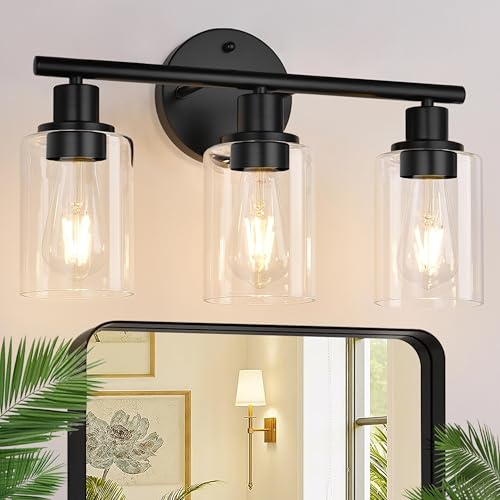
Shade orientation substantially shifts the effective height of your vanity illumination. Many traditional and transitional wall lamps, including the Zarbitta 3-Light Bathroom Light Fixtures, feature reversible mounting brackets that allow installation with shades facing upward or downward. Mounting shades downward directs intense, focused task light directly onto the sink and countertop area. This downward position works exceptionally well in bathrooms where the vanity light serves as the single illumination source in the space.
Mounting glass shades in an upward direction bounces light off the ceiling, creating softer, diffused ambient illumination. Upward mounting reduces direct glare on the eyes and creates a warm, relaxing atmosphere across the room. Because upward shades position the actual light bulbs several inches higher than the electrical junction box, you may need to mount the junction box slightly lower on the wall. Testing the visual height of the bulbs rather than just the mounting plate ensures proper light distribution.
Fixtures equipped with directional or rotatable light heads offer another way to control light delivery. The Modern LED Stainless Steel Chrome Acrylic Bathroom fixture incorporates 350-degree rotatable lamp bodies, allowing users to angle light toward the mirror or outward into the room. Angling adjustable heads slightly toward the wall diffuses sharp beams and eliminates specular glare on polished mirror glass. This versatility helps homeowners fine-tune their task illumination after the physical bracket is secured to the wall.
Adapting Height for Household Stature and Room Architecture
Standard mounting guidelines reflect population averages, but custom adjustments make sense for specific households. A primary bathroom used exclusively by tall homeowners may call for mounting the fixture between 80 and 82 inches from the floor. Conversely, a children’s bathroom or a vanity designed for shorter adults functions better with fixtures set near 72 to 74 inches. Balancing the fixture height against the eye lines of the regular users prevents blinding direct sightlines into open bulb sockets.
Ceiling architecture introduces another practical boundary that dictates vanity light elevation. Bathrooms featuring sloped ceilings, tray architectural details, or low seven-foot ceilings cannot always accommodate an 80-inch mounting centerline. In spaces with constrained vertical clearance, maintaining at least 4 to 6 inches between the fixture and the ceiling drywall protects the surface from heat buildup and prevents harsh ceiling hot spots. Adjusting fixture scale downward or switching to side sconces resolves vertical restrictions without sacrificing required task lighting.
Electrical Junction Box Alignment and Wall Clearances
Planning junction box placement during rough-in electrical work prevents frustrating retrofitting headaches later. Electricians typically drill stud holes and secure junction boxes before drywall, flooring, and vanity cabinets are installed. Calculating finished floor height correctly during rough construction is essential because tile, underlayment, and subfloors can add more than an inch to the baseline. Reviewing general techniques for positioning dedicated task lighting illustrates how subtle elevation shifts influence user comfort in everyday residential settings.
Retrofitting a new light onto an existing electrical box requires careful verification of fixture canopy dimensions. Builders occasionally position rough-in boxes slightly off-center from the plumbing waste pipe or sink basin. If your existing junction box sits lower than the recommended 75-inch mark, choosing a fixture with an offset backplate or upward-facing shades can restore proper bulb elevation without cutting drywall. Always measure from the true center of the actual bulbs rather than relying strictly on the metal wall canopy.
Balancing Fixture Scale, Brightness, and Light Appearance
Proportional balance between your vanity light and the underlying cabinet ensures visual harmony across the room. As a standard rule of thumb, an overhead vanity light should span roughly 75 to 80 percent of the total mirror width. A fixture that extends past the edges of the mirror creates top-heavy proportions that overwhelm the wall space. Compact mirrors paired with wide multi-bulb fixtures can also cause unbalanced illumination that spills awkwardly into neighboring corners.
Luminous output and wattage must align with the size of the vanity and the presence of supplementary lighting. The Modern LED Stainless Steel Chrome Acrylic Bathroom light delivers 1600 lumens at 24 watts, providing robust output suited for crisp grooming tasks. Meanwhile, multi-socket fixtures like the Zarbitta 3-Light Bathroom Light Fixtures rely on standard ceramic E26 sockets, allowing homeowners to select their own individual bulb wattages and lumen ratings. Sockets built with heat-resistant ceramic materials safely handle prolonged operation during busy morning routines.
Color temperature dramatically alters the feel and functionality of vanity illumination. Cool white lighting, such as 6000K illumination, produces high-contrast visibility that excels at detailed grooming and clean modern styling. Warmer tones around 2700K to 3000K cast softer, golden illumination that feels relaxing and flatters warm skin tones. Choosing the right color temperature depends on personal aesthetic preferences, existing tile finishes, and whether the bathroom receives natural daylight from windows.
Safety Protocols and Damp-Location Compatibility
Bathroom lighting fixtures operate in environments with elevated humidity, airborne moisture, and occasional water splashing. Building codes frequently stipulate that lights installed within close proximity to sinks, bathtubs, or showers must carry appropriate damp-location ratings. Solid construction materials help prevent rust, pitting, and corrosion over years of exposure to steam. The Zarbitta 3-Light Bathroom Light Fixtures utilizes an all-metal lamp body with scratch and tarnish-resistant coatings specifically engineered to withstand moist indoor environments.
Safe installation requires disconnecting power at the main service panel before handling any electrical wiring. Standard hardwired vanity lights utilize mounting plates that fasten securely to wall junction boxes, grounding the metal assembly against electrical faults. Ceramic socket ratings, such as UL certifications, confirm that internal components withstand operational heat cycles without degrading insulation. Homeowners unsure about house wiring, neutral connections, or junction box load capacities should hire a licensed electrical professional to execute the installation safely.
Correcting Common Vanity Placement and Glare Errors
One of the most frequent mistakes in bathroom lighting design is mounting an overhead fixture directly above the center of the sink rather than the center of the mirror. When sinks sit off-center within extended countertops, aligning the light with the plumbing creates asymmetric glare and awkward facial shadows. The lighting should always center on the mirror and the user’s standing position. Aligning the fixture with the glass creates a unified visual anchor that makes daily grooming intuitive.
Another widespread issue involves exposed bulb glare bouncing directly off reflective glass or glossy tile. Clear glass shades showcase decorative filament bulbs beautifully, but clear glass can produce uncomfortable hotspots if mounted directly at eye level. Installing dimmable switches or choosing frosted bulbs softens the point-source intensity while maintaining adequate total lumen output. Adjusting the mounting height upward by just two inches can also elevate clear bulbs out of direct forward sightlines, restoring comfortable visibility.
Taking time to measure your bathroom layout, mirror dimensions, and household eye levels before drilling ensures ideal vanity illumination for years to come. Holding a cardboard template or marking candidate heights with painter’s tape helps you preview the balance between your mirror and the light fixture. Whether you choose an integrated LED bar or a multi-shade reversible wall lamp, aiming for the 75 to 80-inch height window establishes clear, flattering light that enhances every morning routine.




Write Your Review
No reviews yet. Be the first to share your experience!