


Standing in a lighting aisle or shopping online often turns frustrating when you hold a dead bulb that offers zero readable markings. Fixtures come in countless designs, ranging from compact ceiling fans to enclosed bedroom wall lamp fixtures, and guessing dimensions frequently leads to bulbs that poke out awkwardly or fail to thread into place. Learning how to determine light bulb size removes this guesswork by breaking the product down into two distinct parts: the diameter and shape of the glass envelope, and the exact physical size of the threaded or pinned contact base.
Every residential bulb follows standardized manufacturing codes established to ensure predictable fits across diverse household sockets. Once you understand how manufacturers convert eighths of an inch into bulb model codes and millimeters into screw base numbers, selecting the correct replacement becomes straightforward. Evaluating physical dimensions alongside fixture clearance and heat dissipation ensures that your replacement hardware operates safely, illuminates your living space effectively, and maintains reliable contact without damaging socket housing.


Pros
- True plug-and-play dusk-to-dawn automation with zero need for Wi-Fi, smartphone apps, or special wiring
- Low 8.5W electricity consumption helps reduce ongoing utility costs while replacing standard 60W bulbs
- Standard A19 form factor and E26 medium base fit effortlessly into typical outdoor light fixtures
- Supported by a GE 3-year limited warranty alongside an extensive 22.8-year rated lifespan
Cons
- Requires fixture placement where the integrated light sensor is sufficiently exposed to natural daylight
- Features a fixed Soft White color profile with no dimming or color-temperature adjustments supported
- Fixture wall switch must stay powered on continuously for the automatic light sensor to function
The GE LED+ Dusk to Dawn A19 is a self-contained outdoor security light bulb designed for homeowners, renters, and property managers who want automated nighttime illumination without dealing with smart-home apps or complex timer switches. Built with an integrated photocell sensor and a standard E26 medium screw base, this two-pack is intended for front porches, garage exteriors, patios, and perimeter entryways where consistent overnight lighting is desired.
Regarding illumination and power use, each bulb draws 8.5 watts of electricity to replace a conventional 60-watt incandescent bulb. The emitted light is a Soft White tone, which provides a warm, inviting visual glow that welcomes visitors while offering clear exterior visibility after dark. Because the unit relies entirely on its onboard optical sensor, it delivers steady, full-brightness output throughout the night rather than supporting manual dimming or variable color modes.
The build quality reflects GE's proven lighting design, packaged in a standard A19 envelope with a durable housing tailored for exterior fixtures. The key hardware feature is the small ambient light sensor embedded directly into the bulb structure, eliminating the expense of retrofitting external photocell receptacles or wall-box timers. According to product specifications, the bulb carries a rated lifespan of up to 22.8 years and is backed by a 3-year limited warranty for dependable long-term use.
Installation is as simple as changing an everyday light bulb. You screw the bulb into an outdoor fixture with a standard E26 socket, ensure the integrated daylight sensor has an unobstructed view of ambient light, and leave the wall switch flipped to the on position. Because there is no wireless networking, Bluetooth pairing, or mobile application involved, power interruptions or network outages will not desynchronize your security lighting schedule.
Prospective buyers should take into account a few physical installation requirements before purchasing. Because the sensor must accurately detect rising and falling daylight levels, heavily shaded, opaque, or deeply recessed fixtures may inadvertently trigger the light to stay on during daytime hours. Similarly, installing the bulb too close to another high-intensity light source may cause false readings, so thoughtful placement is essential for smooth dusk-to-dawn transitions.
For anyone seeking a straightforward, reliable exterior lighting upgrade, the GE LED+ Dusk to Dawn two-pack offers an excellent balance of convenience, efficiency, and peace of mind. Its standalone sensor operation, 8.5-watt energy efficiency, and standard E26 fit make it a dependable choice for household security without the hassles of smart-home configuration.
The GE LED+ Dusk to Dawn bulb operates through an integrated optical sensor that continuously monitors ambient daylight levels. When ambient light drops at dusk, the internal circuitry powers the bulb on automatically to provide continuous nighttime security. As morning light returns, the sensor detects the shift in natural light and shuts the bulb off without manual intervention.
This automated function is entirely self-contained within each A19 bulb, meaning it does not rely on home Wi-Fi networks, mobile apps, or separate bridge hubs. To maintain proper operation, the fixture wall switch must remain on, and the sensor portion of the bulb must remain exposed to natural outdoor light rather than enclosed behind fully opaque fixture panels.
Consuming only 8.5 watts of power, this LED bulb is engineered to replace traditional 60-watt incandescent lamps while lowering continuous outdoor energy consumption. The manufacturer indicates that this energy-efficient performance can save up to $140 in electricity costs over the bulb's rated lifespan of 22.8 years.
Each bulb uses an E26 standard medium base and produces a Soft White light appearance suitable for residential porches, decks, and walkways. For ownership assurance, the product includes a 3-year limited warranty from GE covering manufacturing defects and reliability.


Pros
- Built-in photocell sensors eliminate the need for separate external timers or smart-home hubs
- Bright 1100-lumen output at 5000K daylight provides crisp visibility for exterior entryways and driveways
- Standard A19 size with standard E26 base fits most regular household outdoor and indoor fixtures
- Low 10-watt power consumption offers an efficient 75-watt equivalent replacement
Cons
- Non-dimmable design makes these bulbs incompatible with wall dimmers or dimmer switches
- Fixed 5000K daylight color temperature may appear too cool or stark for buyers who prefer warm white ambient lighting
- Requires an uninterrupted power switch connection and fixtures that do not obstruct the integrated light sensor
The GEPLAD Dusk to Dawn A19 LED bulb set is a practical four-pack of automatic light-sensing bulbs designed for exterior security, entryway illumination, and utility areas. Operating at 10 watts while providing a listed 75-watt incandescent equivalent output, these bulbs cater to homeowners, renters, and property managers seeking reliable automated exterior lighting without the expense or complexity of dedicated smart hubs, timers, or wired wall sensors.
Lighting performance centers on a bright 1100-lumen output paired with a cool 5000K daylight color temperature. This daylight profile produces a crisp, alert visual quality suited for walkways, driveways, porches, and garage surrounds where clear visibility is a priority. Buyers evaluating illumination should note that these bulbs are strictly non-dimmable, meaning they should only be wired to standard on-off wall switches rather than electronic or mechanical dimmer circuits.
Physically, each bulb adopts the standard A19 profile measuring 2.3 inches in diameter by 4.1 inches in length, weighing a combined total of approximately 0.33 pounds for the package. The medium E26 screw-in base fits standard household lighting sockets found across outdoor wall sconces, post lanterns, and open entryway fixtures. An integrated photocell sensor is embedded within the bulb structure, allowing each unit to measure ambient light thresholds independently without requiring special directional aiming during screw-in installation.
Setup is straightforward and mirrors standard light bulb replacement. You simply screw the bulb into an existing E26 socket and leave the wall switch in the on position. From that point, the integrated photocell automatically powers the bulb on as ambient evening darkness falls and switches it off as dawn approaches. For smooth daily operation, the bulb should be placed in fixtures where ambient daylight can reach the sensor unobstructed, preventing false triggers during daytime hours.
While automatic dusk-to-dawn functionality offers high convenience, several design limitations apply. Because these bulbs are non-dimmable, pairing them with dimmer switches can cause improper operation or damage to the internal electronics. Additionally, placing multiple sensor bulbs too close to one another in dual-socket or closely spaced fixtures may cause the light from one bulb to trigger the photocell of the adjacent bulb, leading to cycling. The cool 5000K daylight color tone is also permanent, making it unsuitable for buyers looking for soft, warm amber lighting.
For households looking to boost exterior security and daily convenience across porches, garages, and yard areas, this GEPLAD 4-pack delivers dependable dusk-to-dawn automation at an accessible entry point. As long as your fixtures utilize standard E26 sockets, connect to non-dimming switches, and accommodate a crisp 5000K daylight tone, these bulbs provide an efficient and hassle-free lighting upgrade.
Yes, these bulbs operate automatically through an integrated photocell sensor that detects natural daylight levels. As long as the controlling wall switch stays powered on, the bulb illuminates automatically at dusk and turns off at dawn without requiring an app, Wi-Fi connection, or manual timer scheduling.
To ensure proper photocell detection, install the bulb in fixtures that permit ambient natural light to strike the bulb body. Avoid installing two photocell bulbs in direct proximity within the same multi-socket enclosure, as the output of one bulb can falsely trigger the light sensor of the other bulb and cause erratic on-off cycling.
These bulbs use a standard E26 medium screw base, making them directly compatible with standard North American household sockets found in porch lamps, garage wall fixtures, post lights, and interior corridors.
Featuring standard A19 dimensions of 2.3 inches wide by 4.1 inches tall, each bulb fits standard enclosed or open decorative fixtures designed for traditional incandescent bulbs. Because they are designated as non-dimmable, ensure the connected circuit uses a standard on-off wall switch rather than a dimmer control.
Each bulb generates 1100 lumens of light output using 10 watts of electrical power, serving as an energy-conscious replacement for traditional 75-watt incandescent lamps.
The color profile is fixed at 5000K daylight, producing a clean, cool white light designed for clarity, safety, and outdoor utility. This crisp color tone makes outdoor paths, house numbers, and entry gates easy to see at night, though it does not offer warm amber tones or adjustable color options.

Pros
- Built-in light sensor provides automatic exterior illumination without requiring phone apps, timers, or Wi-Fi
- High 90+ CRI rating ensures clear, vivid color accuracy across driveways, porches, and outdoor walkways
- Standard E26 base allows for quick, tool-free installation into existing household light fixtures
- Low 11-watt power draw delivers substantial 1200-lumen output to replace inefficient 100-watt traditional bulbs
Cons
- Fixed 5000K daylight white color profile cannot be adjusted to warm or soft white tones
- Internal sensor requires unobstructed exposure to ambient light and may misread daylight inside heavily tinted or shielded fixtures
- Operates on standard continuous electrical power and is not designed for traditional dimmer switches
The Brightever 4-Pack Dusk to Dawn LED Light Bulbs provide an automated lighting solution designed to replace standard 100-watt incandescent bulbs in exterior and interior fixtures. Built in the standard A19 profile with a standard E26 screw base, each bulb integrates a smart ambient light sensor directly into its housing. This design is particularly well suited for homeowners, renters, and property managers who want reliable porch, driveway, and patio security lighting without the hassle of setting up Wi-Fi networks, hubs, or mechanical timers.
In terms of real-world visibility, these bulbs deliver a manufacturer-rated 1200 lumens of light output while drawing only 11 watts of power. Emitting a 5000K daylight white color temperature, the light produced is crisp, cool, and alert, making it effective for illuminating dark perimeters, driveways, and entry points. The manufacturer specifies a high color rendering index of 90+ CRI, which helps outdoor colors, structures, and steps appear clear and distinct. The lighting design is also engineered to avoid flicker, flash, and distracting glare during normal operation.
The build centers around everyday residential convenience and environmental durability. Each bulb houses an automatic light sensor that reads ambient lighting conditions, switching the light on when dusk arrives and shutting it off when morning daylight returns. The components are manufactured without mercury, lead, ultraviolet, or infrared emissions, ensuring dependable operation across damp or dry residential outdoor fixtures such as porch lanterns, carriage lights, garage sconces, and courtyard mounts.
Installation is as straightforward as replacing any conventional household bulb. Users simply screw the E26 base into an existing light socket and leave the controlling wall switch turned on continuously so the internal sensor can manage power delivery. Because operation is completely self-contained within the bulb, there are no companion apps to configure, no pairing sequences, and no external photocell wiring required.
Prospective buyers should be aware of a few practical limitations inherent to photocell bulbs. Because the automatic functionality depends on detecting surrounding light levels, positioning these bulbs inside deeply recessed, heavily tinted, or fully enclosed opaque fixtures can interfere with the sensor, causing the bulb to stay on during daytime hours. In addition, the 5000K daylight white tone is crisp and cool, which may feel stark for users seeking a warm, soft white ambient glow, and these bulbs are not compatible with wall dimmers.
For homeowners and property owners seeking hands-free perimeter illumination, the Brightever Dusk to Dawn A19 LED pack offers a practical combination of bright 1200-lumen output, high CRI clarity, and automated convenience. It is an efficient, set-and-forget option for anyone wanting to maintain a well-lit home exterior without investing in smart switches or complex lighting automation systems.
The Brightever dusk-to-dawn bulbs utilize a built-in optical sensor that measures ambient illumination levels in the surrounding environment. When ambient light fades at sunset, the internal sensor automatically activates the LED array, and when morning sunlight returns, it powers down without user intervention.
To ensure proper automatic cycling, the wall switch supplying the fixture must remain in the on position. Users should also ensure that the bulb is placed in a clear or semi-clear fixture where daylight can reach the sensor, avoiding overlapping beams from neighboring fixtures that might accidentally cause the sensor to turn off at night.
Each bulb in this 4-pack is rated to produce 1200 lumens, providing robust illumination suitable for exterior security, entryways, and task areas. The listed 5000K daylight white color temperature delivers a clean, modern aesthetic with a cool, vibrant cast that aids in spatial recognition after dark.
With a rated Color Rendering Index of 90+ CRI, these bulbs render colors more accurately and vividly than standard 80 CRI utility bulbs. This makes outdoor paths, landscaping details, house numbers, and entry features noticeably easier to identify in nighttime conditions.
Operating at 11 watts, these bulbs serve as a direct energy-efficient alternative to traditional 100-watt incandescent lamps. With a manufacturer-rated lifespan exceeding 25,000 hours, they provide long-lasting performance that reduces the frequency of ladder climbs and exterior maintenance.
The standard E26 medium base ensures compatibility with the vast majority of standard household outdoor lanterns, post lights, and wall sconces. However, because the internal light sensor requires constant, stable line voltage, these bulbs are not designed for use on dimmer circuits or with rheostat wall controls.
Pros
- Built-in dusk-to-dawn sensor eliminates the need for manual switch flipping, external timers, or smart hubs.
- Low 9W electrical consumption delivers noticeable power savings while replacing 60W incandescent bulbs.
- Warm 2700K soft white output offers a comfortable, glare-free ambiance for residential entryways.
- Standard A19 profile and E26 base make installation as simple as screwing in a traditional bulb.
Cons
- Non-dimmable design makes it unsuitable for fixtures connected to wall dimmers or variable-power switches.
- Fixed 2700K color temperature cannot be adjusted to daylight or cool white tones.
- Sensor performance requires adequate ambient light exposure, which may be affected by heavily tinted or deep enclosed fixtures.
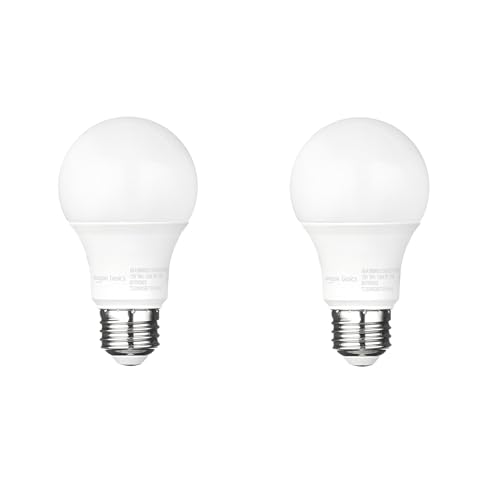
The Amazon Basics A19 Dusk to Dawn Sensor LED Light Bulb 2-Pack is an automated exterior lighting solution designed for homeowners, renters, and property managers seeking reliable outdoor illumination without daily switch toggling. Built around a standard A19 profile and an E26 medium screw base, these bulbs are tailored for porch lights, garage exteriors, patio lanterns, and pathway fixtures.
In terms of lighting output, this model operates as a 60-watt incandescent equivalent while consuming only 9 watts of electrical power. The bulb emits a 2700K soft white color temperature, producing a warm, welcoming light distribution that suits residential entryways and cozy outdoor entertaining areas. It is non-dimmable, meaning it delivers a steady, consistent output whenever ambient darkness triggers the internal daylight sensor.
Physical construction reflects a classic light bulb design, with dimensions of 2.37 by 2.37 by 4.13 inches and a lightweight 0.07-pound build. The primary feature is the built-in photocell sensor, which detects ambient light levels to automatically switch the LED on at dusk and off at dawn. The manufacturer rates the bulb for a 10,000-hour operational lifetime, equating to over 9 years of dependable use when operated for an average of 3 hours per day.
Installing the bulb requires no complex wiring, smart hubs, or programming apps. Users simply screw the E26 base into a compatible, non-dimming standard light socket and leave the main wall switch in the ON position. Daily operation is completely automatic, eliminating the need to set manual timers or remember to flip outdoor switches before nightfall.
While highly convenient, this model has specific operational limitations buyers should keep in mind. Because the bulb is strictly non-dimmable, pairing it with wall dimmers or smart dimmer switches can cause operational faults or premature failure. In addition, the photocell requires adequate exposure to natural daylight to distinguish day from night; placing the bulb inside deeply tinted, opaque, or fully covered fixtures could hinder proper sensor switching. The color temperature is also locked at 2700K soft white, leaving no option for daylight or cool white adjustments.
For anyone searching for an affordable, set-and-forget outdoor lighting upgrade, the Amazon Basics Dusk to Dawn LED 2-pack offers an excellent balance of energy savings and hands-free utility. It is an especially practical pick for porch fixtures and garage posts where dependable, warm evening illumination is needed without paying for smart-bulb complexity.
The integrated photocell sensor is calibrated to monitor ambient light levels continuously, turning the bulb on as daylight fades and shutting it off when dawn breaks. For proper operation, the controlling wall switch must remain powered on at all times so the sensor can manage current delivery to the LED elements.
To achieve reliable light detection, fixtures should allow ambient outdoor light to reach the bulb body. Highly frosted glass, solid enclosure covers, or nearby competing floodlights could occasionally cause erratic sensor switching or false daytime activation.
Consuming only 9 watts to produce the equivalent output of a traditional 60-watt incandescent lamp, this bulb significantly reduces energy usage for fixtures left running overnight. The manufacturer estimates a total lifetime savings of $55.87 per bulb compared to incandescent options over its 10,000-hour rated lifespan.
Operating at a fixed 2700K soft white temperature, the bulb is strictly non-dimmable. Buyers should install it only on standard, toggle-switched E26 fixtures to prevent electrical buzzing or component damage associated with dimmer circuits.

Decoding Bulb Dimensions, Base Types, and Fixture Clearance
Determining the correct light bulb size requires identifying the bulb shape letter, measuring the widest diameter of the glass globe, and confirming the socket base code. In North America, the numeric portion of a bulb code represents its maximum diameter measured in eighths of an inch, while base codes represent contact diameters in millimeters. Reading the stamped text on an old bulb or taking two quick physical measurements quickly reveals whether a replacement will fit within the fixture housing.
Understanding the Standard Bulb Coding System
Light bulb sizes in North America rely on an alphanumeric format combining a letter for shape with a number for width. The letter indicates the general silhouette of the glass envelope, such as classic household curves, globes, or parabolic reflectors. The following number indicates the widest point across the bulb body in eighths of an inch. For example, an A19 bulb describes an arbitrary shape measuring nineteen eighths of an inch across, equal to two and three-eighths inches.
When you encounter a bulb stamped with PAR38, the acronym refers to a parabolic aluminized reflector design, and thirty-eight represents thirty-eight eighths of an inch, or four and three-quarters inches across. Larger directional bulbs like floodlights follow this rule, allowing buyers to determine fixture compatibility quickly. If you compare general options, such as a selection of natural daylight bulbs for standard lamps, you will typically work with the familiar A19 shape. This fractional formula makes it simple to visualize bulb dimensions before purchasing.
In regions using the metric system, packaging frequently states dimensions directly in millimeters rather than eighths of an inch. Many manufacturers list both formats side by side to prevent confusion during replacement projects. Checking the packaging details or glass etching allows you to translate between fractional inches and millimeters without specialized tools. Remembering that the number strictly measures the widest point prevents buying an oversized unit that collides with the fixture frame.
Measuring and Identifying the Screw Base or Pin Type
A light bulb can have the ideal globe size, but it remains useless if the base cannot connect with the socket. Screw-in bases belong to the Edison family, using the letter E followed by the outer thread diameter in millimeters. The most common household screw base in North America is the E26 medium base, measuring twenty-six millimeters across the threads. European fixtures often utilize the E27 base, which is close in dimension but carries distinct electrical standards.
Smaller decorative fixtures like chandeliers, sconces, and ceiling fans frequently require an E12 candelabra base. The E12 standard denotes a threaded base measuring twelve millimeters in diameter, designed specifically for slim sockets that cannot accept a medium base. Some specialized models, including products like the Sailstar candelabra bulb, offer variations in base collar length to conceal the socket rim neatly inside compact sconces. Matching the threaded diameter precisely prevents cross-threading, poor electrical contact, or socket arcing.
Beyond traditional Edison screw threads, several contemporary fixtures employ pin-based connections. Two common pin variations include GU10 twist-and-lock pins, spaced ten millimeters apart, and GU24 twist-lock dual-pin mounts designed for energy-efficient ballasts. Measuring the distance between pins in millimeters ensures you pick the right standard for low-profile track lighting or recessed can retrofits. Never force a pin-based bulb into an incompatible socket, as mechanical strain can crack the housing.
Common Residential Bulb Shapes and Their Typical Dimensions
Standard bulb shapes allow quick visual identification even when stamped factory labels have worn off. The A-series represents the classic teardrop household bulb, with A19 serving as the standard format for table lamps and ceiling fixtures. A15 bulbs offer a shorter, rounder profile measuring fifteen eighths of an inch across, making them common choices for appliances, range hoods, and tight fan enclosures. Choosing an A15 over an A19 provides identical base compatibility while trimming nearly an inch off the overall height.
Candelabra and flame-shaped bulbs typically carry B or C designations, such as B10, B11, or CA10 models. The B stands for blunt-tip torpedo shapes, whereas C indicates a conical taper and CA describes a bent-tip flame. These bulbs generally measure ten or eleven eighths of an inch across and pair with E12 sockets to fit narrow glass shades. Their slender profile ensures that multiple bulbs fit comfortably side by side inside multi-arm dining room chandeliers.
Directional lighting uses reflector-style envelopes, categorized under R, BR, and PAR designations for broad or concentrated beam spreads. Bulged reflector bulbs like the BR30 measure thirty eighths of an inch and feature wide diffused lenses suitable for indoor recessed ceiling cans. Parabolic aluminized reflector bulbs, such as PAR38 outdoor floodlights, feature heavy glass lenses, integrated seals, and wider bodies designed for outdoor security coverage. Selecting between a wide flood bulb and a narrow spotlight depends directly on whether you need ambient illumination or targeted accent lighting.
How to Measure a Physical Light Bulb with Household Tools
When printed codes have faded from an old bulb, taking physical measurements with a ruler or digital caliper provides exact dimensions. Begin by switching off the electrical circuit and allowing the bulb to cool completely before unthreading it from the socket. Place the bulb flat on a stable surface alongside a standard ruler marked in eighths of an inch or millimeters. Measure across the widest section of the glass body to determine the overall envelope diameter.
To convert your physical measurement into a standard bulb code, multiply the width in inches by eight. If your tape measure reads two and a half inches across the widest point, multiply two point five by eight to arrive at twenty, corresponding to a size twenty bulb. Digital calipers simplify this process by providing direct millimeter and fractional inch readouts without manual calculations. Calipers also make measuring curved glass surfaces safer and more precise than balancing a rigid ruler.
Next, measure the base by checking directly across the outer diameter of the threaded metal shell. If the metal base measures approximately twenty-six millimeters, you have an E26 medium screw base, whereas twelve millimeters confirms an E12 candelabra base. Record the total length from the contact point to the top of the glass dome as well. Fixtures with glass globes, harp-mounted lampshades, or damp-rated outdoor covers require strict clearance along both width and length to assemble properly.
Fixture Clearance and Physical Enclosure Limitations
A bulb may feature the correct base threading while still failing to fit inside your lighting fixture due to outer envelope clearance. Table lamps frequently rely on a metal harp that supports the lampshade, creating a rigid cage around the upper half of the bulb. If you replace a slender A19 bulb with a wider bulb, the glass can press against the wire frame and tilt the shade. Measuring the vertical and horizontal space inside the lamp harp prevents unexpected contact between glass and metal framing.
Enclosed ceiling globes, flush mounts, and recessed cans present strict boundaries that cannot accommodate arbitrary bulb sizes. Installing an oversized bulb inside an enclosed glass globe restricts air circulation, causing heat buildup that can shorten the operating life of sensitive electronics. Specialized fixtures, including installations using specialized bathroom heat lamp bulbs, require dedicated ceramic sockets and large housings specifically engineered for wide reflector diameters. Measuring the interior cavity of recessed cans ensures the reflector face sits flush with the ceiling trim ring.
Outdoor wall lanterns introduce another clearance constraint with swinging glass doors and protective wire cages. When replacing outdoor security lights, verify that the bulb diameter leaves at least a half-inch of clearance from surrounding glass panels. Tight contact between a hot bulb surface and fixture glass can lead to thermal stress, condensation trapping, or mechanical failure during seasonal temperature swings. Ensuring adequate physical spacing around the bulb envelope maintains safe operating temperatures and protects the fixture materials.
Matching Modern LED Replacements to Older Fixture Enclosures
Upgrading from incandescent or halogen bulbs to solid-state LED alternatives introduces subtle physical differences in bulb construction. While older incandescent bulbs were almost entirely hollow glass, LED bulbs incorporate internal driver electronics and heat sinks near the base. This lower collar can make the neck of an LED bulb noticeably thicker than its incandescent predecessor, even when both share an A19 designation. In tight sockets with deep decorative collars, this wider neck can bottom out against the fixture rim before electrical contact occurs.
Weight is another physical factor to evaluate when sizing replacement LED hardware for older fixtures. Multi-bulb chandeliers and flexible gooseneck reading lamps can sag under the collective mass of heavy cast-aluminum LED heat sinks. Compact candelabra LEDs designed with lightweight plastic bodies prevent mechanical droop while matching traditional candle proportions. Inspecting the bulb’s neck contour and total weight helps ensure that the replacement seats securely without altering the balance of delicate fixtures.
Furthermore, enclosed fixture ratings must be verified before screwing modern LED bulbs into sealed glass diffusers or jelly-jar porch fixtures. Standard LED bulbs generate heat at their base, and trapping that thermal energy within an airtight fixture degrades internal components over time. Manufacturers clearly state on packaging whether a particular bulb size is certified for enclosed fixtures or strictly intended for open-air installations. Selecting a bulb engineered for enclosed environments ensures dependable thermal management and prevents premature driver burnout.
Special Considerations for Sensor Bulbs and Directional Reflectors
Modern functional bulbs frequently integrate specialized automation hardware that influences how and where the bulb fits. Dusk-to-dawn outdoor bulbs, such as sensor models produced by Sengled, GE, and Amazon Basics, feature integrated photocells embedded directly into the bulb body. Sizing these bulbs correctly requires checking that the sensor window remains completely exposed to ambient daylight once threaded into the lantern. If an opaque decorative metal cage or frosted glass panel shadows the photocell, the sensor may trigger false on and off cycling throughout the day.
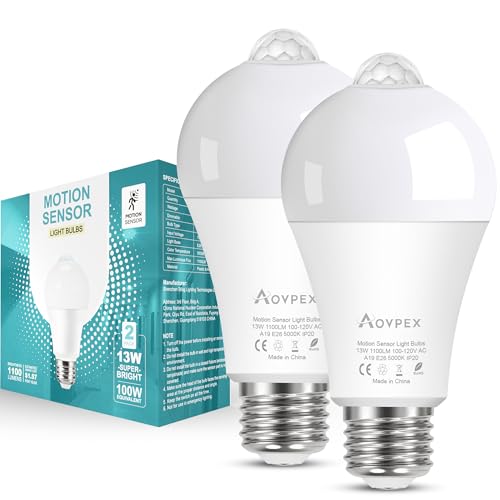
Directional security bulbs with passive infrared motion sensors present additional orientation requirements during installation. Motion sensor bulbs, such as Aovpex sensor models, detect thermal radiation and require their detection dome to point downward toward target walkways. Installing a downward-facing motion bulb inside an upside-down sconce or behind frosted glass blocks the infrared beam and renders the motion detection feature inoperable. Checking the physical length of the bulb and line of sight prevents operational issues after installation.
Directional PAR38 bulbs designed for outdoor floodlights also require careful measurement around socket weather seals. Outdoor fixtures frequently incorporate rubber gaskets around the socket rim to keep rainwater from reaching electrical contacts. A replacement reflector bulb must have a neck profile that seats firmly against this rubber gasket without leaving gaps or stripping threads. Confirming that your PAR38 or BR30 replacement bulb matches the socket depth guarantees weather resistance and prevents moisture intrusion during severe storms.
Verifying Electrical and Physical Safety Before Powering On
Before completing any bulb replacement, inspect the safety label permanently affixed to the interior of your fixture. Every certified luminaire displays a manufacturer sticker specifying maximum permissible wattage and recommended bulb types. While energy-efficient LED bulbs draw significantly less power than older incandescent filaments, exceeding recommended physical dimensions can still violate fixture thermal limits. Never force a bulb with a larger wattage equivalent or bulkier envelope into a fixture than what the label permits.
Ensure that the bulb threads smoothly into the socket without requiring excessive torque or force. If the base feels tight before threading fully down, stop immediately and verify that you have matched the correct thread pitch and diameter. Forcing an incompatible base into a socket can bend the delicate brass center contact or strip the threaded socket shell. Once the bulb sits snugly against the bottom contact tab, restore electrical power and verify that the fixture provides steady illumination without flickering or buzzing.
Taking time to decode standardized size numbers, measure base diameters in millimeters, and check fixture enclosure depth guarantees that every bulb replacement fits seamlessly. Whether upgrading decorative chandeliers to candelabra LEDs, fitting recessed cans with reflector floodlights, or swapping porch fixtures with automated sensor bulbs, accurate measurements prevent return hassles and safeguard household electrical connections. Keep a small record of your home’s socket types and bulb dimensions to make future lighting maintenance effortless and reliable.




Write Your Review
No reviews yet. Be the first to share your experience!