


Living spaces often feel uninviting or harsh simply because the installed illumination casts the wrong visual tone across the walls and furniture. Figuring out how to choose light bulb color requires looking beyond raw wattage to understand how warm or cool hues influence visual comfort throughout the day. Soft amber tones promote evening relaxation in living rooms, while crisp white illumination helps maintain focus during detailed kitchen prep or office tasks. Pairing the correct white tone with your daily habits transforms how every room feels, whether you are unwinding on the couch or preparing an early morning meal.
Fixtures like table lamps, flush mounts, and recessed cans interact differently with ceiling height and wall paint depending on the light source inside them. If you are currently positioning a reading lamp near a nightstand, selecting a gentle warm hue prevents glare that could otherwise keep your mind active at bedtime. Modern LED options also include versatile tunable white and RGB color changing features that let you toggle between functional daytime whites and relaxing evening ambiance. Evaluating socket types, fixture dimensions, and control compatibility ensures that your selected bulbs operate smoothly without unexpected flickering or control mismatches.


Pros
- Standard A19 size and E26 screw base allow immediate drop-in replacement across standard household light fixtures.
- Included remote control provides full operation without requiring smart apps, network pairing, or home internet.
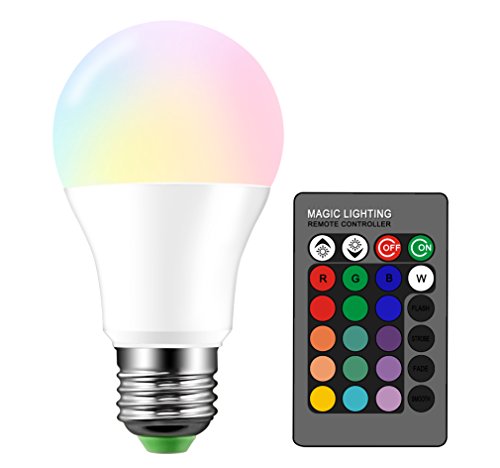
- Provides 16 color choices, warm light, and four dynamic effects with five speed adjustment settings.
- Low 6-watt power draw delivers 500 lumens, making it practical for energy-efficient mood and decorative lighting.
Cons
- 500 lumens of output is suited for accent or secondary lighting rather than bright, primary room task illumination.
- Lacks Wi-Fi, Bluetooth, or voice-assistant compatibility, requiring the physical remote control for adjustments.
- Product specifications do not list wet-location ratings, limiting recommended use to dry indoor environments.
The Droiee 6W RGBW LED Light Bulb 2-Pack is a remote-controlled, color-changing lighting solution designed for decorative and accent applications. Built in the widely used A19 profile with a standard E26 medium screw base, this bulb suits American households looking to add vibrant atmosphere or soft warm tones to table lamps, accent fixtures, and bedroom sconces. Because it operates via a dedicated remote rather than wireless networking protocols, it is especially well suited for renters, college students, and homeowners who want quick lighting customization without managing smart-home apps or Wi-Fi connections.
In terms of lighting performance, the bulb produces a listed light output of 500 lumens while consuming 6 watts of electrical power. This brightness profile positions the bulb as an accent, decorative, or mood-lighting source rather than a primary high-output task light for large spaces. Alongside its warm white setting, the bulb features RGBW capability offering 16 static color options. It also provides four dynamic color-changing modes: Flash, Strobe, Fade, and Smooth. Users can adjust the speed of dynamic sequences across five settings and fine-tune overall brightness using the remote dimming function, which the manufacturer notes is engineered for silent, flicker-free output.
The build centers on a durable outer shell housing an integrated LED module and receiver. The A19 shape matches standard everyday incandescent and LED household bulbs, ensuring trouble-free clearance inside lamp harps, clip-on shades, and enclosed decorative fixtures. With two bulbs included in the package, users can balance matching fixtures, such as dual bedside nightstands or entryway sconces, maintaining uniform color schemes across a shared room.
Setup is completely plug-and-play. You screw the bulb into any standard E26 socket, power on the fixture switch, and use the included handheld remote to control power, adjust brightness, pick individual colors, or activate color-cycling modes. There are no pairing routines, bridge devices, or software updates required. Daily operation is straightforward, making it accessible for family rooms, dorm spaces, kids' rooms, or holiday party decor where simple handheld control is preferred over phone-based operation.
Buyers should keep practical limitations in mind before purchasing. At 500 lumens, the bulb is not designed to replace high-output 60W-equivalent or 100W-equivalent primary illumination in large living rooms, kitchens, or workshops. Because control is tied to the handheld remote, losing the remote will restrict access to color and dimming adjustments. Furthermore, there is no mention of outdoor damp or wet ratings, so installation should remain indoors unless protected within a dry, suitable enclosure.
Overall, the Droiee 6W RGBW A19 LED bulb set is a practical and economical pick for anyone seeking customizable ambient color and warm light. For holiday displays, gaming setups, cozy bedroom lighting, and budget-friendly party accents, it provides reliable functionality without the complexity of smart-home ecosystems.
The Droiee RGBW LED bulb features 16 static color choices alongside warm white illumination, providing flexible options for both everyday relaxation and festive decorating. The included remote control lets you switch between static colors with dedicated buttons for instant scene selection.
For animated effects, the bulb includes four built-in dynamic lighting modes: Flash, Strobe, Fade, and Smooth. These modes transition through the color palette at varying rates, which can be further customized using five selectable speed levels to create anything from an energetic party environment to a gentle, slow-cycling ambient backdrop.
Control for the Droiee 6W RGBW bulb is handled entirely through the included handheld remote, eliminating the need for Wi-Fi routers, Bluetooth connections, or mobile applications. This standalone design ensures immediate responsiveness without network latency or connectivity drops.
The remote includes dimming controls to raise or lower brightness levels across the bulb's supported range. The manufacturer highlights silent, flicker-free dimming performance, making the bulb well suited for evening bedside use and relaxed living room settings. Traditional in-wall dimmer switches are not required, as dimming adjustments are managed directly by the bulb's internal receiver.

Pros
- Standard E26 screw base threads directly into common household lamps without extra adapters
- Includes a dedicated handheld remote for color selection, dimming, and mode adjustments without a smart device
- Supports 16 static color options, warm white lighting, and four dynamic transition modes
- Five selectable speed levels allow easy customization of transition effects
Cons
- Listed 500-lumen output is intended for decorative and accent lighting rather than whole-room primary task lighting
- Relies entirely on the included physical remote with no Wi-Fi, Bluetooth, or voice-assistant compatibility
- Does not specify an official IP weather rating, requiring sheltered or indoor fixture placement
The Droiee Dimmable E26 RGBW LED Light Bulb is a practical, color-changing lighting solution designed for accent, mood, and decorative applications throughout the home. Utilizing a standard medium screw base, this bulb suits renters, dorm students, families, and homeowners who want to add vibrant color washes or relaxing tones to their living spaces without managing smart-home setups, network pairings, or mobile applications.
In terms of lighting performance, the bulb produces a manufacturer-listed 500 lumens while drawing 6W of electrical power. This output level is ideal for localized accentuation, holiday decorating, and bedside relaxation. It integrates RGB color diodes alongside warm white LEDs, giving users access to 16 preset static colors as well as four specialized transition modes: Flash, Strobe, Fade, and Smooth. The included remote also provides five speed-adjustment levels and integrated dimming functionality, allowing users to soften the glow or dial in dynamic transitions.
The physical housing measures 2.36 inches wide by 4.41 inches high and weighs just 0.13 pounds, maintaining a familiar A-line form factor that clears most standard lamp shades and enclosed decorative fixtures. Droiee constructs the exterior with a durable outer shell intended for regular handling and thermal dissipation. The standard E26 aluminum threaded base ensures direct mechanical and electrical contact with standard North American sockets.
Installation and daily operation are exceptionally straightforward. Users simply screw the bulb into an unpowered standard E26 socket, turn on the fixture switch, and use the included handheld remote control to command color, brightness, and mode cycling. Because the bulb operates via local remote signals rather than Wi-Fi or Bluetooth, it functions reliably in locations without home internet, such as basements, dorm rooms, or seasonal holiday displays.
Buyers should keep in mind that a 500-lumen output is engineered primarily for ambient and accent lighting, meaning it will not replace high-output primary overhead lighting for task-heavy rooms. Additionally, because the bulb uses internal remote-controlled dimming circuitry, it must be powered by a standard on/off switch rather than a traditional wall dimmer to prevent electrical buzzing or operational glitches. Finally, with no explicit IP weather rating provided, any outdoor use should be restricted to fully enclosed, weather-tight fixtures.
For shoppers seeking an accessible, budget-friendly decorative bulb with hassle-free controls, the Droiee 6W RGBW LED bulb delivers dependable color versatility. Its combination of 16 static shades, warm white utility, dynamic modes, and dedicated remote dimming makes it a convenient accent light for parties, seasonal celebrations, and relaxing bedroom spaces.
The Droiee RGBW LED bulb provides 16 selectable color options directly on the remote control keypad, covering primary colors, pastels, and a dedicated warm white setting. This allows users to quickly shift between casual ambient lighting for evenings and bold, saturated shades for parties or holiday themes.
For animated effects, the bulb features four preset modes: Flash, Strobe, Fade, and Smooth. Users can fine-tune these dynamic programs using five distinct speed adjustment levels, enabling either rapid attention-grabbing transitions or slow, gentle fades between colors.
All dimming and color functions on the Droiee bulb are controlled via the included handheld remote control. The bulb features built-in multi-level dimming, allowing users to increase or decrease light intensity from across the room without leaving their chair or bed.
This bulb is engineered for use with standard, non-dimming household on/off switches. Connecting the bulb to an external in-wall dimmer switch can cause flicker, buzzing, or internal driver conflicts, as all dimming commands should be issued solely through the remote.
Featuring a standard E26 screw base, this bulb directly fits common North American table lamps, floor lamps, pendant lights, and accent fixtures. Its standard dimensions of 2.36 x 2.36 x 4.41 inches allow it to easily fit inside standard harps and lamp shades without protruding awkwardly.
While the manufacturer highlights suitability for mood and landscape applications, no formal IP weather rating is listed in the specifications. As a result, landscape or patio installations should only be carried out inside fully enclosed, sealed outdoor fixtures that protect the bulb from moisture and rain.

Pros
- Produces 820 lumens of clean 5700K white light with a solid 85 Ra color rendering index.
- Provides 120 ambient colors plus dynamic and static transition modes via the included remote.
- Features convenient auto-off timer scheduling from 1 to 23 hours and built-in setting memory.
- Installs into standard household E26 sockets without complex Wi-Fi, app, or hub setup.
Cons
- Lacks Wi-Fi, Bluetooth, or smart-home ecosystem integration, relying entirely on the physical remote.
- Dimming functions strictly through the remote control rather than traditional in-wall dimmer switches.
- The 5700K daily white setting provides cool daylight illumination rather than a warm 2700K amber glow.
The SUNNEST 10W RGBW LED light bulb is a standalone color-changing mood lamp engineered for everyday household fixtures. Designed with a standard E26 screw base, this bulb suits homeowners, renters, college students, and parents seeking colorful decorative lighting or room accents without the hassle of wireless networks or mobile applications. It combines everyday functional illumination with creative ambiance in a single screw-in format.
For daily lighting duty, the manufacturer specifies an output of 820 lumens from an internal array of 12 LED chips, designed to replace a conventional 60W incandescent bulb while drawing only 10W of power. The daily white light is calibrated to 5700K, offering a crisp, cool daylight balance paired with a color rendering index of up to 85 Ra. For accent and entertainment use, the bulb offers 120 selectable colors, supported by dynamic stage-effect modes and automated static cycling transitions to suit parties, relaxing bedroom routines, or holiday displays.
Brightness and operational control are handled entirely through the included handheld remote. Rather than using conventional wall dimmers, the bulb offers 5 remote-controlled brightness steps spanning from 100% full output down to 1% for low-level night light use. The remote also features a flexible timer function that can schedule an automatic shutoff from 1 to 23 hours in single-hour increments, while the internal memory chip preserves your chosen hue and intensity between power cycles.
Physical setup is as simple as threading the bulb into any standard E26 medium socket found in bedside lamps, floor lamps, or ceiling fixtures. Because it does not rely on 2.4 GHz Wi-Fi pairing, Bluetooth synchronization, or smart-home bridges, operation begins immediately out of the box. The manufacturer rates the bulb for up to 50,000 hours of lifespan, emphasizing low chip temperatures and reduced current per diode to maintain long-term light output.
Potential buyers should consider a few clear functional limitations before purchasing. Because dimming and color switching are managed through the remote control, installing this bulb on an existing in-wall dimmer switch can cause operational conflicts. Additionally, while the product listing describes the daily white light as warm white, the listed 5700K color temperature is technically cool daylight, which may look sharper and cooler than traditional 2700K soft white residential bulbs.
Overall, the SUNNEST 10W RGBW bulb represents a practical and budget-friendly upgrade for bedrooms, dorms, home offices, and entertainment areas. If you want versatile color options, customizable sleep timers, and solid daily brightness without dealing with smart apps or complex pairing processes, this standalone remote-controlled bulb offers solid everyday value.
The SUNNEST LED bulb incorporates RGBW architecture, combining dedicated white illumination with multicolor diodes to produce 120 selectable shades. This allows users to switch between functional daily lighting and rich decorative hues for holidays, gaming spaces, and social gatherings.
Alongside static color selection, the bulb features dynamic lighting modes designed to deliver lively stage and rhythm-oriented effects. The static cycle mode smoothly transitions through available color palettes automatically, creating a hands-free ambient backdrop for relaxation or entertaining.
All adjustments are managed via an included infrared remote control, removing the need for smartphone applications, accounts, or local home network connections. The interface includes direct access to 5 preset brightness levels ranging from full 100% illumination down to a subtle 1% night mode.
The remote also houses an intuitive timing button that adds one hour of operation per press, up to a maximum 23-hour shutdown schedule. Combined with internal memory that remembers your last color and dimming preferences, the bulb functions smoothly as a scheduled bedside reading or sleep lamp.

A Practical Guide to Selecting Light Bulb Color for Home Spaces
Selecting the right tone for home lighting depends on how you use each room and the atmosphere you want to establish throughout the day. Light appearance changes the perceived colors of furniture, affects eye fatigue during work, and supports your natural sleep patterns in the evening. Understanding the visual difference between warm amber tones, neutral whites, and crisp daylight helps you eliminate guesswork when upgrading home fixtures. A balanced approach combines appropriate color ratings with reliable socket fit, dimming compatibility, and suitable beam distribution.
Understanding Color Temperature and the Kelvin Scale
Color temperature describes the visual warmth or coolness of light produced by a bulb, measured numerically on the Kelvin scale. Kelvin ratings for residential bulbs typically range between 2200K and 6500K. Lower numbers produce a warm, reddish-orange glow reminiscent of candlelight, whereas higher numbers emit a cool, blue-tinted illumination similar to overcast outdoor daylight. Checking the Kelvin rating on product packaging provides a far more reliable guide to light tone than generic marketing terms like bright white or soft glow.
Soft white and warm white bulbs fall within the 2700K to 3000K range, making them the standard choice for most residential living areas. A 2700K bulb emits a cozy, golden light that mimics traditional incandescent filaments, softening textures and creating an inviting environment for conversation or rest. Moving up to 3000K introduces slightly crisper white undertones while retaining enough warmth to keep wood tones and warm wall paints feeling natural. These lower Kelvin options remain ideal for bedrooms, dining areas, and living rooms where relaxation is the primary objective.
Neutral white and cool white bulbs occupy the middle spectrum between 3500K and 4100K. This intermediate range strips away the heavy yellow tint of warm bulbs while avoiding the sharp blue cast found in higher color temperatures. Spaces with modern architecture, stone countertops, or cool gray paint palettes often appear sharper and cleaner under neutral white illumination. Many utility rooms, home offices, and basements benefit from this balanced color because it enhances visual clarity without feeling clinical or sterile.
Daylight bulbs typically rate between 5000K and 6500K, producing an intense, high-contrast illumination that closely resembles clear midday sun. These cool tones boost alertness and render fine details with exceptional precision, making them well-suited for craft rooms, garages, and commercial workbenches. Using daylight bulbs in cozy spaces like bedrooms or family rooms can feel overly harsh and induce visual discomfort after dark. Reserve 5000K and above for dedicated task stations where reading fine print or inspecting detailed projects takes precedence over relaxation.
Matching Light Bulb Color to Room Function and Daily Routines
Living rooms serve multiple purposes throughout the day, ranging from casual family gatherings to evening entertainment. A warm white color profile between 2700K and 3000K complements upholstery and creates an intimate, calm environment that encourages people to unwind. Overhead ceiling fixtures paired with warm accent lamps allow you to layer light sources and tailor illumination levels to specific activities. Maintaining consistent color temperatures across multiple floor and table lamps prevents visual clutter and keeps the open space cohesive.
Bedrooms require lighting schemes that actively support evening wind-down routines and circadian rhythms. Blue wavelengths emitted by higher Kelvin bulbs can suppress melatonin production, making it harder for your body to transition into restful sleep. Equipping bedside reading lamps and flush-mount fixtures with 2700K bulbs creates a gentle environment that eases eye strain before bedtime. Dedicated night-light settings on specialty bulbs, such as soft red or low-output amber tones, provide safe navigation in the dark without disrupting your sleep cycle.
Kitchens demand lighting that prioritizes food safety, precise ingredient preparation, and clean visual lines. Neutral white lighting around 3500K to 4000K helps you judge the true freshness of ingredients, detect counter spills, and read recipe directions clearly. Overhead recessed cans combined with bright under-cabinet task lights eliminate shadows across cutting boards and cooking surfaces. Balancing functional task lighting with a slightly warmer overhead fixture can keep open-concept kitchen islands feeling welcoming during casual meals.
Bathrooms benefit from clean, balanced color temperatures that reflect natural skin tones accurately during morning grooming routines. Vanity fixtures equipped with bulbs around 3000K to 3500K strike an effective balance by minimizing unflattering yellow shadows without casting harsh blue highlights. Installing bulbs along the sides of a mirror rather than directly overhead reduces dark pockets under the eyes and chin. Checking moisture ratings is also essential, ensuring that bulbs installed near showers or steam vents carry appropriate damp-location listings.
Home offices, study spaces, and reading corners require crisp light that prevents drowsiness and keeps text sharp on printed pages or computer screens. Neutral white to cool daylight tones between 4000K and 5000K stimulate alertness and sustain concentration over long work sessions. When installing specialized task lighting or hanging decorative pendant lights over a dedicated work desk, coordinate the bulb color with your ambient ceiling fixtures. Proper alignment between ambient and task color temperatures prevents your eyes from constantly readjusting as you shift your gaze across the desk.
The Role of Color Rendering Index and Brightness Levels
Color Rendering Index, commonly abbreviated as CRI, measures how accurately an artificial light source reveals the true colors of objects compared to natural daylight. The scale runs from 0 to 100, with scores above 80 considered standard for quality residential LED bulbs. High-CRI bulbs scoring 90 or above preserve the vibrant hues of fabrics, artwork, and natural wood grain that lower-rated bulbs might make look washed out. While color temperature determines the warmth or coolness of the beam, CRI determines the richness and clarity of the colors illuminated underneath it.
Food presentation, makeup application, and artistic hobbies reveal the practical value of high color rendering in everyday living. A kitchen illuminated by low-CRI bulbs may give fresh produce an unappealing, grayish cast even if the color temperature matches the recommended Kelvin range. Similarly, matching clothing colors or applying makeup under poor rendering can lead to surprising discrepancies once you step outdoors into direct sunlight. Checking manufacturer packaging for a CRI rating of 85 or 90 helps ensure your living space looks vibrant and true to life.
Lumens and Kelvins measure entirely distinct attributes of a light bulb, though shoppers frequently confuse the two concepts. Lumens indicate the total volume of visible light produced, representing the true brightness of the bulb regardless of its color. Kelvin ratings indicate only the visual tone of that light, whether amber, pure white, or cool blue. A high-lumen bulb with a warm 2700K rating provides ample brightness for a large room while still maintaining a warm, comfortable ambiance that feels gentle on the eyes.
Evaluating Tunable White and Multicolor LED Bulbs
Tunable white bulbs combine warm and cool white LED chips inside a single envelope, allowing you to adjust color temperatures on demand. These systems let you shift from energizing 5000K daylight during morning work hours to a restful 2700K warm white as dusk approaches. Selecting a bulb with a broad adjustable range between 2700K and 6000K gives you the flexibility to adapt lighting to changing seasonal patterns or household routines. This versatility eliminates the need to commit permanently to a single static color temperature in multipurpose living areas.
Multicolor RGB and RGBW bulbs introduce decorative hues alongside functional white lighting for entertainment, holiday displays, and accent accents. Standard RGB bulbs blend red, green, and blue diodes to generate colors, but dedicated RGBW designs include independent white diodes for cleaner everyday illumination. Bulbs like the Sylvania LED Color Changing Light Bulb allow users to cycle through vibrant primary colors and standard whites using simple switch toggles without requiring separate hubs. Models such as the DUSKTEC LED Color Changing Light Bulb feature high 90 CRI tunable white chips alongside vivid RGB colors and specialized sleep modes that transition into soft night-light settings.
Control methods vary widely across color changing options, influencing ease of use and long-term convenience in different household setups. Basic models from brands like ILC and Droiee rely on compact infrared remotes to switch between static hues, flash modes, and brightness presets without internet connections. Options like the NAWVACE LED Color Changing Light Bulb with Remote offer dedicated timer sequences and memory functions that restore your previous color selection after power cycles. Smart bulbs, including the Govee Smart Light Bulbs, connect to mobile apps and voice platforms, enabling music synchronization, automated schedules, and multi-bulb group controls across a home network.
Decorative colored illumination excels at creating thematic ambiance, but it should not replace dedicated white lighting for demanding visual tasks. Saturated red, green, or blue light provides dramatic visual flair for social gatherings or holiday displays, yet it significantly reduces visual acuity when reading or cooking. Many compact color bulbs, including 5W or 6W models from SUNNEST and Droiee, deliver between 450 and 820 lumens, which works well for accent lamps but may leave large rooms under-illuminated if used alone. Layering color changing bulbs into secondary fixtures while keeping primary fixtures focused on balanced white tones maintains both style and everyday functionality.
Fixture Compatibility, Dimmers, and Electrical Considerations
Socket sizes and bulb shapes must align with fixture physical dimensions to ensure safe operation and even light output. Standard residential fixtures in North America most commonly use the E26 medium screw base, which fits typical A19 household bulbs. Smaller decorative fixtures, enclosed globes, and ceiling fan sockets often require compact A15 bulbs, such as the ILC RGB LED Light Bulb, to prevent glass envelopes from touching fixture shades. Verifying base type, physical bulb diameter, and fixture clearance before purchase prevents socket strain and ensures the bulb fits securely inside the housing.
Compatibility with wall dimmer switches is a critical consideration when upgrading to color changing or specialty LED bulbs. Most remote-controlled and smart color bulbs contain internal driver circuits designed to receive full, steady line voltage at all times. Installing these units on standard wall-mounted triac dimmers can cause severe flickering, audible buzzing, or premature circuit failure because the switch chops electrical voltage. If you intend to use remote-controlled or app-based dimming, wire the fixture to a standard on-off wall switch and perform all light adjustments through the included remote or mobile application.
Enclosed fixtures and wet environments impose specific thermal and environmental demands on LED bulb construction. Enclosed glass globes trap heat around internal electronics, which can degrade color consistency and shorten component life if bulbs lack proper thermal management. Maintaining fixtures through regular dust removal and cleaning a brass chandelier or pendant housing ensures proper ventilation and keeps light transmission clear. Always confirm that bulbs intended for porches, entryways, or landscape fixtures carry explicit outdoor or damp-location suitability ratings to resist moisture ingress and temperature fluctuations safely.
Practical Strategies for Coordinating and Testing Bulb Colors
Testing a single bulb in your actual home environment is the most dependable way to verify how wall paint, flooring, and natural sunlight interact with a specific color temperature. Paint colors with warm undertones look washed out or dingy under cool daylight bulbs, while cool gray or blue walls can take on an unappealing yellowish cast under 2700K lighting. Buying one trial bulb and observing its appearance during morning daylight, afternoon shade, and evening darkness reveals nuances that showroom displays cannot reproduce. This test prevents the costly mistake of repurchasing multiple multi-packs after outfitting an entire living room in an unflattering tone.
Mixing color temperatures within a single shared sightline requires intentional planning to prevent jarring visual contrasts. Open-concept floor plans where kitchens, dining areas, and living rooms flow together without walls look best when ambient light sources stay within 500K of each other. For example, pairing a 3000K overhead pendant with 2700K floor lamps creates a subtle, harmonious layer of illumination without visible color clashing. Avoid placing a harsh 5000K daylight fixture in direct visual contact with a 2700K warm lamp, as the stark boundary draws attention to the mismatched hues rather than the room decor.
Finalizing your lighting plan involves balancing personal comfort, daily task requirements, and fixture specifications across your living space. Start by identifying the primary task performed in each zone, select an appropriate Kelvin rating that supports those visual demands, and verify that socket and control configurations match manufacturer instructions. Whether you choose static warm white bulbs for cozy gathering spots or versatile tunable LEDs that adapt from sunrise to sunset, deliberate color choices bring clarity, warmth, and balance into every corner of your home.




Write Your Review
No reviews yet. Be the first to share your experience!