


Walking down a hardware aisle to replace a burned-out lamp often leads to unexpected confusion. Most homeowners wonder which watt light bulb to use when their primary goal is simply getting the right balance of brightness and comfort. Traditional incandescent lamps made power draw synonymous with illumination levels, but modern LED technology has completely separated electrical consumption from visual output. Selecting an appropriate bulb now requires evaluating lumens, fixture thermal limits, and the visual demands of your daily routine. Taking time to match the wattage to your fixture prevents dangerous electrical overloads while ensuring your space receives adequate illumination.
Different activities demand tailored illumination levels to prevent eyestrain while keeping living spaces cozy and functional. When positioning a bedside reading lamp, an overpowering beam disrupts evening relaxation, whereas an underpowered bulb makes reading small print frustrating. Understanding how wattage ratings interact with light output and color temperature allows you to equip every fixture safely. This balanced approach protects your light fixtures from excessive heat buildup and eliminates common annoyances like flickering circuits and harsh overhead glare.

Pros
- Crisp 5000K daylight white provides clear, alert visibility for reading, cooking, and work areas
- Standard E26 base and A19 profile fit directly into everyday lamps, vanity fixtures, and ceiling sockets
- Efficient 9W power draw produces 800 lumens, substantially lowering energy use compared to 60W incandescents
- Listed 15,000+ hour rated lifespan helps minimize routine household maintenance
Cons
- Non-dimmable circuitry makes these bulbs incompatible with wall dimmers or variable brightness controls
- Cool 5000K color temperature may feel too stark for cozy living areas or bedrooms seeking warm ambient glow
The evelor A19 LED light bulb 6-pack is designed for budget-conscious homeowners, renters, and property managers seeking an efficient replacement for standard 60-watt incandescent bulbs. Built around a familiar A19 shape and standard E26 screw base, this multi-pack suits everyday fixtures across bedrooms, home offices, laundry rooms, and utility spaces. For shoppers looking to outfit multiple fixtures in one go with clean, vibrant illumination, this pack provides a practical, straightforward solution.
In terms of lighting output, each bulb generates 800 lumens of light while consuming only 9 watts of electricity. The 5000K daylight color temperature produces a crisp, alert ambiance that excels in task-focused environments like work desks, kitchen counters, or craft rooms. With an 80+ Color Rendering Index (CRI), these bulbs render household colors naturally, while the integrated no-flicker LED beads promote steady, eye-friendly performance across standard residential lighting fixtures.
Physically, each bulb measures approximately 2.36 inches in diameter by 4.17 inches in height, matching the classic A19 form factor. Operating on standard 110 to 130VAC household current, the E26 medium screw base threads easily into standard floor lamps, desk lamps, pendant lights, and ceiling fixtures. With a manufacturer-listed lifespan of 15,000+ hours, these bulbs are engineered to provide years of dependable service before requiring maintenance or replacement.
Installing these bulbs is as simple as threading them into a compatible E26 socket once power to the fixture has been turned off. Because these bulbs are strictly non-dimmable, they should be connected only to standard on-off switches. Pairing non-dimmable LED bulbs with wall dimmers can cause erratic performance, buzzing, or reduced bulb life, so keeping them on basic toggle or rocker switches is recommended for long-term reliability.
While the daylight 5000K tone and 800-lumen output are beneficial for focused tasks, the cool white hue may feel overly clinical for living rooms or bedrooms where warmer, cozier light is preferred. Additionally, although the product description mentions outdoor spaces such as porches and patios, these bulbs do not carry an explicit waterproof or wet-location IP rating. Consequently, any outdoor use should be restricted to weather-protected, enclosed, or covered fixtures.
For shoppers seeking affordable, energy-efficient task lighting that threads directly into standard household lamps, the evelor A19 5000K 6-pack delivers dependable clarity. It stands out as an economical, hassle-free upgrade for kitchens, basements, laundry areas, and workspaces where crisp daylight and consistent brightness are paramount.
These evelor bulbs emit a 5000K daylight white color temperature, which mimics the cool, bright feel of natural noon daylight. Delivering 800 lumens per bulb, they supply ample illumination for reading, cooking, crafting, and organizing without the yellowish cast of warm white incandescent bulbs.
The integrated 80+ CRI ensures that interior furnishings, clothing, and everyday items appear vibrant and true to color. For spaces where visual clarity and focus are top priorities, such as home offices, workshops, and vanity areas, this 5000K balance delivers sharp, functional light.
Featuring a standard A19 profile and an E26 medium screw base, these bulbs are physically compatible with standard North American light fixtures operating between 110 and 130VAC. They screw easily into table lamps, pendant shades, wall sconces, and ceiling mount fixtures that accept medium-base bulbs.
These bulbs are strictly non-dimmable, meaning they must be used on standard on-off wall switches rather than dimming circuits. Always confirm your fixture socket type and verify that your switch provides full on-off power to ensure consistent, stable operation.

Pros
- Standard E26 base installs quickly into common 110-130VAC lamps, pendants, and flush-mount fixtures
- 9W power consumption produces 800 lumens, offering an efficient alternative to traditional 60W bulbs
- 5000K daylight color temperature provides crisp, alert lighting ideal for task areas and home offices
- Rated lifespan of 15,000+ hours helps minimize ongoing maintenance across residential and workspace settings
Cons
- Non-dimmable design makes these bulbs incompatible with standard wall dimmer switches
- 5000K cool daylight hue is not suited for users seeking soft, warm, amber ambient light for relaxation
- Rated 80 CRI is suitable for basic everyday use but may not satisfy critical color-accurate art or studio needs
The Ruboffcs 6-Pack A19 LED Light Bulbs provide an everyday lighting upgrade for homeowners, renters, and property managers seeking reliable, general-purpose illumination. Built to standard A19 dimensions with an E26 medium screw base, these bulbs serve as straightforward replacements for standard 60-watt incandescent bulbs. They work well for residential spaces like home offices, kitchens, and basements, as well as light commercial spaces including retail backrooms, cafes, and utility closets where cool, functional visibility is required.
In terms of lighting output, each bulb produces 800 lumens of light while drawing 9 watts of power, operating on a standard 110-130VAC electrical range. The listed color temperature is 5000K daylight, which provides a clean, crisp, cool-white appearance similar to midday sunlight. With a Color Rendering Index of 80 CRI, these bulbs offer balanced color clarity for reading, meal prep, and office work. They feature an instant-on design that reaches full illumination immediately at the switch without noticeable warm-up delay or flicker.
The physical build follows the traditional A19 bulb profile, pairing a frosted diffuser globe with a durable base housing designed to reduce direct glare. Ruboffcs rates these LED bulbs for an operating life of 15,000+ hours, significantly extending replacement intervals compared to short-lived incandescent options. The integrated driver is engineered for steady 110-130VAC current delivery, supporting stable operation in compatible open household fixtures and everyday indoor lamps.
Installing the bulbs requires no special tools or technical expertise. The E26 medium screw base threads smoothly into standard American light sockets, including table lamps, floor lamps, ceiling pendants, and open vanity fixtures. Because the six bulbs come packaged together, outfitting multiple rooms or keeping spare units on hand for quick swaps is simple and convenient. Daily handling is uncomplicated, requiring only a basic standard wall switch or lamp turn-knob for operation.
A decisive limitation of this model is its non-dimmable construction; attempting to use these bulbs with wall dimmers or electronic dimming controls can cause buzzing, strobing, or premature bulb failure. Additionally, the 5000K daylight color profile delivers a distinctly cool, alertness-promoting white tone that may feel too clinical for cozy bedroom environments or relaxing living spaces. For buyers seeking affordable, high-efficiency task lighting for workshops, laundry rooms, home offices, and kitchens, this 6-pack represents a sensible, budget-friendly lighting choice.
The Ruboffcs A19 LED bulbs feature a 5000K daylight color temperature, producing a cool, crisp white light that resembles natural midday sunlight. Unlike warm white 2700K or 3000K bulbs that emit a yellow, relaxing glow, a 5000K light source promotes alert visual focus and sharp contrast.
This color profile makes these bulbs especially useful in task-oriented environments such as home offices, kitchens, garages, laundry rooms, and basements. Buyers desiring warm, cozy ambient light for evening relaxation in bedrooms or family rooms should consider warmer alternatives instead.
No, these Ruboffcs A19 LED bulbs are strictly non-dimmable. They are engineered to operate exclusively on standard on/off switches connected to standard 110-130VAC electrical circuits.
Installing these bulbs on TRIAC, smart, or rotary wall dimmers is not recommended. Connecting non-dimmable LED bulbs to a dimmer circuit can result in visible flickering, audible buzzing, erratic behavior, or permanent damage to the bulb's internal driver.
These bulbs utilize a standard E26 medium screw base, which is the most widely used residential socket size in North America. They screw directly into everyday household fixtures, including ceiling fixtures, floor lamps, desk lamps, wall sconces, and hanging pendants designed for 110-130VAC systems.
The standard A19 shape ensures broad physical clearance inside typical lamp shades and open light fixtures, making them a direct physical replacement for traditional 60W incandescent household bulbs.


Pros
- Built-in light sensor provides automatic exterior illumination without requiring phone apps, timers, or Wi-Fi
- High 90+ CRI rating ensures clear, vivid color accuracy across driveways, porches, and outdoor walkways
- Standard E26 base allows for quick, tool-free installation into existing household light fixtures
- Low 11-watt power draw delivers substantial 1200-lumen output to replace inefficient 100-watt traditional bulbs
Cons
- Fixed 5000K daylight white color profile cannot be adjusted to warm or soft white tones
- Internal sensor requires unobstructed exposure to ambient light and may misread daylight inside heavily tinted or shielded fixtures
- Operates on standard continuous electrical power and is not designed for traditional dimmer switches
The Brightever 4-Pack Dusk to Dawn LED Light Bulbs provide an automated lighting solution designed to replace standard 100-watt incandescent bulbs in exterior and interior fixtures. Built in the standard A19 profile with a standard E26 screw base, each bulb integrates a smart ambient light sensor directly into its housing. This design is particularly well suited for homeowners, renters, and property managers who want reliable porch, driveway, and patio security lighting without the hassle of setting up Wi-Fi networks, hubs, or mechanical timers.
In terms of real-world visibility, these bulbs deliver a manufacturer-rated 1200 lumens of light output while drawing only 11 watts of power. Emitting a 5000K daylight white color temperature, the light produced is crisp, cool, and alert, making it effective for illuminating dark perimeters, driveways, and entry points. The manufacturer specifies a high color rendering index of 90+ CRI, which helps outdoor colors, structures, and steps appear clear and distinct. The lighting design is also engineered to avoid flicker, flash, and distracting glare during normal operation.
The build centers around everyday residential convenience and environmental durability. Each bulb houses an automatic light sensor that reads ambient lighting conditions, switching the light on when dusk arrives and shutting it off when morning daylight returns. The components are manufactured without mercury, lead, ultraviolet, or infrared emissions, ensuring dependable operation across damp or dry residential outdoor fixtures such as porch lanterns, carriage lights, garage sconces, and courtyard mounts.
Installation is as straightforward as replacing any conventional household bulb. Users simply screw the E26 base into an existing light socket and leave the controlling wall switch turned on continuously so the internal sensor can manage power delivery. Because operation is completely self-contained within the bulb, there are no companion apps to configure, no pairing sequences, and no external photocell wiring required.
Prospective buyers should be aware of a few practical limitations inherent to photocell bulbs. Because the automatic functionality depends on detecting surrounding light levels, positioning these bulbs inside deeply recessed, heavily tinted, or fully enclosed opaque fixtures can interfere with the sensor, causing the bulb to stay on during daytime hours. In addition, the 5000K daylight white tone is crisp and cool, which may feel stark for users seeking a warm, soft white ambient glow, and these bulbs are not compatible with wall dimmers.
For homeowners and property owners seeking hands-free perimeter illumination, the Brightever Dusk to Dawn A19 LED pack offers a practical combination of bright 1200-lumen output, high CRI clarity, and automated convenience. It is an efficient, set-and-forget option for anyone wanting to maintain a well-lit home exterior without investing in smart switches or complex lighting automation systems.
The Brightever dusk-to-dawn bulbs utilize a built-in optical sensor that measures ambient illumination levels in the surrounding environment. When ambient light fades at sunset, the internal sensor automatically activates the LED array, and when morning sunlight returns, it powers down without user intervention.
To ensure proper automatic cycling, the wall switch supplying the fixture must remain in the on position. Users should also ensure that the bulb is placed in a clear or semi-clear fixture where daylight can reach the sensor, avoiding overlapping beams from neighboring fixtures that might accidentally cause the sensor to turn off at night.
Each bulb in this 4-pack is rated to produce 1200 lumens, providing robust illumination suitable for exterior security, entryways, and task areas. The listed 5000K daylight white color temperature delivers a clean, modern aesthetic with a cool, vibrant cast that aids in spatial recognition after dark.
With a rated Color Rendering Index of 90+ CRI, these bulbs render colors more accurately and vividly than standard 80 CRI utility bulbs. This makes outdoor paths, landscaping details, house numbers, and entry features noticeably easier to identify in nighttime conditions.
Operating at 11 watts, these bulbs serve as a direct energy-efficient alternative to traditional 100-watt incandescent lamps. With a manufacturer-rated lifespan exceeding 25,000 hours, they provide long-lasting performance that reduces the frequency of ladder climbs and exterior maintenance.
The standard E26 medium base ensures compatibility with the vast majority of standard household outdoor lanterns, post lights, and wall sconces. However, because the internal light sensor requires constant, stable line voltage, these bulbs are not designed for use on dimmer circuits or with rheostat wall controls.
Pros
- Built-in dusk-to-dawn sensor eliminates the need for manual switch flipping, external timers, or smart hubs.
- Low 9W electrical consumption delivers noticeable power savings while replacing 60W incandescent bulbs.
- Warm 2700K soft white output offers a comfortable, glare-free ambiance for residential entryways.
- Standard A19 profile and E26 base make installation as simple as screwing in a traditional bulb.
Cons
- Non-dimmable design makes it unsuitable for fixtures connected to wall dimmers or variable-power switches.
- Fixed 2700K color temperature cannot be adjusted to daylight or cool white tones.
- Sensor performance requires adequate ambient light exposure, which may be affected by heavily tinted or deep enclosed fixtures.
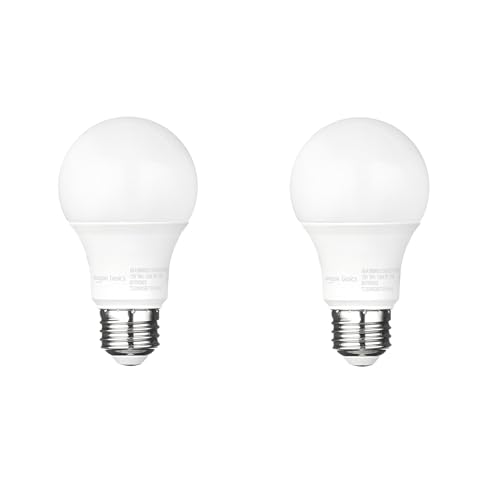
The Amazon Basics A19 Dusk to Dawn Sensor LED Light Bulb 2-Pack is an automated exterior lighting solution designed for homeowners, renters, and property managers seeking reliable outdoor illumination without daily switch toggling. Built around a standard A19 profile and an E26 medium screw base, these bulbs are tailored for porch lights, garage exteriors, patio lanterns, and pathway fixtures.
In terms of lighting output, this model operates as a 60-watt incandescent equivalent while consuming only 9 watts of electrical power. The bulb emits a 2700K soft white color temperature, producing a warm, welcoming light distribution that suits residential entryways and cozy outdoor entertaining areas. It is non-dimmable, meaning it delivers a steady, consistent output whenever ambient darkness triggers the internal daylight sensor.
Physical construction reflects a classic light bulb design, with dimensions of 2.37 by 2.37 by 4.13 inches and a lightweight 0.07-pound build. The primary feature is the built-in photocell sensor, which detects ambient light levels to automatically switch the LED on at dusk and off at dawn. The manufacturer rates the bulb for a 10,000-hour operational lifetime, equating to over 9 years of dependable use when operated for an average of 3 hours per day.
Installing the bulb requires no complex wiring, smart hubs, or programming apps. Users simply screw the E26 base into a compatible, non-dimming standard light socket and leave the main wall switch in the ON position. Daily operation is completely automatic, eliminating the need to set manual timers or remember to flip outdoor switches before nightfall.
While highly convenient, this model has specific operational limitations buyers should keep in mind. Because the bulb is strictly non-dimmable, pairing it with wall dimmers or smart dimmer switches can cause operational faults or premature failure. In addition, the photocell requires adequate exposure to natural daylight to distinguish day from night; placing the bulb inside deeply tinted, opaque, or fully covered fixtures could hinder proper sensor switching. The color temperature is also locked at 2700K soft white, leaving no option for daylight or cool white adjustments.
For anyone searching for an affordable, set-and-forget outdoor lighting upgrade, the Amazon Basics Dusk to Dawn LED 2-pack offers an excellent balance of energy savings and hands-free utility. It is an especially practical pick for porch fixtures and garage posts where dependable, warm evening illumination is needed without paying for smart-bulb complexity.
The integrated photocell sensor is calibrated to monitor ambient light levels continuously, turning the bulb on as daylight fades and shutting it off when dawn breaks. For proper operation, the controlling wall switch must remain powered on at all times so the sensor can manage current delivery to the LED elements.
To achieve reliable light detection, fixtures should allow ambient outdoor light to reach the bulb body. Highly frosted glass, solid enclosure covers, or nearby competing floodlights could occasionally cause erratic sensor switching or false daytime activation.
Consuming only 9 watts to produce the equivalent output of a traditional 60-watt incandescent lamp, this bulb significantly reduces energy usage for fixtures left running overnight. The manufacturer estimates a total lifetime savings of $55.87 per bulb compared to incandescent options over its 10,000-hour rated lifespan.
Operating at a fixed 2700K soft white temperature, the bulb is strictly non-dimmable. Buyers should install it only on standard, toggle-switched E26 fixtures to prevent electrical buzzing or component damage associated with dimmer circuits.

How to Determine Which Watt Light Bulb To Use for Home Fixtures
Deciding which watt light bulb to use requires matching your fixture’s maximum electrical limit with the actual lumen output you need for the room. For standard residential lighting, a 60-watt equivalent bulb (consuming approximately 9 watts in modern LED design) delivers roughly 800 lumens and serves as the baseline for table lamps, hallways, and living rooms. Higher-demand tasks, workbenches, and outdoor security fixtures typically call for 100-watt equivalent bulbs producing 1,000 to 1,200 lumens while consuming roughly 11 to 12 watts. Checking the safety label on your lamp or ceiling fixture ensures you never exceed its structural electrical threshold while securing adequate light for daily activities.
Understanding Actual Wattage Versus Incandescent Wattage Equivalents
Wattage strictly measures electrical power consumption rather than visual brightness. Historically, incandescent technology forced buyers to rely on wattage as an informal proxy for how bright a bulb would shine. A standard 60-watt incandescent bulb pulled 60 watts of electrical energy from the wall while radiating substantial amounts of wasted heat into the surrounding air. When energy-efficient lighting arrived, manufacturers introduced wattage equivalence to help consumers transition between technologies without confusion. That familiar reference point still guides homeowners who remember the illumination levels of traditional incandescent lamps.
Modern LED bulbs consume significantly less electricity to deliver the same visual impact. A typical 9-watt LED bulb, such as the standard A19 options from evelor or Amazon Basics, produces illumination comparable to a classic 60-watt incandescent. Higher-output models, like the 11-watt or 12-watt sensor bulbs from Brightever and Aukora, generate light comparable to older 100-watt bulbs. Looking at the actual power draw tells you how much energy the lamp pulls from your electrical system, while the equivalent rating provides a familiar reference for brightness. Separating these two concepts prevents confusion when reading contemporary product packaging.
Translating Watts to Lumens for Every Living Space
Lumens measure the actual volume of visible light emitted by a light source. Measuring light in lumens rather than watts gives an objective assessment of how brightly a space will be illuminated. A bulb producing around 450 lumens equates roughly to an old 40-watt bulb, creating soft accent lighting suitable for relaxing evenings. Standard everyday living areas generally rely on 800 lumens, which matches the output of a 60-watt equivalent bulb. Workspaces, kitchens, and reading nooks frequently require 1,100 to 1,600 lumens, matching older 75-watt and 100-watt incandescent outputs.
Relying solely on wattage can lead to underlit work areas or uncomfortably harsh living rooms. When illuminating a functional desk or food prep counter, focusing on bulbs that deliver at least 800 to 1,200 lumens ensures clear visibility without casting heavy shadows. In contrast, accent lights and nightstand fixtures benefit from gentle 450-lumen outputs that avoid overwhelming tired eyes. Modern LED options list their lumen output clearly on the front of the packaging alongside their electrical draw. Comparing lumen ratings across different bulbs helps you select the exact illumination required for each specific activity.
Reading Fixture Maximum Wattage Ratings Safely
Every lighting fixture carries a manufacturer safety sticker indicating its maximum wattage rating. This electrical rating reflects the physical heat limits of the internal wiring, socket materials, and fixture housing. Installing an incandescent bulb that exceeds this stated threshold creates severe thermal risks, including melted wire insulation, scorching, and potential house fires. Fixture safety ratings were originally established when hot-burning incandescent filaments were the universal standard. Even though low-energy bulbs run much cooler, respecting the underlying physical design of the fixture remains vital for safety.
When installing pendant fixtures or table lamps, checking the socket label is the primary safety check before inserting any bulb. A fixture rated for a maximum of 60 watts can safely host a 9-watt LED that produces 60-watt equivalent brightness. Because that LED consumes only 9 watts of actual electricity, it operates well below the fixture’s 60-watt thermal and electrical threshold. You could even install a 12-watt LED rated as a 100-watt equivalent in that same 60-watt socket without exceeding its electrical capacity. However, you must verify that the bulb physically fits inside the enclosure and receives sufficient airflow to keep its internal driver cool.
Matching Wattage and Brightness to Specific Rooms
Every room inside a home serves distinct functional purposes that require different lighting intensities. In living rooms and family areas, layered lighting works best by combining multiple 60-watt equivalent bulbs across several lamps rather than relying on a single intense overhead fixture. Bedrooms generally benefit from softer illumination around 450 to 800 lumens per light source to encourage relaxation and winding down before sleep. Distributing moderate-wattage bulbs across multiple points creates a balanced ambient environment without harsh contrast.
Kitchens, bathrooms, and utility areas demand substantially higher overall visibility to support detailed daily tasks. A central kitchen fixture often requires 1,200 to 2,500 total lumens, which can be accomplished by combining multiple 60-watt equivalent bulbs or using higher-output 100-watt equivalent models. Bathroom vanity bars typically utilize several 60-watt equivalent bulbs spaced evenly around the mirror to eliminate shadows across the face. Home offices also benefit from focused task lighting utilizing 800-lumen to 1,000-lumen sources positioned directly over the primary desk surface.
Color Temperature Considerations Alongside Wattage Selection
Wattage determines power consumption, but color temperature dictates how warm or cool the emitted light appears to the human eye. Color temperature is measured on the Kelvin scale, ranging from warm yellow tones around 2700K to crisp daylight tones at 5000K or 6000K. A 60-watt equivalent bulb at 2700K, like the soft white options from Amazon Basics and evelor, generates a cozy, relaxing ambiance reminiscent of traditional incandescent filaments. This warm spectrum makes it particularly well suited for living rooms, dining spaces, and bedrooms where comfort takes priority.
Conversely, daylight bulbs rated at 5000K, such as the Ruboffcs and Brightever models, cast a cool, vibrant light that mimics midday sun. Pairing higher brightness with a 5000K daylight hue enhances focus and alertness, making it ideal for utility rooms, basements, and detailed hobby stations. A high-wattage bulb in a cool color temperature can feel clinical or intense if installed in an intimate gathering area. Balancing both the wattage equivalent and the Kelvin rating ensures that the light provides sufficient clarity while maintaining an appealing visual atmosphere.
Exterior and Outdoor Lighting Requirements
Outdoor lighting balances curb appeal, nocturnal security, and personal safety along walkways and entrances. Standard front porch fixtures often utilize 60-watt equivalent bulbs to deliver around 800 lumens of welcoming illumination without blinding approaching guests. Driveways, garage perimeters, and large backyard areas typically call for 100-watt equivalent options that deliver 1,000 to 1,200 lumens for broader visual coverage. Choosing higher output levels outdoors helps illuminate dark property corners and deters unwanted nocturnal visitors.
Modern outdoor setups often incorporate automatic illumination controls to save energy and simplify maintenance. Options like the Aukora 12-watt cool white sensor bulb and the Brightever 11-watt daylight bulb feature built-in photoelectric sensors that turn on at dusk and shut off at dawn. For patios and porches where insects congregate around bright light sources, specialized amber options like the Gonhom 10-watt bug light bulb provide 100-watt equivalent output while emitting wavelengths that naturally repel flying pests. Ensuring your outdoor bulbs are rated for exterior enclosures prevents moisture damage and premature electronic failure.
Dimmer Switches and Circuit Compatibility Challenges
Selecting a light bulb becomes more complex when the fixture is connected to a wall dimmer switch. Older incandescent dimmers were engineered to handle heavy electrical loads, often requiring a minimum load of 40 watts across the entire circuit to function smoothly. When you install low-wattage LED bulbs that draw only 9 watts, the circuit may struggle to regulate voltage properly. This incompatibility frequently results in rapid flickering, buzzing sounds from the fixture, or an inability to turn the light completely off.
Many standard entry-level LED bulbs, including basic models from evelor and Amazon Basics, are explicitly labeled as non-dimmable. Placing a non-dimmable LED onto a dimmed circuit risks damaging the bulb’s internal driver circuitry and can void the manufacturer warranty. If you plan to adjust brightness levels throughout the day, always verify that the product packaging states dimmable capability. Furthermore, pairing LED bulbs with modern LED-compatible dimmer switches ensures seamless dimming without irritating electronic buzzing or unexpected dropouts.
Multi-Bulb Fixtures and Total Wattage Calculations
Fixtures that house multiple sockets require careful mathematical calculation to prevent overwhelming the room with excess glare. When maintaining multi-bulb chandeliers, bathroom vanity bars, or multi-head track lights, each individual bulb contributes to the total cumulative illumination. A chandelier featuring five sockets filled with 60-watt equivalent bulbs will generate 4,000 total lumens of light. In a modest dining room, that cumulative output can easily become harsh and blinding unless controlled by a dimmer or scaled back to lower-wattage equivalents.
You must also check the fixture’s cumulative electrical rating printed near the central junction or wiring housing. While modern 9-watt LEDs will rarely exceed the electrical rating of a multi-socket chandelier, heat dissipation remains a factor inside compact glass globes. Opting for 40-watt equivalent bulbs producing roughly 450 lumens each is often the ideal solution for fixtures containing four or more sockets. This approach provides gentle, glare-free light spread evenly across the dining table or living area while remaining well within safe operating limits.
Practical Steps for Replacing an Existing Bulb
Replacing a burned-out bulb begins with turning off the wall switch and allowing the existing bulb to cool down completely before touching it. Unscrew the spent bulb carefully and examine the markings printed around the ceramic neck or metal base. Most residential fixtures utilize a standard E26 medium screw base, which matches common A19 household bulbs. Verify the socket label inside the fixture shade to identify the maximum permissible wattage before selecting your new replacement.
Once you know the fixture limits and socket type, choose an LED bulb whose equivalent rating meets your brightness needs while its actual wattage stays below the socket maximum. Inspect the bulb shape to confirm that it fits comfortably inside the shade or glass enclosure without contacting surrounding materials. Thread the new bulb smoothly into the socket until snug, taking care not to overtighten and crack the socket casing. Restoring power and testing the fixture confirms that your newly chosen wattage delivers the exact brightness, warmth, and visual comfort you intended.
Summary of Choosing the Right Bulb Wattage
Selecting the right bulb comes down to separating electrical consumption from illumination output while respecting fixture safety limits. For everyday ambient lighting in table lamps and living areas, a 60-watt equivalent LED drawing roughly 9 watts provides a reliable 800-lumen baseline. High-demand workspaces, security fixtures, and utility zones benefit from 100-watt equivalent bulbs delivering 1,000 to 1,200 lumens of bright light. Taking a few moments to inspect socket labels, evaluate room needs, and verify dimming compatibility guarantees a safe, beautifully illuminated home.




Write Your Review
No reviews yet. Be the first to share your experience!