


Walking into a space illuminated by ultraviolet fixtures reveals a striking visual transformation as everyday items suddenly shine with unexpected intensity. Understanding %what color glows under black% light fixtures helps decorators, artists, and homeowners create vivid, immersive spaces that immediately capture attention. Certain pigments contain specialized compounds that absorb invisible ultraviolet radiation and re-emit it as visible illumination, producing a distinct luminescence. Coordinating these reactive materials with reliable portable lighting setups ensures that every artistic accent stands out cleanly against surrounding shadows.
Not all vibrant daytime shades respond equally when exposed to specialized ultraviolet wavelengths. While brilliant fluorescent greens, vivid yellows, and hot pinks ignite with dramatic brightness, standard dark pigments often disappear entirely into the background. Knowing which specific hues deliver dependable radiance allows you to choose effective craft acrylics, body paints, and party decor without guesswork. Selecting the right color palette transforms ordinary ultraviolet bulbs into an engaging lighting feature for themed gatherings, theatrical stages, and creative home displays.



The Science and Visual Dynamics of Colors Under Ultraviolet Illumination
Determining which shades produce an intense glow under ultraviolet illumination requires understanding how chemical dyes interact with high-energy light. Standard color theory changes dramatically once normal room lighting turns off and ultraviolet bulbs take over the visual environment. Certain pigments absorb short wavelengths that fall outside human vision and instantly convert that energy into longer, visible light rays. The following sections break down the specific colors that react with the highest intensity, the physical mechanisms behind the effect, and how to optimize your lighting fixtures for maximum contrast.
The Top Glowing Hues: Colors That Shine Brightest Under Blacklight
Fluorescent green consistently ranks as the brightest and most visible color under blacklight illumination. Human eyes naturally maintain peak sensitivity toward yellow-green wavelengths under ambient conditions, which makes neon green appear to radiate with unmatched energy. When illuminated by ultraviolet fixtures, fluorescent green pigments exhibit an intense, electric pop that easily cuts through ambient room darkness. This dramatic visual reaction makes neon green a primary choice for safety markers, artistic focal points, and dynamic party accents.
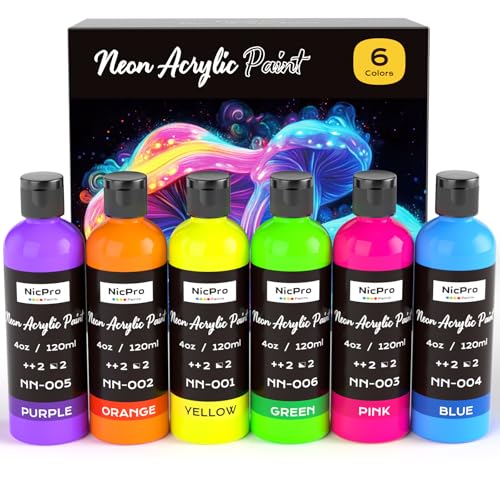
Fluorescent yellow follows closely behind green, delivering an exceptionally bright, high-contrast glow that commands attention. High-quality neon yellow paints absorb ultraviolet rays efficiently and re-emit them as a sharp, sunny luminescence. Fluorescent orange also provides outstanding luminescence, shifting from a bright citrus tone in standard daylight to a glowing amber flame under ultraviolet lamps. Because of their dependable output, green, yellow, and orange represent the most reliable foundational colors for any blacklight display.
Hot pink and magenta also produce an impressive visual reaction under ultraviolet bulbs. These shades contain synthetic fluorescent dyes that convert invisible energy into an intense, glowing reddish-purple hue that looks entirely different from standard pink paint. Optic white is another standout shade, primarily because many white fabrics and papers are manufactured using optical brightening agents. These chemical additives absorb ultraviolet light and re-emit blue-white rays to make materials appear cleaner and brighter to the naked eye.
The Underlying Physics: How Ultraviolet Radiation Creates Visible Light
The striking visual glow seen under blacklights is the direct result of a physical phenomenon known as photoluminescence, specifically fluorescence. Blacklight bulbs emit ultraviolet radiation, primarily within the UV-A spectrum between 315 and 400 nanometers. Because human retinas cannot clearly perceive light at these shorter wavelengths, the radiation itself remains largely invisible to people sitting in the room. When these energetic, invisible photons strike specialized fluorescent molecules, they trigger a rapid atomic reaction.
Electrons within the fluorescent pigment absorb the incoming ultraviolet energy and instantly jump to a higher, excited orbital state. These excited electrons cannot hold this heightened energy state indefinitely, so they rapidly drop back to their original ground state. During this descent, the electrons shed a small portion of their energy through microscopic heat vibrations before releasing the remaining energy as a new photon. Because the emitted photon possesses slightly less energy than the absorbed photon, it travels at a longer wavelength that falls squarely within the visible light spectrum.
Scientists refer to this wavelength shift as the Stokes shift, named after the physicist who documented the conversion process. Ordinary wall paint merely reflects whatever ambient daylight or incandescent light hits its surface, bouncing back existing wavelengths. In sharp contrast, blacklight reactive pigments actively generate new visible wavelengths from invisible radiation. This continuous energy conversion is why fluorescent objects look as though they are internally powered light sources rather than passive surfaces.
Subtle and Non-Reactive Colors: Why Blues, Purples, and Reds Often Struggle
While warm neon shades ignite with blinding brightness, darker or cooler colors often produce a much weaker visual response under blacklights. Fluorescent blue and violet pigments do glow, but their emitted light sits very close to the edge of the visible spectrum. Because human eyes have lower sensitivity to deep blue wavelengths, these shades can appear soft or dim compared to electric green. Furthermore, if a blacklight bulb leaks significant visible violet glare, that extra ambient purple light can easily wash out subtle blue emissions.
Standard red pigments present one of the most common disappointments for decorators unfamiliar with ultraviolet physics. Normal red paint absorbs ultraviolet radiation and converts almost all of that absorbed energy into invisible heat rather than visible light. Under a blacklight, an ordinary red surface usually appears muddy brown, dull maroon, or completely black. To achieve a visible red glow, paint manufacturers must blend specialized fluorescent orange or magenta compounds that mimic red while preserving active photoluminescence.
Dark neutral colors such as charcoal, navy, deep brown, and standard black do not fluoresce under ultraviolet illumination. These pigments contain heavy mineral binders or carbon compounds that absorb radiation across multiple spectrums without exciting electrons to re-emit light. While non-reactive dark colors will not shine, they serve an essential role as high-contrast backdrops that make surrounding neon paints stand out. Painting backgrounds in non-reactive matte black prevents stray reflections and allows reactive neon elements to appear suspended in open air.
Everyday Materials and Organic Substances That Glow Naturally
You do not need specialized synthetic art supplies to witness ultraviolet fluorescence in your home or workspace. Many standard household items contain natural or added fluorophores that respond vigorously to blacklight bulbs. Tonic water glows with an ethereal, icy blue light because it contains quinine, a bitter compound extracted from cinchona tree bark. Similarly, liquid laundry detergents and fabric softeners contain fluorescent brightening agents designed to leave clothes looking brilliant in natural sunlight.
Certain organic substances, vitamins, and minerals also possess inherent fluorescent qualities that activate under ultraviolet inspection. Crushed vitamin B2, also known as riboflavin, produces a bright yellow-green glow when dissolved in water and placed near a blacklight. Natural biological tissues such as human fingernails, tooth enamel, and pet stains also contain organic proteins that fluoresce under inspection fixtures. Even scorpions in the desert glow with a vivid cyan hue because their external cuticles contain specialized beta-carboline compounds.
Synthetically treated consumer goods provide another wide variety of incidental fluorescent reactions. High-visibility neon poster boards, modern yellow highlighter markers, and bright green sticky notes light up instantly under blacklight sources. White cotton t-shirts washed in modern commercial detergents generally radiate a brilliant bluish-white glow that dominates darkened rooms. Understanding these incidental reactions helps you avoid unwanted glowing distractions or intentionally incorporate everyday items into an affordable event layout.
Fluorescent Versus Phosphorescent Glow: Key Differences in Performance
Many consumers confuse fluorescent materials with phosphorescent materials, but their chemical mechanisms and lighting behaviors differ fundamentally. Fluorescent products, including the neon body paints and acrylic sets commonly sold for parties, require a continuous source of ultraviolet light to glow. The electron excitation and photon emission happen almost simultaneously, within fractions of a microsecond. As soon as you switch off the blacklight fixture, the fluorescent color immediately stops emitting light and returns to normal darkness.
Phosphorescent materials, commonly marketed as classic glow-in-the-dark items, operate on a delayed emission cycle. These materials use phosphors such as copper-activated zinc sulfide or modern strontium aluminate to store absorbed energy within their crystalline structures. Instead of releasing photons instantly, phosphorescent compounds trap excited electrons and let them bleed energy back slowly over several minutes or hours. While phosphorescent paint will continue glowing after you turn off the room lights, its luminescence is typically much softer than the intense, energized radiance of active blacklight paint.
Deciding between these two lighting effects depends entirely on how you intend to control your environment. If you want bright, saturated colors that pop with intense clarity during an ongoing dance, theater performance, or Halloween event, fluorescent paints are essential. If you want subtle ambient shapes that linger after all power sources are disconnected, phosphorescent materials are the appropriate selection. Many creative artists combine both mediums on a single canvas, creating an artwork that shifts dynamically between energized blacklight mode and lingering dark mode.
Comparing Acrylic Craft Paints and Cosmetic Body Paints
Selecting the right medium is just as critical as choosing the right pigment hue for your planned project. Specialized neon acrylic paints, such as multi-surface sets from FolkArt or larger sets from Nicpro, are engineered for rigid and porous craft surfaces. These paints utilize synthetic acrylic polymer binders that dry quickly to form a durable, water-resistant film over wood, canvas, paper, rocks, and fabric. Their high pigment concentration allows the neon pigments to reflect maximum ultraviolet energy without flaking or washing away easily.
Cosmetic body paints, such as twistable neon face paint sticks from Dmsky, utilize completely different carrier formulations to ensure skin safety. These products rely on gentle, water-based or wax-based cosmetic ingredients that do not irritate sensitive facial skin or clog pores. While craft acrylics dry into a permanent plastic layer that is difficult to wash off skin and can cause irritation, body paints are formulated for simple removal with soap and water. The trade-off is that skin paints remain slightly blendable and can smudge if brushed against clothing during active events.
Surface preparation also varies significantly depending on which medium you apply. Craft acrylic paints deliver their brightest fluorescent glow when applied over a solid white primer coat, because dark surfaces absorb stray light and reduce outward emission. Body paints, on the other hand, must be applied directly to clean, dry skin that is free of heavy oils or moisturizers. Knowing how these formulations adhere ensures that your fluorescent artwork remains vivid and intact throughout the duration of your event.
Blacklight Fixture Specifications: 365 nm Versus 395 nm Wavelengths
The specific wavelength generated by your ultraviolet light fixture plays a massive role in how clean and intense your glowing colors appear. Consumer blacklights generally operate at one of two distinct peak wavelengths: 365 nanometers or 395 nanometers. Fixtures tuned to 365 nanometers emit pure UV-A radiation with very little visible violet light, often using dark filtered glass to block stray emissions. This wavelength excites fluorescent pigments cleanly, creating a striking contrast where objects glow brightly against an ink-black room.
Fixtures operating at 395 nanometers, which include many affordable modern LED bars and floodlights, sit closer to the edge of the visible violet spectrum. These lights produce a noticeable purple wash across walls, floors, and furniture alongside their invisible ultraviolet output. While 395 nanometer LEDs excite bright neon greens and yellows very well, the ambient purple wash can reduce contrast and make subtle blue or orange pigments look less distinct. For casual parties and holiday decor, 395 nanometer fixtures offer great value, but fine art displays often benefit from filtered 365 nanometer sources.
The physical format of the fixture also influences how evenly ultraviolet energy spreads across your display space. Traditional linear fluorescent tubes provide broad, diffused coverage that minimizes harsh shadows over large decorative murals. When evaluating fixture choices for wide areas, reviewing fluorescent tube lighting output helps you understand how standard tube dimensions correspond to spatial coverage. In contrast, LED blacklight spot fixtures concentrate intense ultraviolet energy into targeted beams, making them ideal for highlighting specific sculptures or stage performers.
Room Setup and Placement: Maximizing Ultraviolet Contrast
Maximizing the visual pop of blacklight colors requires careful management of ambient light levels within the room. Even minor amounts of daylight creeping through blinds or secondary incandescent lamp spill will diminish the apparent brilliance of fluorescent pigments. To achieve the most dramatic glow, you should eliminate as much outside light as possible by drawing blackout curtains and turning off adjacent hallway fixtures. Creating a pitch-black baseline allows your eyes to adjust to lower light levels, which heightens sensitivity to the neon emission spectrum.
Physical distance between your ultraviolet fixture and the painted surface significantly impacts how brightly colors respond. Ultraviolet radiation obeys the inverse square law of illumination, meaning that doubling the distance between the lamp and the surface cuts the light intensity to one-quarter of its original strength. If your glowing paints appear dim or washed out, moving the light source closer or installing secondary fill fixtures will dramatically enhance their radiance. Positioning lamps at 45-degree angles prevents harsh glare while ensuring consistent coverage across horizontal and vertical surfaces.
Operating your ultraviolet fixtures efficiently also involves timing and safety management for longer seasonal installations. When managing automated holiday displays, haunted houses, or gallery exhibits, installing certified indoor light timers allows you to schedule operating hours consistently without manual intervention. Timers prevent unnecessary wear on bulb filaments and reduce energy consumption when rooms are unoccupied. Proper placement and automated control ensure that your glowing installation remains vibrant, safe, and ready to impress guests whenever they enter the room.
Practical Takeaways for Designing Glowing Blacklight Spaces
Creating a successful blacklight installation comes down to matching responsive pigments with appropriate lighting wavelengths. Fluorescent green, yellow, orange, and hot pink will always provide the most dramatic visual impact, while standard blues, deep purples, and non-neon reds will fade into the background. Choosing white primers beneath craft acrylics and selecting skin-safe cosmetic sticks for personal makeup guarantees both visual brilliance and user safety. By eliminating ambient light spill and positioning fixtures at optimal distances, you can turn any dark room into an unforgettable, glowing showcase.




Write Your Review
No reviews yet. Be the first to share your experience!