


Cooking in a kitchen shadowed by dim corners or weak overhead illumination creates unnecessary frustration during daily meal prep. Learning how to add more light to kitchen layouts allows homeowners and renters to eliminate harsh silhouettes cast over countertops and cutting boards. Overhead units often leave prep stations dark because a standing cook blocks direct illumination from behind. Introducing layered illumination across ambient, task, and accent zones balances room brightness and elevates everyday functionality.
Upgrading existing illumination does not always require opening walls or running expensive new electrical circuits from scratch. Many people start by exploring simple plug-in fixtures, adhesive strip solutions, or modern flush-mount luminaires that swap easily into standard junction boxes. For open spaces, hanging pendant lights over work areas can direct clear illumination downward where detailed prep work happens. Choosing the right combination of lumens, color temperatures, and mounting designs restores complete clarity to your cooking space.


Pros
- High listed output of 3200 lumens at 24 watts provides solid brightness for medium-sized living spaces
- Adjustable color temperature (3000K/4500K/6000K) eliminates the guesswork of matching room ambiance
- Low-profile 0.95-inch depth helps prevent clearance issues near doors, bunk beds, and low ceilings
- Includes two complete fixtures with mounting hardware for straightforward home improvement projects
Cons
- Color temperature switch is located on the fixture body and requires detaching the light from the canopy to change
- Wall dimmer switch is not included and must be purchased separately for brightness adjustments
- Integrated LED design means the entire fixture must be replaced if the light engine eventually fails
The GOZIG 12-Inch Flush Mount LED Ceiling Light 2-Pack is an integrated hardwired ceiling fixture designed for homeowners, apartment dwellers, and property managers seeking modern, low-profile ambient lighting. Built with a compact 12-inch diameter and a slim 0.95-inch depth, this two-pack is particularly well-suited for bedrooms, hallways, entryways, kitchens, closets, and rooms with lower ceiling heights where traditional bulky fixtures or drop pendants might feel intrusive.
In terms of lighting performance, each fixture operates at a listed 24 watts and produces up to 3200 lumens of light output. The standout feature is its built-in three-color temperature switch, which allows you to toggle between 3000K warm white, 4500K neutral white, and 6000K cool daylight. Setting the light to 3000K creates an inviting, cozy atmosphere suitable for bedrooms and living rooms, while 4500K offers a clean, balanced light for general routines, and 6000K provides crisp, cool illumination that aids visibility and concentration in home offices or utility spaces. The manufacturer also notes zero-flicker operation to help reduce visual strain during extended daily use.
The build quality focuses on minimalism and utility. With a matte black rim and flat diffuser, the fixture blends seamlessly into modern, industrial, or transitional interior decors. The ultra-thin 0.95-inch profile hugs the ceiling tightly, ensuring doors, tall furniture, and standard movement are never obstructed. A key design convenience is the detachable twist-lock mechanism connecting the light body to the canopy, allowing you to access the internal CCT switch without having to completely uninstall the base from the ceiling.
Installation is designed for straightforward DIY setup using standard residential wiring. The product package contains two complete light fixtures along with the required mounting screws and wire connectors. Setup follows four straightforward steps: secure the mounting canopy to the junction box, connect the corresponding line, neutral, and ground wires, select your preferred color temperature on the switch, and lock the LED fixture securely into place. The fixture supports dimming when wired to most standard wall dimmers, though it can also be wired to a standard on/off wall switch if dimming is not required.
There are a few realistic limitations to consider before buying. First, the color temperature switch is located on the fixture itself rather than controlled via an external switch or app, meaning you must twist the light off the canopy if you wish to adjust the Kelvin setting later. Second, a dimmer switch is not included in the package, so you will need to provide your own compatible dimmer to take advantage of brightness controls. Finally, because the LEDs are integrated directly into the housing, you cannot replace a single bulb; the entire unit is replaced when it reaches the end of its operational life.
Overall, the GOZIG 12-Inch Flush Mount LED Ceiling Light 2-Pack offers strong value for everyday overhead residential lighting. With 3200 lumens of output per fixture, three versatile color temperatures, and a clean ultra-flat profile, this set is an excellent choice for budget-conscious buyers and homeowners tackling multi-room lighting updates.
Yes, the GOZIG 12-inch ceiling light features a built-in 3-CCT switch that lets you select between 3000K warm white, 4500K neutral white, and 6000K cool daylight.
The 3000K setting produces a warm, soft white tone that suits bedrooms, dining rooms, and casual living areas where a relaxing environment is preferred. The 4500K setting provides a neutral white balance that closely mimics clean midday lighting, making it practical for kitchens, hallways, and bathrooms. The 6000K setting delivers a crisp, bright daylight tone intended for task-oriented environments like home offices, workshops, and utility closets.
Because the selector switch is located on the internal side of the fixture body, you choose your preferred color temperature before finalizing the installation, or simply untwist the fixture from its mounting canopy to toggle the setting at any time.
Installation is designed around a straightforward four-step process using standard residential ceiling electrical boxes.
The package includes two complete 12-inch fixtures along with all required screws and mounting hardware. Installation involves attaching the mounting canopy to the ceiling box, making the standard hardwire connections, setting the desired CCT slide switch, and securing the main light fixture onto the base plate.
Measuring 12 by 12 inches with a thickness of only 0.95 inches, the low-profile design sits flush against the ceiling surface. This ensures clean lines and prevents interference in low-clearance areas such as basement rooms, stairwells, and walk-in closets.
The GOZIG LED ceiling light is dimmable when connected to a compatible standard wall dimmer switch, but it can also be wired to a standard on/off switch.
When paired with a dimmer, users can adjust the 3200-lumen light output to match ambient requirements throughout the day, whether setting low-intensity night lighting in a bedroom or maximum brightness for meal preparation in a kitchen.
Please note that an external dimmer switch is not included in the package and must be supplied separately. Additionally, this fixture does not feature smart connectivity, Wi-Fi, or remote control capabilities; all control relies on hardwired wall switches.
A Practical Strategy for Brightening Every Kitchen Layout
Brightening a dim cooking space requires more than simply inserting a higher-wattage bulb into an existing ceiling fixture. A truly functional kitchen relies on balanced illumination placed precisely where hands and eyes do their daily work. When overhead fixtures, perimeter cabinets, and task surfaces work together, dark prep corners vanish and meal assembly becomes much safer. Achieving this balance involves identifying lighting deficits, selecting appropriate lumens, and layering fixtures across distinct zones.
Most kitchen lighting frustrations stem from relying on a solitary central luminaire to illuminate an entire room. Understanding how light spreads across work surfaces helps homeowners and renters choose practical upgrades that fit their space and budget. Whether you swap out dated flush-mount fixtures or install peel-and-stick strips under hanging cabinets, targeted adjustments make an immediate visual difference.
Diagnosing Kitchen Lighting Deficits and Shadow Zones
The first step in improving room visibility is mapping where shadows fall during normal culinary tasks. Stand at your primary food preparation counter and notice where your body casts shadows across the cutting board. When ceiling fixtures sit behind your back, your shoulders and head block the light path, leaving your hands working in deep gloom. Deep upper cabinets also block ambient ceiling rays, creating an overcast zone across the back half of your countertops.
Take time to examine secondary problem areas, such as dark pantry corners, deep lower drawers, and the basin beneath your sink. Sinks without dedicated downlights force you to scrub dishes in murky water, making it harder to spot grease or leftover residue. Kitchen islands and dining peninsulas also suffer if hanging fixtures lack adequate downward throw or feature excessively tinted glass shades. Pinpointing these specific dark spots ensures that every new lighting fixture you introduce solves a genuine functional problem.
The Principles of Layered Illumination in Food Prep Spaces
Professional lighting designs divide residential illumination into three primary layers: ambient, task, and accent lighting. Ambient lighting provides the overall baseline of soft, diffused illumination that lets you navigate the room safely without stumbling. Task lighting delivers concentrated, high-output brightness aimed directly at work planes such as sinks, stoves, and prep islands. Accent lighting adds architectural depth by illuminating display cabinets, toe kicks, or decorative backsplashes to prevent the room from feeling flat.
Relying exclusively on ambient lighting forces ceiling fixtures to work too hard, which often produces harsh glare and unflattering shadows. When you introduce dedicated task fixtures directly over work stations, the ambient ceiling fixtures do not need to operate at overwhelming intensities. This layered balance reduces eye strain during prolonged meal preparation and lets you adjust the room atmosphere as day transitions into night. Blending these three distinct layers creates a flexible cooking environment that accommodates both detailed food prep and casual social dining.
Upgrading Flush-Mount Ceiling Fixtures for High-Output Ambient Light
Upgrading an aging center ceiling fixture is often the fastest way to elevate overall ambient baseline brightness. Modern integrated LED luminaires provide wide-angle light dispersion that reaches far closer to perimeter walls than old dome bowls. For instance, the 3200LM Flush Mount Ceiling Light Fixtures Black by GOZIG provides 3200 lumens of brightness while drawing only 24 watts of power. Its low profile measures just 0.95 inches in thickness, making it especially advantageous for kitchens with low ceiling clearance where hanging fixtures might feel cramped.
Integrated fixtures like the GOZIG model also incorporate selectable color temperatures, giving users the option to switch between 3000K warm white, 4500K neutral white, and 6000K cool daylight. Setting the fixture to 4500K provides crisp, neutral illumination that clarifies food presentation without making the kitchen feel sterile or harsh. The zero-flicker LED design helps prevent eye fatigue during lengthy cooking sessions, and its lightweight housing mounts to standard ceiling electrical boxes with basic mounting screws and wire nuts.
Using Open-Cage Fixtures for Maximum Bulb Output and Easy Upkeep
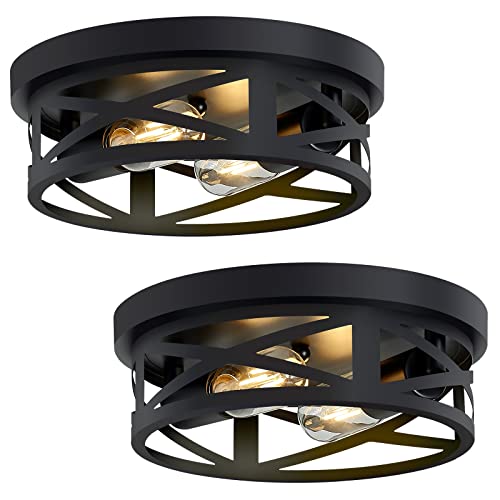
Some kitchens benefit visually and functionally from multi-bulb open fixtures rather than enclosed frosted glass globes. Solid glass domes tend to absorb a significant percentage of lamp output and quickly accumulate airborne cooking grease that dulls brightness over time. A fixture such as the SKEJAO Flush Mount Ceiling Light Fixture,Black uses an open-frame industrial metal cage with dual E26 medium screw bases. Because the lamps remain completely exposed, light radiates outward across the ceiling and room without frosted diffusion barriers dampening the lumens.
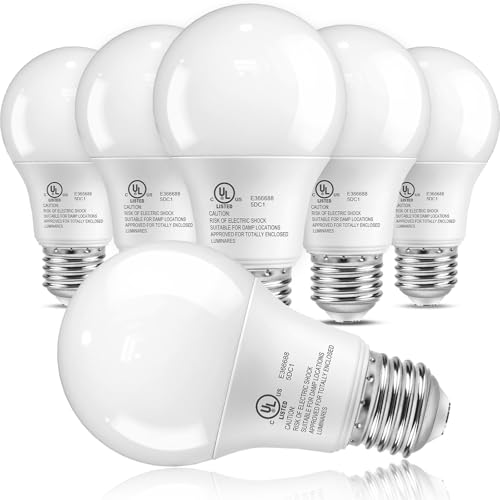
The SKEJAO dual-socket ceiling fixture supports any standard E26 bulb up to 60 watts per socket, including energy-efficient LED, compact fluorescent, or halogen varieties. This universal socket configuration gives homeowners complete freedom to choose their preferred bulb shape, lumen output, and beam spread. Furthermore, replacing burnt-out bulbs requires no tedious disassembly of glass covers or retention screws since the open frame offers direct hand access. Pairing this fixture with dimmable LED bulbs allows users to transition effortlessly between high-intensity prep lighting and subdued evening ambiance.
Conquering Countertop Shadows with Under-Cabinet Strip Lights
Even the brightest ceiling lights cannot illuminate the counter space tucked directly beneath overhead cabinetry. Installing slim under-cabinet luminaires places the light source directly between your eyes and the cutting surface, completely washing away body-cast shadows. For situations where hardwiring electrical lines inside finished drywall is impractical, battery-operated LED strips offer an immediate and flexible solution. The Amagle Motion Sensor Light Indoor delivers a 3.2-foot strip that adheres directly to clean cabinet undersides using pre-applied double-sided adhesive tape.
Operating on four standard AAA batteries, the Amagle strip outputs 180 lumens of 4000K neutral white illumination, which mimics natural daylight on work surfaces. Its integrated infrared sensor detects movement across a 120-degree field at distances of three to five meters, turning the LEDs on automatically as you approach the counter. An automatic 15-second shutoff timer conserves battery power when you step away, while an alternative manual switch lets you keep the light continuously illuminated during lengthy food prep tasks. You can also trim the flexible strip with ordinary household scissors along designated copper solder marks to fit shorter cabinet sections.
Selecting the Best Color Temperature for Culinary Work
Light appearance, measured in Kelvins (K), plays a massive role in how functional and welcoming your kitchen feels. Warm white lighting between 2700K and 3000K casts a yellowish amber glow reminiscent of traditional incandescent filaments. While warm light feels cozy in dining areas and living rooms, it can make green vegetables and meats look slightly dull while reducing visual contrast on work surfaces. Conversely, cool daylight ranging between 5000K and 6000K delivers vibrant blue-white clarity, but excessive use can make a domestic kitchen feel stark and clinical.
Neutral white illumination in the 3500K to 4500K range represents the sweet spot for kitchen food prep and cleaning stations. This balanced spectrum renders colors accurately, helping you judge the freshness of produce and the doneness of cooked meats without deceptive yellow or blue color casts. When mixing multiple fixtures across your kitchen, strive to keep color temperatures reasonably uniform across all active zones. Mixing a 2700K warm ceiling fixture with a 6000K daylight under-cabinet strip creates visual discord and uneven contrast that strains the eyes.
Integrating Dimming Controls to Balance Brightness Throughout the Day
A bright kitchen is essential while chopping vegetables or following intricate recipes, but maximum output can feel uncomfortably intense during late-night visits or morning coffee. Installing dimming switches gives you immediate control over light levels, allowing single fixtures to serve multiple functions. Both the GOZIG integrated ceiling light and the SKEJAO fixture, when fitted with compatible dimmable E26 bulbs, support smooth dimming across wide brightness ranges. Dimming also reduces electrical draw and can extend the operational life of LED drivers and internal emitter components.
Before installing a wall dimmer, always check the compatibility information provided by the switch and light manufacturers. Traditional legacy dimmers designed for incandescent bulbs often cause modern LED lights to flicker, buzz, or drop out abruptly at low output levels. Dedicated electronic low-voltage or LED-rated dimmer switches ensure clean sine-wave modulation without high-frequency stuttering. If your home uses non-dimmable wiring circuits, integrated fixtures like the GOZIG model can still operate safely with standard on-off wall switches at full brightness.
Renter-Friendly and Non-Hardwired Upgrades for Dark Corners
Renters and apartment dwellers often face strict lease limitations that prevent swapping hardwired ceiling boxes or cutting holes in drywall. Fortunately, non-invasive lighting products make it simple to illuminate dark kitchens without forfeiting security deposits. Battery-powered puck lights, magnetic under-shelf bars, and plug-in pendant cords convert gloomy rental kitchens into bright culinary spaces in just minutes. Heavy-duty removable mounting tapes allow you to secure lightweight LED strips beneath cabinets and peel them away cleanly when moving out.
Plug-in track lighting strips that connect to existing wall outlets can run along cabinet tops to wash upper walls and ceilings with bounce light. This indirect illumination reflects off pale ceiling paint, raising the overall ambient light level across the entire room without direct glare. Cord clips and self-adhesive wire raceways keep dangling cables safely tucked against cabinet sides and out of food prep zones. Even simple magnetic task lights affixed to the side of a refrigerator or metal range hood can provide critical illumination right where you need it most.
Electrical Safety and Installation Best Practices
Whenever you tackle hardwired lighting upgrades in your home, safety must remain the foremost consideration. Before loosening mounting screws or touching electrical leads, always shut off power at the main service panel and verify the circuit is dead with a reliable non-contact voltage tester. Never rely solely on a wall switch to isolate electrical current, as switch boxes can still harbor live incoming hot feeds. Secure all wire connections with appropriately sized twist-on wire nuts, and ensure the ground wire connects firmly to the metal junction box or fixture ground lead.
Take time to inspect the structural capacity and physical dimensions of your existing ceiling junction box. While lightweight flush fixtures mount easily to standard round or octagonal boxes, heavier multi-light designs require secure ceiling framing support. If you encounter deteriorated insulation, frayed wire leads, or ambiguous wiring configurations in older homes, pause your work immediately and consult a qualified licensed electrician. Professional electrical contractors ensure that all connections comply with local building codes, preventing dangerous shorts or fire hazards.
Maintaining Kitchen Fixtures to Preserve Maximum Output
Kitchen lighting operates in a demanding domestic environment filled with airborne grease, boiling water vapor, and drifting dust particles. Over several months, a thin greasy film can coat fixture diffusers and bulb surfaces, absorbing up to thirty percent of emitted light. Establishing a routine cleaning schedule restores original lumen output and prevents heat buildup around sensitive LED electronics. Always switch fixtures off and let bulbs cool completely before wiping surfaces with a dry or lightly dampened microfiber cloth.
Avoid spraying liquid household cleaners directly onto installed electrical fixtures or socket cavities where moisture could seep into wiring connections. For vintage or specialized hardware, following established techniques such as cleaning brass fixtures properly keeps metallic finishes lustrous while protecting internal electrical contacts from liquid corrosion. Open-cage fixtures like the SKEJAO model make regular dusting especially simple because grease cannot pool inside an enclosed glass bowl. Regular maintenance keeps your luminaires operating efficiently and ensures your kitchen remains bright, clean, and welcoming for years to come.
Brightening a dark kitchen is an achievable home upgrade that pays immediate dividends in safety, efficiency, and visual appeal. By combining broad ambient ceiling fixtures, focused under-cabinet task strips, and adaptable dimming controls, you eliminate frustrating prep shadows and illuminate every workstation clearly. Match your fixture choices to your kitchen layout, maintain consistent color temperatures across complementary layers, and enjoy the renewed ease of cooking in a fully illuminated space.


Write Your Review
No reviews yet. Be the first to share your experience!