


Entering a poorly lit room immediately highlights the difference that proper overhead illumination makes in everyday living. Whether replacing an outdated dome fixture or furnishing a newly renovated space, discovering how to choose a ceiling light requires balancing architectural scale with functional brightness. Proper overhead lighting anchors your interior layout, preventing shadowy corners while creating a welcoming backdrop for daily activities. Many homeowners struggle with choosing between integrated LED fixtures and traditional bulb sockets, especially when planning spaces with distinct illumination needs.
Ceiling height, room dimensions, and color temperature all dictate which fixture will perform best in your specific space. While accent fixtures like hanging decorative pendant lights draw the eye toward specific work surfaces, a flush or close-to-ceiling fixture provides broad, ambient coverage. Taking the time to understand lumens, light distribution, and dimmer controls ensures you select an overhead light that enhances both comfort and visual clarity. This practical guide breaks down the core technical specifications and design choices so you can confidently update any room in your home.
Pros
- Versatile 5-in-1 CCT selector covers warm white, neutral, and daylight tones
- Bright 2400-lumen output at an energy-efficient 24W draw on 120V circuits
- Slim 1.9-inch profile fits low ceilings without obstructing doors or sightlines
- Lightweight unibody backplate reduces arm strain during overhead wiring and mounting
Cons
- Color temperature switch is located inside the fixture and cannot be changed from the wall
- External wall dimmer is not included and must be matched for compatible 10% to 100% dimming
- Integrated LED design requires replacing the entire fixture once it reaches the end of its lifespan
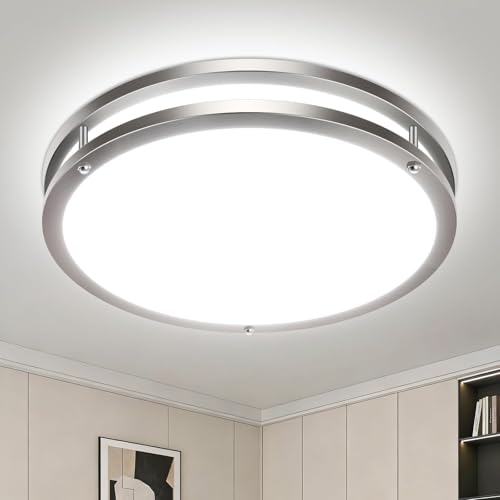
The libtit 13-inch flush mount ceiling light is a low-profile, hardwired LED fixture designed for residential spaces that require balanced overhead lighting without bulky hanging hardware. Featuring a brushed nickel outer trim and a slim thickness of just 1.9 inches, this fixture suits homeowners, renters, and property managers seeking a clean update for kitchens, hallways, bedrooms, closets, and bathrooms. Its circular footprint mounts close against flat ceiling surfaces, maximizing vertical clearance in rooms with standard or low ceilings.
Lighting performance is centered around an integrated 24W LED board running on standard 120-volt electrical lines, generating 2400 lumens of output. Instead of being restricted to a fixed light tone, users can select from five color temperature options using a switch inside the fixture before mounting: warm white (3000K to 3500K), neutral white (4000K to 5000K), or daylight white (6500K). When wired to a compatible LED-rated dimmer switch, the light supports continuous brightness adjustments from 10% to 100%, allowing seamless transitions from task illumination to softer ambient lighting.
The build quality incorporates a lightweight, fire-resistant polycarbonate unibody backplate that provides natural electrical insulation. This lighter plastic foundation reduces the physical fatigue of holding a heavy metal base overhead during hardwired installation. Additionally, the manufacturer specifies a dustproof and moisture-resistant construction, making the fixture suitable for humid areas like laundry rooms and bathrooms while keeping internal components shielded from dust accumulation.
Installation follows standard junction box mounting procedures using basic household tools. Because the CCT toggle is positioned on the inner baseplate, it is best to test and select your desired color temperature before securing the diffuser cover into place. The hardwired setup connects directly to household wiring, and the lightweight frame minimizes the drop risk during alignment with the ceiling electrical box.
Practical limitations center around control accessibility and long-term serviceability. Because the color temperature switch is sealed inside the fixture, changing the tone after setup requires turning off the breaker, disassembling the cover, and toggling the switch manually. Furthermore, achieving reliable dimming requires pairing the fixture with a compatible wall dimmer, and because the LEDs are integrated directly onto the internal board, individual bulbs cannot be swapped out when the unit eventually reaches the end of its 25,000-hour rated life.
For households looking for an ETL-listed overhead light fixture that balances strong output with adaptable color tones, the libtit 13-inch flush mount provides dependable illumination in a sleek, low-profile format. It is particularly well-suited for kitchens, utility rooms, and hallways where moisture resistance, wide light distribution, and an understated brushed nickel finish are required.
The libtit ceiling light includes a 5-step CCT selector switch located directly on the internal baseplate, allowing users to choose between 3000K, 3500K, 4000K, 5000K, and 6500K before finalizing installation.
Warm white settings (3000K to 3500K) produce an inviting, comfortable atmosphere suited for bedrooms, dining areas, and living spaces. Neutral white options (4000K to 5000K) deliver clean, crisp light ideal for food preparation in kitchens or grooming in bathrooms. The 6500K daylight white setting provides high-contrast clarity suited for utility closets, workshops, and task-focused hallway spaces.
This fixture is engineered for straightforward hardwired ceiling mounting on standard 120V residential junction boxes using common household tools. The lightweight unibody backplate reduces the physical strain typically involved when holding heavy fixtures overhead during wire connection.
Because the color temperature switch is located on the interior backplate, ensure you set your preferred Kelvin temperature and test the wiring before securing the outer diffuser cover. Always shut off power at the circuit breaker and follow manufacturer instructions during electrical installation.
The libtit flush mount supports a dimming range between 10% and 100% when connected to an external, compatible wall dimmer switch. A dimmer switch is not included in the package and must be supplied separately.
To ensure smooth dimming performance without buzzing or flickering, verify that your wall dimmer is explicitly rated for dimmable LED lighting loads. This fixture relies solely on wired wall controls and does not feature built-in smart-home protocols, Wi-Fi, or remote control functionality.

Pros
- Generous 3600-lumen output per fixture provides ample general illumination for medium-to-large rooms.
- Five selectable Kelvin options eliminate guesswork when matching existing room lighting.
- High CRI 90+ rating delivers superior color accuracy compared to standard commercial LEDs.
- Durable dual-ring metal housing provides better structure and heat management than all-plastic designs.
- Two-pack configuration offers immediate multi-room value for renovations and updates.
Cons
- Color temperature must be manually selected on the fixture body rather than adjusted via remote or app.
- Requires direct hardwiring into a standard residential ceiling junction box.
- Wall dimmer switch is required for dimming functionality and must be purchased separately.
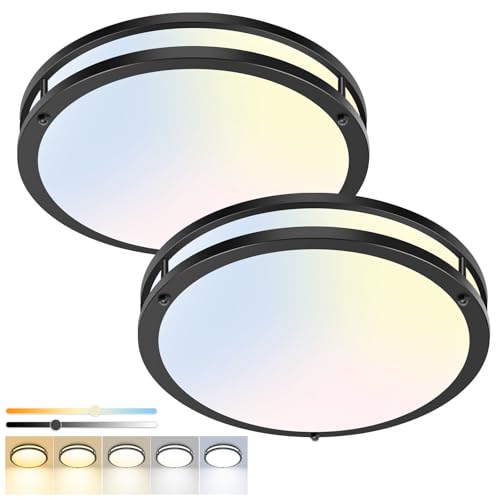
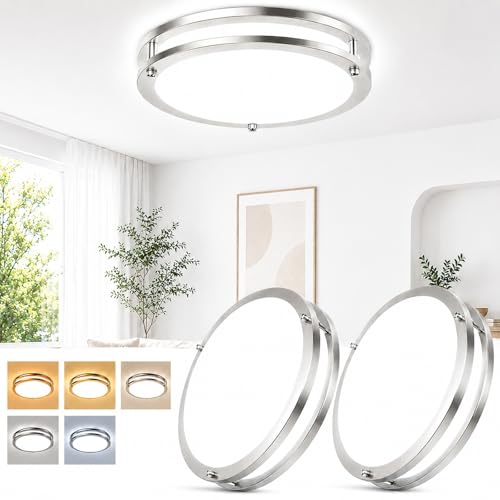
The weddeg 13-inch LED Flush Mount Ceiling Light Fixtures come as a two-pack of low-profile, hardwired overhead luminaires designed for general residential illumination. Measuring 13 inches in diameter with a slim 2.6-inch depth, these fixtures cater to homeowners, renters, and property managers seeking clean, close-to-ceiling lighting for spaces such as kitchens, bedrooms, hallways, home offices, basements, and laundry rooms.
Each fixture produces a manufacturer-listed output of 3600 lumens while consuming 36 watts of power, which the brand highlights as suitable for rooms up to 250 square feet. A built-in five-color temperature switch allows selection between 2700K warm white, 3000K soft white, 4000K neutral white, 5000K daylight, and 6500K cool white to match room function. With a color rendering index of CRI 90+, the integrated LED board ensures interior colors, textiles, and surfaces appear natural without washed-out tones, supported by smooth 10% to 100% dimming when connected to most standard wall dimmers.
In terms of physical construction, the fixtures feature a modern brushed nickel dual-ring metal frame engineered to assist with thermal management and long-term diode durability. The light source is shielded by a thick plastic diffuser engineered to soften visual glare, eliminate harsh hotspots, and resist yellowing over extended use. The integrated LED design eliminates the need for separate bulb replacements, reducing long-term maintenance demands in high-traffic areas.
Installation follows standard residential hardwiring practices, mounting directly onto ceiling junction boxes. Because the color temperature selection is controlled via an internal toggle switch, setting the preferred Kelvin profile prior to final ceiling fastening ensures the desired ambiance. The flush mount design leaves minimal clearance between the ceiling and the housing, which helps keep overhead walkways clear in rooms with standard eight-foot ceilings.
A few practical limitations should be noted before purchasing. The color temperature toggle is located on the fixture housing rather than controlled dynamically through a smartphone app or remote, meaning adjustments after mounting require accessing the unit directly. Additionally, while the lights support 10% to 100% dimming, a compatible wall dimmer is required and not included in the package, and hardwired installation requires standard household electrical safety practices.
For households needing substantial illumination and color flexibility without commercial fixture aesthetics, this two-pack from weddeg represents a dependable option. The combination of high lumen output, selectable color temperatures, CRI 90+ rendering, and a three-year manufacturer warranty makes it a well-rounded overhead lighting choice for multi-room interior upgrades.
Each weddeg 13-inch ceiling light delivers a listed 3600 lumens while drawing 36 watts, designed to provide comprehensive overhead illumination for spaces up to 250 square feet. The fixture supports smooth 10% to 100% dimming capabilities when paired with standard residential wall dimmers, allowing users to dial down the intensity for ambient evening light or raise it to maximum for task-oriented activities.
This flush mount fixture incorporates a 5CCT adjustable switch offering 2700K warm white, 3000K soft white, 4000K neutral white, 5000K daylight, and 6500K cool white settings. Combined with a color rendering index rating of CRI 90+, the LED board ensures that indoor colors appear vibrant and accurate rather than washed out, helping paint, furnishings, and decor look natural in bedrooms, kitchens, and offices.
The product includes a 3-year manufacturer warranty covering operational defects and performance issues. This warranty coverage provides added peace of mind for homeowners and property managers outfitting multiple rooms with permanent, hardwired LED fixtures.

Pros
- Substantial 3600-lumen output per fixture brightens utility areas, kitchens, and larger bedrooms effectively
- Five selectable Kelvin options eliminate color-temperature guesswork prior to installation
- High CRI 90+ ensures natural color accuracy and eye-friendly, flicker-free light distribution
- Dual-ring metal frame offers a more durable and upscale build compared to basic all-plastic flush mounts
Cons
- Requires standard hardwired installation, which may require professional help if you are unfamiliar with home wiring
- Color temperature must be selected directly on the fixture switch rather than dynamically adjusted via a wall switch or app
- Lacks built-in smart features, requiring an external smart dimmer switch if automation is desired
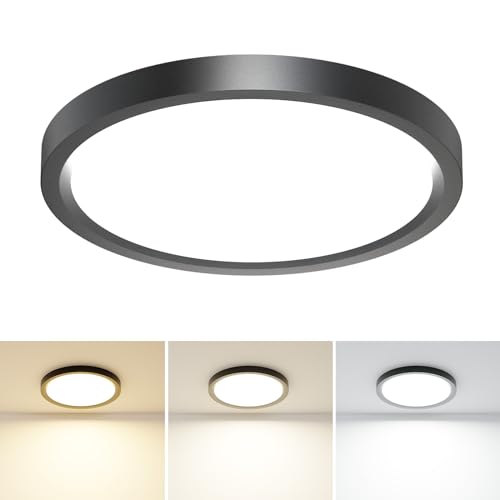
The weddeg 13-Inch Flush Mount LED Ceiling Light 2-Pack is an integrated LED fixture built to replace outdated dome fixtures and energy-draining incandescent lamps. Featuring an oil-rubbed bronze dual-ring metal trim, this set integrates smoothly into traditional, transitional, or farmhouse-inspired decor. The 2.6-inch low-profile height hugs close to the ceiling, making it a functional upgrade for standard eight-foot ceilings in bedrooms, kitchens, hallways, closets, laundry rooms, and home offices.
Real-world lighting performance centers on strong brightness and clean visual output. Each fixture delivers a manufacturer-rated 3600 lumens while drawing 36 watts of power, which provides significantly more light than typical 13-inch ceiling units. The onboard 5CCT switch gives you five options: warm white (2700K and 3000K), neutral white (4000K), and cool daylight (5000K and 6500K). Combined with a CRI 90+ rating, the fixture produces vibrant, accurate colors without muddy or washed-out tones, ensuring that wall paint, furniture, and kitchen counters look their best.
Build quality balances practical thermal dissipation with glare-reducing optics. The dual-ring metal frame conducts heat away from the internal LED diodes to promote component longevity, offering greater rigidity than thin plastic shells. Light passes through a thick plastic diffuser designed to eliminate visible hotspots and distribute illumination evenly across the room. When wired to a compatible standard wall dimmer, the light dims smoothly from 10% to 100%, allowing you to transition effortlessly between high-focus task lighting and softer evening ambient lighting.
Installation is straightforward for anyone comfortable with standard hardwired ceiling fixtures. Measuring 13 by 13 by 2.6 inches, the unit mounts flush against standard ceiling junction boxes using common mounting hardware. You simply select your preferred color temperature on the fixture switch during assembly, complete the wiring connections, and secure the trim. Having two matching fixtures in the box makes it easy to maintain visual consistency across adjacent spaces like an entryway and hallway.
There are a few practical limitations to keep in mind before purchase. Because the color temperature switch is located on the fixture itself, you cannot adjust the Kelvin setting from your wall switch or smartphone once installed without dismounting the cover. It is a traditional hardwired LED unit without native Wi-Fi, Bluetooth, or smart hub compatibility, so automated scheduling or voice control requires adding an external smart switch. Buyers should also note that the manufacturer listing mentions a 3-year warranty in one section and 5 years in another, so verifying exact terms upon arrival is recommended.
For homeowners, renters, and property managers seeking generous light output, classic bronze styling, and versatile color options, the weddeg 2-pack delivers dependable everyday value. It provides enough light for rooms up to 250 square feet while giving you the freedom to choose your preferred color warmth and light level.
Each fixture produces 3600 lumens at 36 watts, which provides substantial overall illumination for kitchens, home offices, and living spaces up to 250 square feet.
The integrated LED driver supports smooth dimming from 10% to 100% when connected to most standard wall dimmers, giving you full control over room brightness from morning prep to evening relaxation.
The fixture features a 5CCT selectable toggle offering 2700K warm white, 3000K soft white, 4000K neutral white, 5000K cool daylight, and 6500K daylight, allowing you to easily match your existing home lighting.
A CRI 90+ rating provides natural and balanced color rendering, helping fabrics, artwork, and interior finishes appear vibrant and accurate without harsh color distortion.
With a compact 13 by 13 by 2.6 inch footprint, this flush-mount fixture is designed for standard hardwired ceiling installation over existing junction boxes.
The low-profile design sits close to the ceiling to preserve overhead clearance in hallways, basements, and laundry rooms with standard ceiling heights.


Essential Principles for Choosing the Right Ceiling Light
Selecting an overhead fixture involves finding the intersection between optical output, physical dimensions, and electrical control. Rather than focusing solely on exterior aesthetics, an effective selection process examines how light disperses across the room surfaces. Starting with structural measurements and specific room tasks prevents common lighting mistakes such as harsh glare or dim shadows.
Assessing Room Function and Lighting Layers
Every room serves a distinct functional purpose that dictates its overhead illumination requirements. Kitchens, laundry rooms, and workshops require energetic, shadow-free illumination to support active tasks safely. Conversely, bedrooms and formal living areas benefit from gentle, diffused lighting that fosters relaxation and visual comfort. An overhead fixture rarely operates in complete isolation within a well-designed lighting layout.
Layered illumination combines general ambient light with specialized task fixtures and decorative accents. Relying solely on a single overhead dome often leaves corners dark and creates unflattering facial shadows. Pairing a central flush fixture with deliberate strategies like positioning secondary bedroom lighting establishes balanced contrast throughout the space. This balanced approach gives you flexible control over room brightness as activities shift from daytime work to evening rest.
Hallways, entryways, and walk-in closets demand a streamlined lighting profile focused on broad coverage. In these transitional spaces, quick visibility matters more than intricate layering or mood setting. A compact flush mount fixture with a wide optical beam angle eliminates dark spots where clutter might gather. Planning fixture output around practical everyday movement keeps each area comfortable and functional.
Calculating Proper Fixture Diameter and Proportions
Scale plays a decisive role in whether a ceiling light looks natural or awkwardly out of place. A tiny fixture in a spacious living room looks visually lost and struggles to illuminate peripheral walls. On the other hand, an oversized fixture can overwhelm a modest entryway and dominate the ceiling visually. Practical sizing formulas provide a dependable baseline before you purchase any fixture.
A reliable interior guideline involves adding a room length and width in feet together, then converting that sum directly into inches for fixture diameter. For instance, a bedroom measuring ten feet by twelve feet totals twenty-two feet, suggesting a twenty-two-inch decorative fixture or a pair of smaller units. In compact utility areas, a modest seven-inch fixture like the hepside fifteen-watt unit delivers focused illumination without crowding the ceiling. For standard bedrooms, eleven-inch to thirteen-inch fixtures maintain harmonious visual balance.
Multiple ceiling lights can also distribute illumination evenly across long, narrow architectural footprints. In extended hallways or galley kitchens, installing two matching twelve-inch or thirteen-inch flush mounts prevents uneven brightness. Products sold in multi-packs, such as the weddeg or IINVGOOD dual fixtures, simplify this proportional balance across connected spaces. Consistent sizing across open floor plans creates visual cohesion throughout adjacent living areas.
Determining Ceiling Height and Fixture Clearance
Vertical clearance dictates whether you should install a flush mount, semi-flush mount, or hanging light. Standard eight-foot residential ceilings leave minimal room for dropped fixtures, making close-to-ceiling profiles the safest option. Walking paths, hallways, and tall family members require at least seven feet of clearance from the floor to the lowest edge of the light. Installing fixtures too low creates physical obstructions and uncomfortable visual glare.
Ultra-slim modern LED designs solve clearance problems by sitting almost entirely flat against drywall surfaces. Fixtures measuring between one and two inches thick, such as the AmazeFan and libtit round units, preserve overhead headroom effectively. These shallow profiles prove particularly advantageous in finished basements, closets, and low-clearance laundry rooms. They provide modern styling without protruding into critical storage or walking zones.
Rooms with nine-foot or ten-foot ceilings allow for slightly deeper fixture housings or semi-flush designs. Traditional glass dome fixtures, such as the Designers Fountain steel-and-glass unit, measure around four and a half inches deep, introducing classic depth without encroaching on walking paths. When working with vaulted or sloped ceilings, always confirm that the mounting plate accommodates angled electrical boxes. Maintaining adequate head clearance prevents accidental impacts while ensuring smooth light dispersion.
Evaluating Brightness Needs and Lumen Output
Evaluating modern lighting requires understanding lumens rather than relying on outdated incandescent wattage ratings. Wattage merely reflects electrical power consumption, whereas lumens measure the actual visible light emitted by the fixture. An older two-bulb fixture might consume over one hundred watts while producing roughly the same light output as a modern twenty-four-watt LED. Focusing on rated lumen output prevents purchasing a light that leaves your room frustratingly dim.
General residential spaces typically require between twenty and thirty lumens per square foot for comfortable ambient visibility. A standard one-hundred-square-foot bedroom needs approximately two thousand to three thousand lumens of total overhead illumination. Units like the twenty-four-watt libtit and zemty fixtures deliver twenty-four hundred lumens, providing ample coverage for typical bedrooms and home offices. Larger areas up to two hundred and fifty square feet benefit from higher-output thirty-six-watt fixtures producing thirty-six hundred lumens, such as the weddeg models.
Smaller utility spaces like pantries, powder rooms, or linen closets require significantly less total light volume. A compact fifteen-hundred-lumen light fixture prevents excessive brightness in tight quarters where white walls reflect light aggressively. Balancing total lumens against room surface reflectance ensures you achieve clear visibility without creating harsh glare. Evaluating the manufacturer listed lumen rating guarantees the fixture meets your specific room requirements.
Navigating Color Temperature and CCT Adjustability
Correlated Color Temperature, measured in Kelvins, defines the warm or cool appearance of white light. Lower ratings between 2700K and 3000K produce a warm, golden ambiance reminiscent of incandescent bulbs. Neutral white light between 3500K and 4000K delivers clean, balanced illumination that works well in kitchens, bathrooms, and utility spaces. Cool white and daylight settings between 5000K and 6500K offer crisp, high-contrast light suited for detailed tasks and garage work.
Selectable color temperature features, commonly abbreviated as CCT switches, remove the guesswork from purchasing overhead lighting. Fixtures from brands like hepside and weddeg integrate internal toggle switches offering five selectable temperatures ranging from 2700K to 6500K. Selecting the preferred setting during installation allows you to match the fixture output to adjacent lamps and under-cabinet lights. This adjustability prevents the frustration of installing a light only to discover its tone clashes with existing home decor.
Some advanced fixtures incorporate dual-mode functionality with dedicated low-intensity nighttime settings. The zemty and AmazeFan ceiling lights feature an auxiliary 1800K amber nightlight mode designed for evening comfort. This gentle backlight provides enough visibility to navigate dark hallways and children bedrooms without triggering sleep disruption. Choosing a fixture with flexible temperature options ensures the lighting adapts gracefully to your changing daily schedule.
Integrated LED Versus Traditional Bulb Sockets
A primary decision when choosing a ceiling fixture is deciding between integrated LED arrays and traditional screw-in sockets. Integrated LED fixtures build the light-emitting diodes directly onto an internal circuit board beneath a permanent diffuser. Traditional socketed fixtures, like the Designers Fountain model, use standard medium bases that accept replaceable incandescent or LED screw-in bulbs. Each design approach offers distinct trade-offs regarding maintenance, longevity, and overall fixture profile.
Integrated LED ceiling lights deliver exceptionally slim profiles and superior energy efficiency compared to bulb-based housings. Because there are no bulky bulb sockets to accommodate, these fixtures sit flush against the drywall with clean lines. They often feature extended service lifespans of twenty-five thousand hours or more, eliminating regular ladder climbs for bulb changes. However, when an integrated diode board eventually fails, the entire fixture typically requires replacement.
Traditional socket fixtures offer simplicity and total freedom over bulb replacement choices over decades of use. If a bulb burns out, swapping in a new one takes seconds without touching any electrical wiring behind the ceiling plate. You can also experiment freely with specialty bulbs, distinct beam angles, or smart bulbs within the socket wattage limits. Evaluating whether you prefer a sleek, zero-maintenance profile or long-term modular repairability helps determine the right fixture style.
Dimmer Switch Compatibility and Control Options
Dimming capability transforms a standard ceiling fixture from a static utility light into an adaptable atmospheric tool. Lowering fixture output during evening dinners or movie nights creates relaxing ambiance while conserving energy. However, dimming performance depends heavily on the compatibility between the fixture internal driver and the wall control. Mismatched dimmer switches frequently cause annoying light flicker, buzzing noises, or incomplete shutoff.
Most hardwired LED flush mounts, such as models from libtit, hepside, and weddeg, support standard triac phase-cut dimmers from 10% to 100%. Always review manufacturer documentation regarding recommended dimmer brands and models before wiring a new light. Older incandescent wall dimmers often lack the minimum electrical load required to control modern low-wattage LED drivers smoothly. Upgrading your wall switch to an LED-compatible dimmer ensures silent, flicker-free operation across the entire dimming range.
Fixtures equipped with dedicated handheld remote controls bypass wall dimmer compatibility entirely. Units like the AmazeFan and zemty models utilize wireless remotes to adjust brightness, toggle nightlight modes, and set shutoff timers. Built-in memory functions preserve your last chosen brightness and color setting when toggled from a standard wall switch. Identifying how you prefer to control your room lighting prevents unexpected electrical rewiring after installation.
Materials, Diffusers, and Glare Management
The physical construction of a ceiling light influences both its aesthetic durability and the quality of light dispersion. Fixture bodies range from lightweight unibody polycarbonate plastics to stamped steel with decorative metal rings. Metal housings, such as brushed nickel or oil-rubbed bronze frames, provide mechanical rigidity and complement surrounding door hardware. Meanwhile, high-grade polymers offer natural electrical insulation and resist accidental denting during routine handling.
Diffuser materials determine how evenly light spreads across the ceiling without creating visible hot spots. Thick acrylic and polycarbonate lenses soften direct diode rays, reducing eye strain when glancing upward. Traditional white alabaster glass shades, found on classic dome fixtures, produce rich, organic diffusion with subtle surface texture. Routine maintenance keeps these diffusers clear of settled dust and insects; techniques like cleaning delicate light fixtures help maintain clean optical output over time.
Color rendering index ratings further separate premium diffusers and optical chips from budget alternatives. Fixtures boasting a CRI of ninety or higher render furniture, wall paint, and skin tones with true-to-life vibrancy. Cheaper LED boards with poor color rendering can leave home interiors looking washed out or unnaturally green. Examining diffuser quality and stated color rendering ensures your new overhead light flatters your living space.
Location Ratings and Moisture Resistance
Environmental conditions dictate whether a specific ceiling fixture can operate safely in damp residential spaces. Standard living rooms and dry bedrooms allow the use of dry-rated fixtures with basic dust covers. Bathrooms, laundry rooms, covered porches, and unheated garages experience airborne moisture and rapid temperature swings. Installing an unrated fixture in a high-moisture environment can cause internal corrosion, electrical shorting, and premature component failure.
Look for explicit damp location ratings on product packaging when shopping for bathroom or covered outdoor installations. Fixtures like the Designers Fountain flush mount and several enclosed plastic LED units carry damp-location listings that protect internal wiring from atmospheric condensation. Sealed housings with integrated gaskets keep humid air and small insects from penetrating the optical chamber. This enclosed design keeps diffusers clean internally while protecting sensitive driver circuitry from moisture damage.
Independent safety certifications from recognized testing laboratories provide vital verification of component reliability. Look for marks from ETL, UL, or CE to confirm that the fixture complies with standardized fire resistance and electrical safety protocols. Fire-resistant plastic backplates and grounded metal baseplates minimize short-circuit hazards during everyday operation. Verifying these marks ensures long-term peace of mind in moisture-prone rooms throughout your home.
Electrical Safety and Safe Installation Habits
Installing or replacing a ceiling light requires strict adherence to residential electrical safety protocols. Always shut off power directly at the main service breaker panel before touching existing electrical fixtures or wiring. Verifying that the circuit is completely de-energized with a reliable non-contact voltage tester prevents accidental shock hazards. Never rely solely on a standard wall switch to cut electrical current to the ceiling junction box.
Inspect the existing ceiling electrical box to confirm it remains securely fastened to structural joists. Modern lightweight polycarbonate fixtures reduce load stress on older junction boxes, making them practical choices for home renovations. Match line, neutral, and ground wires carefully using properly sized wire nuts, ensuring no bare copper remains exposed. If you encounter deteriorated wiring insulation, ungrounded metal boxes, or aluminum wiring, consult a qualified licensed electrician immediately.
Once wired securely, mount the fixture flush against the drywall to prevent light leakage behind the trim. Checking the alignment before fully tightening mounting screws ensures a clean, level appearance from every angle. Restoring breaker power and testing switch operation completes a safe, durable overhead lighting upgrade for your home.




Write Your Review
No reviews yet. Be the first to share your experience!