


Have you ever wondered about the physical components that bring artificial illumination into your living spaces? When replacing a burned-out lamp, learning what light bulbs are made from helps you understand why different lighting designs handle heat, physical impact, and electrical current in unique ways. Traditional incandescent bulbs relied on fragile wire filaments suspended inside blown glass spheres, while modern solid-state lamps incorporate sophisticated combinations of semiconductors, circuit boards, and thermal plastics. Exploring these underlying materials makes it much easier to select dependable options for standard table lamps, damp bathroom vanities, or exposed outdoor patio strings.
Different materials directly influence how a lamp performs across varied household fixtures and environmental conditions. A bulb built with shatterproof polycarbonate resists accidental drops during installation, whereas a thin glass envelope requires delicate handling to prevent dangerous shards. Understanding physical bulb composition also clarifies practical maintenance questions, such as why fluorescent tubes require specialized recycling or how light bulb filaments work under continuous electrical stress. By paying attention to the glass, metals, and electronic components inside modern bulbs, you can make smarter, safer lighting decisions for your property.

Pros
- Direct 2.4 GHz Wi-Fi pairing with Alexa eliminates the expense and clutter of a separate bridge or hub
- Delivers 800 lumens of brightness at just 9 watts with 16 selectable preset colors for mood and accent lighting
- Convenient app-based dimming from 5% to 100% alongside grouping and automated routine scheduling
- Rated for damp interior locations, making it suitable for bathroom vanity fixtures and damp-prone spaces
Cons
- Works exclusively with Amazon Alexa and does not support Google Assistant, Apple HomeKit, or SmartThings
- Dimming functions operate strictly through Alexa voice commands or the app and will not work with physical in-wall dimmer switches
- Requires a dedicated 2.4 GHz Wi-Fi network connection and cannot connect over 5 GHz bands
The Amazon Basics Smart A19 LED Light Bulb is an entry-level smart lighting solution designed specifically for households already invested in the Amazon Alexa ecosystem. Built as a standard A19 replacement bulb drawing 9 watts to replace a traditional 60-watt incandescent bulb, this unit is well-suited for renters, students, and homeowners looking to introduce voice-activated ambient and task lighting into their daily routines without investing in specialized hubs or complex wiring.
In terms of real-world lighting performance, the bulb produces a manufacturer-listed 800 lumens of brightness, making it a capable primary light source for standard table lamps, floor lamps, and ceiling fixtures in small to medium-sized rooms. It features 16 preset color selections tailored for casual entertainment, movie nights, gaming, or holiday decorating, alongside digital brightness controls that adjust from 5% up to 100% directly through the Alexa app or compatible Echo devices.
The bulb carries a compact form factor measuring 2.36 by 2.36 by 4.21 inches and weighs just 0.09 pounds, allowing it to fit into most standard household fixtures without protruding awkwardly. Significantly, the manufacturer certifies this bulb for use throughout interior spaces, including damp locations, which makes it safe to install in humidity-prone rooms such as bathrooms and laundry areas where standard indoor-only LED bulbs might struggle.
Day-to-day operation centers on simplicity, relying entirely on a direct 2.4 GHz Wi-Fi connection with no separate bridge required. Users can take advantage of Amazon zero-touch setup by linking the unit to their account at checkout, allowing the Alexa app to detect the bulb immediately upon being screwed in. Once paired, owners can schedule routines based on sunrise and sunset, control lighting remotely while away from home, and group multiple fixtures together for synchronized room-by-room voice commands.
Despite its convenience, several practical limitations should be kept in mind before buying. The bulb is built exclusively for Alexa and will not pair with Google Assistant, Apple HomeKit, or SmartThings platforms. Furthermore, the dimming capability is purely digital; it cannot be installed on fixtures connected to physical wall dimmers, and pairing requires an active 2.4 GHz Wi-Fi frequency rather than a 5 GHz band.
For shoppers seeking an affordable, straightforward color-changing LED bulb that integrates natively with an existing Echo setup, this Amazon Basics model offers dependable everyday utility. It serves as an accessible upgrade for bedrooms, living spaces, and bathrooms where hands-free control and customizable ambient color add immediate household value.
This smart LED bulb operates exclusively within the Amazon Alexa ecosystem, meaning all automations, voice prompts, and remote adjustments run through the Alexa smartphone app or an Amazon Echo device. It does not provide compatibility with competing platforms like Apple HomeKit, Google Assistant, or SmartThings, so it is strictly intended for Alexa-managed homes.
Because the unit connects directly to your home 2.4 GHz Wi-Fi network, no third-party bridge, hub, or dedicated brand skill is required. Users can configure sunrise and sunset routines to automate daily schedules, group multiple bulbs together to illuminate an entire living room with a single command, and adjust colors across 16 presets using voice prompts.
Out-of-home control is supported through the Alexa app, allowing you to turn lights on or off from the office, car, or gym. This capability lets homeowners and renters create occupancy schedules to make a home look lived-in during vacations or late work hours.
Featuring a standard A19 profile with measurements of 2.36 inches in diameter and 4.21 inches in height, this bulb installs easily into standard screw-in household fixtures, including desk lamps, pendant lights, and ceiling mounts. Setup is expedited by linking the device to your Amazon account during purchase, which activates zero-touch pairing as soon as the bulb is powered on.
A critical installation requirement is electrical compatibility: this smart bulb must be installed in standard on/off switch circuits only. It is not compatible with physical in-wall dimmer switches, and using it with an analog wall dimmer can cause buzzing, erratic performance, or premature failure. All dimming must be managed digitally through voice or the app between 5% and 100%.
Environmental placement is flexible indoors thanks to its damp-location rating. This allows safe installation in interior spaces subject to moisture, such as bathroom vanity sconces and enclosed laundry areas, provided the fixture is shielded from direct water spray.
Pros
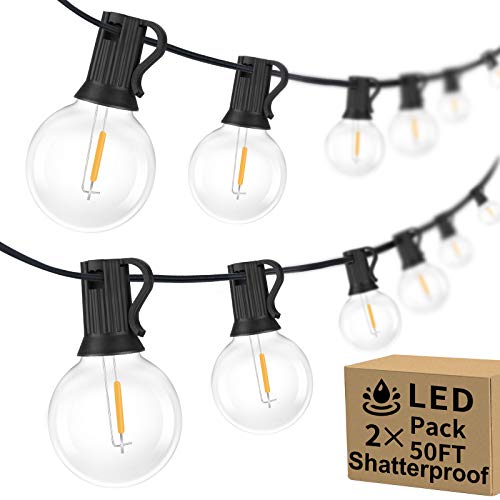
- Durable shatterproof plastic bulbs eliminate dangerous glass shards if strands fall or bump together in wind
- Low power draw of 1 watt per bulb keeps energy consumption low even during extended evening gatherings
- Supports linking up to 17 strands end-to-end for large patio or yard lighting installations
- Waterproof sealed socket design stands up against outdoor moisture and sun exposure
- Built-in hanging hooks on each bulb socket streamline physical installation along guide wires or pergolas
Cons
- Compatible external dimmer switch is not included in the package and must be purchased separately
- Fixed warm white output provides a single aesthetic with no color-changing or tunable white adjustments
- Specific numerical IP rating and lumen specifications are not published by the manufacturer
The Bosceos 100ft G40 Outdoor LED String Lights are engineered for homeowners, renters, and event organizers who need dependable, decorative accent lighting across exterior living spaces. Configured with classic globe-shaped bulbs on a black cord, this set is tailored for backyards, decks, pergolas, bistros, gardens, and outdoor gatherings. The set provides an immediate upgrade over standard string lighting by blending vintage filament charm with modern LED reliability.
Regarding illumination performance, these string lights cast a natural warm white glow that creates a cozy, inviting ambiance without overwhelming outdoor spaces. Each G40 globe bulb operates at an efficient 1 watt, keeping the electrical footprint to approximately 25 watts per string. While specific lumen outputs and Kelvin ratings are not stated in the manufacturer data, the output is purpose-built for atmospheric bistro lighting and social gatherings. For setups requiring customizable brightness, the lights are fully dimmer-compatible when connected to an external dimming switch.
Durability is a major strength of this string set, highlighted by plastic shatterproof globes and sealed socket housings. Unlike traditional glass bulbs that are prone to cracking during wind gusts or accidental drops, these plastic bulbs withstand impacts and rough weather while keeping patio areas safe from broken shards. The sockets feature a fully sealed design intended to endure continuous exposure to sunlight, rain, and shifting seasonal conditions without moisture seeping into the contacts.
Installation is straightforward thanks to the built-in cup hook molded directly into every socket. This allows users to hang each bulb securely from zip ties, cup hooks, or overhead guide wires to prevent sagging over long distances. In addition to simple physical setup, the system features end-to-end connectivity that accommodates linking up to 17 strands simultaneously. The package includes 50 clear G40 bulbs and provides 2 spare replacement bulbs for immediate repairs if needed.
There are a few realistic operational limitations to consider before buying. Although the lights support dimming, an inline or wall dimmer is not included, requiring an additional accessory purchase if variable brightness is needed. Furthermore, the bulbs provide a fixed warm white illumination without smart app integration, remote controls, or multi-color modes. The manufacturer also does not list a specific numerical IP rating, though the sockets are designed with weather-resistant seals for outdoor use.
For anyone wanting to transform a dark patio, pergola, or backyard into a warm, inviting gathering area, the Bosceos G40 outdoor string lights offer practical functionality and low operating costs. The combination of shatterproof plastic construction, 1-watt energy efficiency, generous 17-strand expandability, and built-in hanging hooks makes this set an easy recommendation for everyday outdoor living.
Physical mounting is simplified by the molded cup hook integrated above each bulb socket. These attachment points allow you to secure the light string directly to guide wires, screw hooks, nails, or zip ties without placing tension on the electrical wiring itself.
For wide-span installations across backyards or open lawns, supporting the string lights with a steel guide wire helps prevent cord stretching and maintains a uniform hanging height. The lightweight plastic bulb design keeps total hanging weight down, making setup easier for a single installer.
The strands feature standard male and female plugs that support end-to-end linking up to 17 strands in total. When connecting multiple runs, ensure all connection points are firmly seated and elevated off the ground away from pooling water to maintain weather protection.
Energy consumption is exceptionally low, with each individual G40 globe bulb drawing just 1 watt of electrical power. This equates to roughly 25 watts of total power draw per string, which is significantly lower than traditional 5-watt incandescent string bulbs.
By drawing only 25 watts per run, these string lights allow you to connect multiple strands end-to-end without easily overloading a standard household outdoor circuit. The low wattage also allows you to keep patio or landscape lighting running throughout the evening with minimal impact on electricity bills.
The manufacturer includes 50 clear G40 bulbs along with 2 spare bulbs in the box. Because these are replaceable bulbs operating on standard low-wattage LED filaments, you can swap out individual units over time without needing to discard the entire cord assembly.
The Bosceos G40 string lights are fully compatible with external LED dimmers, allowing you to tailor the light intensity from full brightness for dining down to a soft glow for late-night relaxing. An external dimmer switch is not included with the set and must be supplied separately.
These lights emit a vintage-style natural warm white glow that creates a relaxed, romantic atmosphere reminiscent of outdoor cafes and bistros. This makes them well-suited for decorative accent lighting along fence lines, under pergolas, and around wedding or party venues.
Because the color output is fixed, buyers seeking dynamic multi-color scenes, automated color loops, or tunable white adjustments should note that this model focuses purely on consistent, classic warm white illumination.
Pros
- High listed output of 8000 lumens transforms dim, single-socket ceiling fixtures into bright workspaces
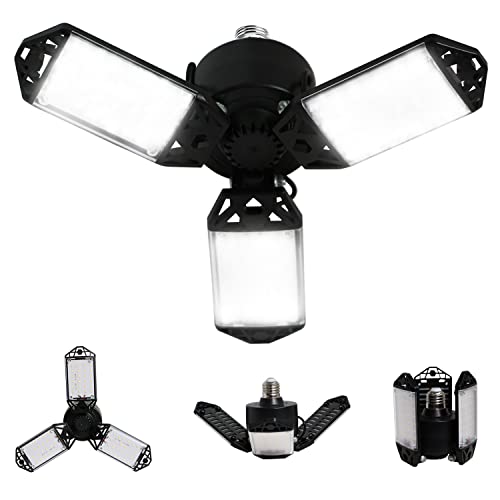
- Three 0 to 90 degree adjustable leaves allow precise directional light to eliminate workbench shadows
- Screw-in E26/E27 design requires no electrical rewiring, extra tools, or specialized mounting brackets
- Compact and lightweight ABS construction places minimal strain on standard ceiling light receptacles
- Holds FCC, CE, and RoHS safety certifications alongside an extended 60,000-hour rated operating life
Cons
- Does not support dimmer switches and must be operated via standard on/off switches to prevent performance issues
- Lacks an official outdoor, damp, or wet IP rating, restricting recommended use to dry indoor environments
- Cool 6500K daylight color temperature is utilitarian and may feel overly stark for finished living areas
The Meiqils 80W LED Garage Light is a deformable, screw-in ceiling fixture designed to replace standard bare incandescent or low-output bulbs in garages, workshops, basements, and utility rooms. Built with three independently adjustable leaves, this unit provides a substantial illumination boost without requiring electrical work, external drivers, or specialized ceiling brackets. It best suits homeowners, renters, and hobbyists who want a fast, budget-conscious way to dramatically improve visibility in task-heavy spaces.
Regarding lighting performance, the manufacturer rates this unit at 80W of power consumption delivering 8000 lumens of light output. The illumination is delivered at a 6500K daylight color temperature with an 80+ CRI rating, producing a crisp, cool white tone that enhances contrast across tool benches and storage shelving. Each of the three panels pivots smoothly from 0 to 90 degrees, allowing users to direct light downward for concentrated task work or fold them flat for broad coverage reaching up to 360 degrees across dark garage bays.
The physical build centers on lightweight ABS material panels finished in black, keeping the total weight to approximately 0.6 pounds. With compact folded dimensions of 3.95 by 3.95 by 4.3 inches, the fixture remains unobtrusive while offering adequate panel surface area to support its solid-state LED arrays. It carries FCC, CE, and RoHS certifications, and the manufacturer lists a rated operational lifespan of up to 60,000 hours, which translates to over a decade of service based on eight hours of daily operation.
Installation is as simple as screwing a conventional light bulb into an existing medium E26 or E27 socket. Because it operates directly from standard line voltage via switch-controlled receptacles, there are no control apps, pairing procedures, or mounting plates to configure. Adjusting the three leaves is easily done by hand, allowing you to tailor the beam distribution curve immediately after threading the fixture into the ceiling.
Buyers should consider a few clear operational limitations before purchasing. This fixture does not list dimming support or smart wireless protocols, meaning it is intended strictly for standard on/off wall switches and should not be paired with wall dimmers. Additionally, the product data does not list an outdoor, damp, or wet-location IP rating, so it should remain in dry, enclosed spaces. The 6500K color profile is also sharply cool, which works well for mechanical tasks but may feel overly clinical in finished residential settings.
For anyone dealing with poor visibility in a garage, barn, laundry room, or workshop powered by a single open socket, the Meiqils 80W LED Garage Light provides a high-lumen, multi-angle upgrade with zero installation friction. Supported by a 3-year replacement guarantee and a 30-day return policy, it represents a practical and cost-effective lighting choice for functional home improvement.
The Meiqils garage light produces a manufacturer-rated 8000 lumens using 80W of power, yielding high visual output for task-focused work areas. Operating at a 6500K daylight color temperature with an 80+ CRI rating, the light provides clear, cool illumination that helps users read labels, work with machinery, and identify details without straining under dim incandescent glow.
Light distribution is fully customizable thanks to three deformable ABS panels that articulate from 0 to 90 degrees. Angling the panels downward directs a concentrated beam directly beneath the fixture for detailed workbench tasks, while spreading the leaves outward disperses light horizontally across up to 360 degrees to eliminate shadows in broad storage bays and utility areas.
Mounting this 80W fixture requires no special tools or electrical modifications, as it features a standard screw base compatible with medium E26 and E27 sockets. Users simply turn off the power switch, unscrew their old bulb, and thread the fixture securely into the ceiling receptacle just like an everyday light bulb.
Once installed, the three multi-directional leaves can be adjusted by hand to suit the specific layout of the room. Weighing roughly 0.6 pounds with folded dimensions of 3.95 by 3.95 by 4.3 inches, the unit remains lightweight enough to mount safely into standard residential plastic or porcelain ceiling sockets without causing mechanical strain.


Pros
- Direct 1:1 mini profile fits factory housings without bulky external drivers or harness adapters
- Clean 6500K cool white beam pattern provides distinct visual contrast on dark roads
- Active 26,000 RPM turbo fan and aviation aluminum body deliver efficient thermal management
- Built-in CANBUS integration reduces decoding errors and flickering on most vehicle systems
- Non-polarized connection makes installation fast and straightforward for DIY vehicle owners
Cons
- The 6500K cool white color profile may not appeal to drivers who prefer warm halogen tones
- A small percentage of sensitive vehicle computer systems may still require additional decoders despite CANBUS support
- Buyers must independently check vehicle manuals or existing bulb sizes to ensure accurate socket fitment
The SEALIGHT S1 Pro Series 9005 and H11 LED Bulbs Combo is an automotive replacement lighting kit designed for vehicle owners who want to upgrade dim, yellow factory halogen bulbs to modern LED illumination. Packaged as a set of four bulbs covering 9005/HB3 high beams and H11/H8/H9/H16 low beam or fog sockets, this combo suits drivers seeking improved nighttime visibility, a clean visual upgrade, and a straightforward DIY installation process.
In terms of forward lighting performance, the combo utilizes 16 high-performance chips per bulb assembly to generate crisp 6500K cool white light. The manufacturer rates the set at up to 100,000 lumens across the combo, producing a noticeable leap in clarity over conventional halogens. More importantly for practical road use, the optical layout is engineered to closely mirror standard halogen filament positioning. This alignment maintains a sharp, focused beam pattern with a defined cut-off line, helping maximize road coverage without projecting hazardous glare into the eyes of oncoming motorists.
Thermal management and durability are critical for automotive LED bulbs, and this set addresses heat through a multi-tier cooling setup. The bulbs are constructed from aerospace-grade aluminum featuring a hollow-carved structure that maximizes surface area for heat radiation. Built into each base is an active 26,000 RPM turbo cooling fan that rapidly moves air away from the internal LED chips. SEALIGHT rates this thermal architecture for up to 70,000 hours of operating life, backed by an IP67 waterproof and dustproof rating with an anti-aging rubber seal to protect internal components against water splash, dust, and road grime.
Installation is designed to be genuinely user-friendly thanks to a true 1:1 size profile. Unlike earlier generations of LED automotive bulbs that relied on oversized rear heat sinks and dangling external driver modules, these bulbs match the physical dimensions of standard halogens. The non-polarized plug design connects directly into the factory socket with no special wiring harnesses or orientation guessing required. Most vehicle owners can complete the swap in just a few minutes per side using standard under-hood access.
While the kit features built-in CANBUS technology designed to prevent flickering and dashboard warning codes across 99% of vehicles, electrical system variations mean occasional decoding adapters may still be needed on select vehicle makes. Additionally, the crisp 6500K cool white color profile provides a modern look and sharp contrast, but drivers who prefer a warmer halogen appearance should consider that Kelvin rating carefully. Automotive fitment databases can also have discrepancies, making it essential to cross-check your vehicle manual or the markings on your current bulbs before buying.
For motorists seeking a dependable, high-output lighting upgrade with factory-like dimensions and straightforward plug-and-play assembly, the SEALIGHT 9005 H11 LED Bulbs Combo offers balanced performance and solid thermal engineering. Its controlled beam geometry, integrated CANBUS decoding, and robust IP67 aluminum build make it a worthwhile option for night-driving safety and vehicle lighting modernization.
The SEALIGHT S1 Pro combo emphasizes controlled optical output through its 16-chip LED design. Replicating the physical filament position of standard halogen bulbs allows the assembly to project an engineered beam pattern that works in harmony with factory headlight reflectors and projector lenses.
Operating at a 6500K color temperature, the bulbs deliver cool white light that helps distinguish road signs, lane markings, and roadside obstacles more sharply than standard halogen bulbs. The focused beam pattern retains a distinct cut-off line, directing usable lumens down onto the asphalt while helping prevent dangerous scattered light from blinding oncoming traffic.
Physical fitment is one of the strongest practical benefits of this SEALIGHT combo. By utilizing a 1:1 real-size mini design, the bulbs fit into tight headlight housings and behind factory dust caps without requiring modifications, cutting, or aftermarket adapters.
The assembly incorporates a non-polarized connector, meaning the plug can be inserted into the factory socket without worrying about reversed polarity. With no external ballast or driver box to tuck away and secure, the installation process is as simple as removing the stock halogen bulb and twisting the replacement LED bulb firmly into place.
Continuous thermal dissipation is essential for maintaining LED brightness and longevity in enclosed automotive housings. The SEALIGHT S1 Pro bulbs are crafted from aerospace-grade aluminum with a hollow-carved body designed to facilitate rapid passive heat transfer.
Active cooling is handled by an integrated 26,000 RPM high-speed turbo fan situated at the base of each bulb. Together with an IP67-rated waterproof and dustproof sealing ring, this build protects internal circuitry from road spray, engine-bay grime, and temperature swings, contributing to the listed 70,000-hour operational lifespan.

The Anatomy and Physical Materials of Modern Light Bulbs
Every light bulb is an engineered assembly of structural enclosures, light-generating elements, electrical conductors, and thermal management components. In traditional lighting designs, manufacturers relied heavily on blown silica glass, metallic tungsten, and copper wiring to produce illumination through extreme thermal incandescence. Contemporary solid-state lamps, however, use semiconductor dies, phosphor powders, aluminum cooling frames, and composite plastics to generate light with significantly greater energy efficiency. Knowing what goes into these assemblies helps you understand how different bulbs withstand vibration, dissipate heat, and interact with home fixtures over time.
Glass Envelopes and Outer Globe Formulations
Glass has served as the primary outer envelope for artificial lighting since the commercial introduction of early incandescent lamps. Most standard household bulbs utilize soda-lime glass, which consists of silica sand, soda ash, and limestone melted together at high temperatures. This specific glass formulation provides excellent optical clarity, handles moderate operating temperatures, and forms a dependable hermetic seal around electrical feed-through wires. Soda-lime glass can also be blown into diverse shapes, ranging from classic pear-shaped A19 bulbs to decorative globe profiles.
Higher-temperature lighting technologies require specialized glass compounds that resist severe thermal stress without warping or cracking. Halogen lamps, for example, often use quartz glass or aluminosilicate glass to contain high-pressure gases directly surrounding the hot filament. Quartz glass softens at significantly higher temperatures than soda-lime formulations, allowing the internal filament to operate at elevated heat levels for improved luminous efficacy. This dense material also helps filter out a portion of the ultraviolet radiation naturally emitted by intense halogen discharge cycles.
Metal Filaments and Internal Support Assemblies
Traditional incandescent and halogen bulbs generate visible illumination through incandescence, where electric current heats a metal wire until it glows brightly. Tungsten remains the standard metal for this purpose because it possesses the highest melting point of all known metals at approximately 3,422 degrees Celsius. Manufacturers draw purified tungsten into extremely fine wire, which is then tightly coiled to maximize the glowing surface area within a compact physical footprint. The extreme density and tensile strength of tungsten allow it to survive intense thermal cycles without vaporizing immediately.
Because a glowing tungsten filament softens during operation, it requires sturdy internal support structures to maintain its precise alignment. Manufacturers construct these supporting hooks and upright posts from heat-resistant metals such as molybdenum and nickel-plated iron. Automotive miniature bulbs demonstrate how dual filament structures can provide multiple lighting functions within a single glass capsule. Products like the SYLVANIA 7443 miniature bulb feature two distinct tungsten coils mounted side by side to handle daytime running lights and brake signals separately, using calibrated wire thickness to withstand vehicle vibrations.
Semiconductor Diodes and Phosphor Layers in LED Bulbs
Modern light-emitting diode lamps do not generate light through burning wires, relying instead on solid-state semiconductor physics. At the heart of an LED bulb sits a tiny crystalline die composed of synthetic materials such as gallium nitride, indium gallium nitride, or silicon. When electrical current passes across the microscopic junction of the crystal, moving electrons release energy in the form of photons. These semiconductor chips are grown on sapphire or silicon carbide wafers under cleanroom manufacturing conditions to ensure high chemical purity and structural integrity.
Most raw LED semiconductor chips naturally emit a narrow spectrum of intense blue or near-ultraviolet light rather than comfortable ambient white light. Manufacturers overcome this by applying a micro-thin layer of rare-earth phosphor powder, often suspended in optical silicone, over the diode surface. The phosphor absorbs a portion of the blue photons and re-emits them across lower-energy yellow, green, and red wavelengths. Blending specific rare-earth elements like cerium-doped yttrium aluminum garnet allows engineers to produce warm light bulbs for comfortable living spaces with precise color temperature ratings.
Thermal Management Metals and Heat Sink Alloys
Although LED bulbs remain cool to the touch on their outer domes, their internal semiconductor junctions generate concentrated heat that must escape. Excessive heat degrades diode efficiency, alters output color, and drastically shortens the operating life of sensitive electronic drivers. Manufacturers solve this thermal challenge by integrating specialized heat sinks constructed from high-conductivity aluminum alloys. Die-cast aluminum and extruded metal frames draw heat directly away from the diode circuit board through physical conduction, protecting delicate internal circuitry.
Deformable multi-panel fixtures illustrate how aluminum components create passive cooling channels for high-lumen illumination. Fixtures like the Meiqils LED garage light combine adjustable panel structures with aluminum backings to disperse heat across open air. Similarly, high-output automotive upgrades like the SEALIGHT 9005 H11 LED Bulbs Combo utilize aerospace-grade aluminum housings alongside miniature cooling fans. Without these specialized metal thermal paths, high-output LED chips would suffer rapid lumen depreciation and premature electrical failure under sustained operation.
Structural Plastics, Polycarbonates, and Shatterproof Shells
Engineering-grade thermoplastics have largely replaced fragile glass across wide segments of the consumer lighting market. Modern LED A19 bulbs, including smart options from Amazon Basics, frequently use outer diffusers made from injection-molded polycarbonate or optical acrylic. Polycarbonate offers remarkable impact resistance, preventing the globe from shattering if dropped onto hardwood floors or concrete during installation. Optical additives blended into the plastic matrix diffuse harsh pinpoints of diode light into a uniform, glare-free glow suitable for ambient living areas.
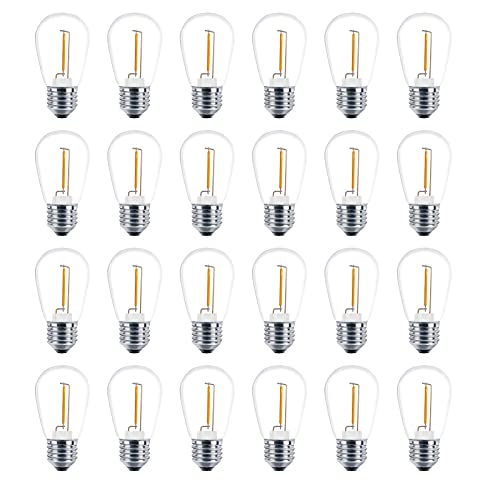
Outdoor commercial and residential string lighting benefits dramatically from heavy-duty plastic construction. Decorative string sets, such as Bosceos G40 patio lights and Meconard S14 replacement bulbs, feature shatterproof plastic shells designed to survive severe weather. Unlike glass bulbs that crack under high winds, hail, or accidental impacts against patio railings, resilient plastic globes withstand heavy physical vibrations. These weather-resistant polymers also resist prolonged ultraviolet radiation exposure, preventing the outer shells from yellowing or becoming brittle outdoors over time.
Internal Drivers, Circuit Boards, and Smart Controls
Unlike traditional incandescent lamps that connect directly to household alternating current, LED chips require regulated low-voltage direct current. Every self-ballasted LED bulb contains an internal driver circuit mounted on a fiberglass printed circuit board, typically constructed from flame-resistant FR4 laminate. Copper traces etched across the fiberglass board route electrical current between miniature surface-mount components. This compact circuit assembly fits snugly within the neck of the bulb between the screw base and the thermal heat sink to ensure safe isolation.
The driver includes an assortment of electronic components crafted from silicon, ceramic, copper, and electrolyte solutions. Diode bridge rectifiers convert incoming alternating current into direct current, while electrolytic capacitors smooth out voltage ripples to prevent visible flicker. Connected lighting adds another layer of sophistication with dedicated wireless communication microchips. The Amazon Basics Smart A19 LED Light Bulb incorporates a 2.4 GHz Wi-Fi radio module and onboard memory directly onto its internal circuit board, allowing microcontrollers to regulate dimming and scheduling routines.
Electrical Screw Bases, Contact Terminals, and Insulating Barriers
The base of a light bulb serves the dual purpose of physically anchoring the lamp and conducting electricity safely from the socket. Most residential screw bases, including standard medium E26 and European E27 formats, are stamped from thin sheets of aluminum or brass. Nickel-plated brass offers superior corrosion resistance compared to plain aluminum, making it ideal for marine environments or damp outdoor fixtures. The outer threaded shell acts as the neutral electrical contact in alternating current installations across North America, completing the primary circuit safely.
At the very bottom tip of the screw base sits a small metallic foot contact that connects to the energized hot wire in the socket. A durable ring of insulating material completely separates this bottom contact point from the surrounding threaded metal shell to prevent dangerous short circuits. Manufacturers traditionally used dark vitrite glass, a specialized high-lead glass, to mold this insulating barrier under high temperatures. Contemporary bulbs also employ heat-resistant phenolic resins or technical ceramics that maintain high electrical resistance even when exposed to continuous socket heat.
Gas Fills, Atmospheric Vacuums, and Chemical Vapors
The internal atmospheric environment of a light bulb plays a critical role in preserving hot filaments and facilitating electrical discharges. Early incandescent bulbs operated under a mechanical vacuum, but the low internal pressure accelerated the evaporation of hot tungsten wire onto the glass. Modern incandescent lamps are filled with an inert gas mixture, usually comprising roughly ninety percent argon and ten percent nitrogen. The heavy argon gas atoms bounce evaporating tungsten atoms back onto the glowing filament, significantly extending the operating life of the bulb.
Halogen bulbs introduce tiny quantities of halogen vapors, such as methyl iodide or hydrogen bromide, into the pressurized inert gas mix to initiate the regenerative halogen cycle. Fluorescent lighting utilizes a completely different chemical approach, relying on low-pressure mercury vapor mixed with inert gases like argon or krypton. When an electric arc strikes through the tube, it excites the mercury atoms, causing them to emit invisible ultraviolet light that excites internal phosphors. Understanding heat emission from fluorescent light bulbs highlights why enclosed fixtures need adequate ventilation when handling gas-discharge lamps.
Material Selection for Outdoor, Enclosed, and Automotive Uses
The operating environment determines which bulb materials provide the safest and most reliable performance over years of use. Indoor dry-location bulbs prioritize cost efficiency and uniform light diffusion, often pairing lightweight plastic housings with basic aluminum bases. In contrast, outdoor string lighting demands weatherproof seals, high-grade synthetic rubbers, and shatterproof globes capable of enduring freezing rain and intense summer sun. Selecting the wrong material composition for an outdoor fixture can result in water ingress, rapid socket corrosion, or catastrophic glass failure during harsh weather.
Enclosed ceiling fixtures and automotive housings introduce extreme ambient heat and physical vibration that require fortified component materials. Bulbs installed in enclosed fixtures face trapped heat that can degrade low-quality driver capacitors and cause plastic housings to discolor prematurely. Automotive replacement bulbs, meanwhile, combine IP67-rated anti-aging rubber sealing rings with solid metal housings and integrated micro-fans to withstand aggressive road debris. Checking the product label for damp-location or enclosed-fixture ratings ensures the internal materials can withstand the expected environmental stresses without early failure.
Environmental Disposal and Safe Handling of Bulb Materials
Knowing the materials inside your light bulbs makes routine handling and cleanup much safer when an accidental drop occurs. If a traditional incandescent or LED bulb breaks, the primary hazard consists of sharp glass shards or fragmented plastic edges that require careful sweeping. Broken LED lamps also expose low-voltage circuit boards and fine wires, which should be handled with protective gloves after disconnecting power to the socket. Letting any hot bulb cool completely before attempting replacement prevents skin burns and minimizes the risk of cracking the outer envelope.
Fluorescent tubes and compact fluorescent lamps demand a specialized cleanup protocol due to their internal mercury content. If a fluorescent bulb breaks, open nearby windows to ventilate the space and avoid using a standard vacuum cleaner that could vaporize and disperse mercury dust. Contemporary LED light bulbs do not contain toxic mercury, but their complex electronic drivers categorize them as electronic waste in many recycling jurisdictions. Responsible disposal through community recycling centers keeps heavy metals and non-biodegradable plastics out of municipal landfills while supporting sustainable material reclamation.
Light bulbs have evolved from fragile, heat-dependent glass vessels into complex electro-mechanical assemblies built from advanced semiconductors, thermal alloys, and resilient polymers. Recognizing what each component is made from gives you the insight needed to select durable outdoor string sets, safe indoor ambient lighting, and efficient smart upgrades. Before purchasing your next replacement bulb, take a moment to inspect the fixture requirements, environmental ratings, and material specifications listed on the packaging. Selecting well-engineered materials tailored to your specific lighting application ensures lasting safety, consistent illumination, and optimal energy efficiency throughout your home.





Write Your Review
No reviews yet. Be the first to share your experience!