


Replacing an old household light source often raises questions about exact brightness levels, especially when switching between fixture styles or matching existing fixtures. For decades, residential shoppers evaluated brightness purely by wattage, but electrical power consumption does not directly measure luminous flux. If you need to understand how many lumens 100 watt incandescent bulb ratings, a classic general-service 100-watt bulb produces roughly 1,600 lumens of omnidirectional light. Knowing this standard benchmark allows you to evaluate both traditional replacements and modern alternatives without ending up with a room that feels dim or uncomfortably glaring.
Different bulb designs and filament configurations can alter actual light output significantly, even among bulbs rated for identical electrical wattage. Bulbs engineered for high-vibration locations or heavy industrial use frequently yield fewer lumens because thicker, supported filaments prioritize mechanical durability over raw luminous efficiency. Exploring understanding how bulb filaments work provides helpful perspective on why heavy-duty filaments glow differently than standard household options. Checking the labeled lumen rating on the packaging ensures your chosen bulb delivers the exact brightness required for reading, task lighting, or general room illumination.


Everything You Need to Know About 100-Watt Incandescent Light Output
Understanding light bulb brightness requires separating the electrical energy a bulb draws from the visible illumination it produces. In traditional incandescent lighting, that distinction explains why two bulbs consuming identical wattage can deliver different levels of room illumination.
The Standard Lumen Benchmark for a 100-Watt Incandescent Bulb
When evaluating traditional household lighting, a standard 100-watt incandescent light bulb engineered for standard 120-volt residential service produces approximately 1,600 lumens. Depending on the manufacturer, glass coating, and slight filament variations, this output typically ranges between 1,500 and 1,700 lumens. For several decades, this 1,600-lumen output established the benchmark for high-output domestic illumination, providing plenty of light for living rooms, kitchens, hallways, and workshop workbenches.
General-service incandescent bulbs create light by passing an electric current through a thin tungsten filament until it glows white-hot, a process known as incandescence. The physical characteristics of a standard tungsten coil operating at roughly 2,500 degrees Celsius dictate this specific lumen level. Because the glowing wire radiates light evenly in all directions, an unmodified clear or frosted incandescent bulb delivers a uniform, 360-degree omnidirectional beam pattern that fills entire fixtures and lampshades evenly.
Historically, consumers relied on wattage as a convenient shorthand for how bright a bulb would appear in a room. However, wattage strictly measures the amount of electrical power a bulb consumes each hour rather than the amount of visible illumination it radiates. In modern lighting standards, luminous flux measured in lumens represents the actual quantity of visible light emitted. While a standard 100-watt bulb consumes substantial electrical power, its 1,600-lumen baseline remains the standard reference point against which other lighting products are compared.
Why Some 100-Watt Incandescent Bulbs Produce Fewer Lumens
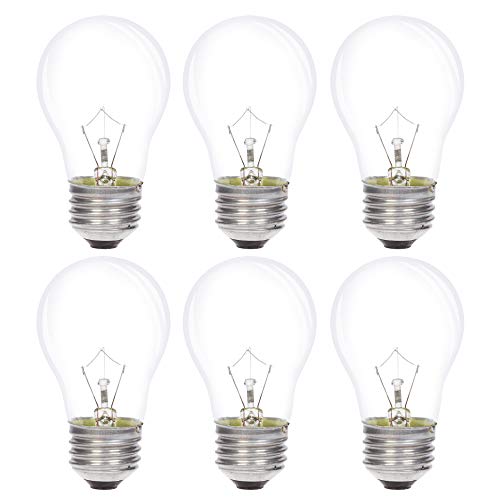
Although 1,600 lumens represents the baseline for standard household lamps, many 100-watt incandescent bulbs produce substantially lower lumen numbers. Specialty options known as rough service or vibration-resistant bulbs frequently output between 1,000 and 1,300 lumens despite drawing a full 100 watts of electrical power. For instance, the Xtricity A19 Clear Incandescent Rough Service bulb and the FMLAD 100 Watt Incandescent Light Bulbs both explicitly specify an output of 1,020 lumens. Similarly, the CMA Traditional Style GLS Bulb is labeled at 1,300 lumens, demonstrating that lumen ratings vary widely based on intended application.
The reduction in light output found in rough service bulbs results from intentional structural reinforcements inside the glass envelope. Standard incandescent filaments are delicate and can easily snap when subjected to mechanical shock, door slams, or ceiling fan vibrations. To counter this vulnerability, manufacturers add extra support wires along the filament bridge, as featured in Hoimuv and runquiz rough service designs. These supplementary metallic supports conduct thermal energy away from the tungsten coil, slightly lowering the operating temperature of the filament and reducing its overall luminous efficiency.
Purchasers choosing rough service bulbs trade maximum light output for superior mechanical durability and resistance to physical movement. If you place a bulb in a garage garage-door opener, an overhead workshop drop light, or a vibrating ceiling fan, a reinforced 1,020-lumen filament will withstand daily jolts that might quickly destroy a standard 1,600-lumen filament. Recognizing this engineering tradeoff prevents disappointment when a newly installed industrial-grade bulb appears noticeably softer than an ordinary general-service 100-watt bulb.
The Impact of Voltage Ratings: 120-Volt vs. 130-Volt Bulbs
Another significant factor influencing incandescent lumen output is the bulb rated operating voltage compared to your household line voltage. Standard residential electrical receptacles in North America typically supply nominal power between 115 and 120 volts. However, many heavy-duty incandescent bulbs, including options from Xtricity, carry a design rating of 130 volts. This voltage difference creates a measurable shift in both the brightness and the expected lifespan of the tungsten filament.
When a bulb rated for 130 volts operates on a standard 120-volt household circuit, the filament receives less electrical pressure than its maximum rating. Running the filament below its designed voltage reduces its internal operating temperature, causing it to produce roughly 15 to 20 percent fewer visible lumens. In exchange for this reduced brightness, the cooler filament evaporates at a drastically slower rate, extending the bulb operational life from the traditional 750 or 1,000 hours up to 3,000 hours or more.
Understanding this voltage interaction helps homeowners make informed buying choices based on fixture accessibility. For an easily accessible bedside reading lamp where vibrant illumination is paramount, a standard 120-volt bulb operating at full temperature provides optimal brightness. Conversely, for a high foyer ceiling or a rugged outdoor fixture where changing blown bulbs requires setting up a ladder, accepting the lower lumen output of a 130-volt bulb provides convenient longevity.
Lumens vs. Watts: Understanding Light Output Versus Electrical Consumption
To evaluate modern lighting options accurately, it helps to calculate luminous efficacy, which expresses the ratio of visible light produced to electrical energy consumed. Traditional incandescent lamps exhibit relatively low luminous efficacy, generating approximately 10 to 16 lumens per watt of consumed electricity. For a standard 100-watt bulb emitting 1,600 lumens, the efficacy sits right around 16 lumens per watt, meaning that only a minor fraction of the electricity turns into visible light while the rest radiates as thermal energy.
Modern lighting technologies deliver the same luminous output while drawing significantly less wattage from the electrical panel. Compact fluorescent lamps (CFLs) can produce 1,600 lumens while consuming approximately 23 watts, whereas modern LED replacements achieve 1,600 lumens using only 14 to 17 watts. When outfitting study areas or home offices, choosing brighter bulbs for desk tasks and study spaces requires focusing directly on lumen ratings rather than wattage labels to achieve comfortable clarity without exceeding fixture limits.
Package labeling guidelines enforced by the Federal Trade Commission emphasize lumens on front-facing Lighting Facts labels to eliminate consumer confusion. Instead of guessing how bright a bulb will shine based on power draw, shoppers can match lumen specifications directly across incandescent, halogen, and solid-state alternatives. If a desk lamp or ceiling pendant calls for the illumination level of an old 100-watt bulb, searching for a product marked between 1,500 and 1,600 lumens ensures an exact visual match.
Color Temperature and Spectral Quality of Incandescent Illumination
Beyond raw brightness, the visual character of light depends heavily on color temperature, which is measured in kelvins (K). Incandescent bulbs produce light through continuous thermal blackbody radiation, yielding a distinctly warm, golden glow typically rated between 2700K and 3000K. Products like the CMA Traditional Style bulb and the Hoimuv incandescent pack are rated at 2700K soft white, while the FMLAD clear bulb is rated at 3000K warm white, producing a slightly crisper tone.
A major reason many consumers still prefer incandescent bulbs is their exceptional color rendering capability. The Color Rendering Index (CRI) measures how accurately a light source reveals the true colors of objects compared to natural daylight. Because incandescent filaments generate an unbroken, continuous spectrum of light across all visible wavelengths, they naturally achieve a CRI score near 100. As highlighted in the runquiz specifications, this full spectrum brings out rich tones in wood furniture, fabrics, skin tones, and artwork without artificial color spikes.
Light appearance plays a substantial role in shaping the psychological comfort of different living spaces. Cooler color temperatures can feel clinical or energizing, making them suitable for commercial workspaces or task zones, but warmer tones promote relaxation in residential settings. When outfitting bedrooms, dining rooms, or living areas, selecting warm light bulbs for cozy living areas creates an inviting atmosphere that complements residential decor and supports evening wind-down routines.
Physical Specifications: A19 Bulb Shape, Clear Glass, and E26 Bases
Light output means very little if the physical bulb cannot fit correctly inside your intended lighting fixture. Most 100-watt incandescent bulbs designed for general home use feature the classic A19 bulb shape. The letter A designates an Arbitrary or classic pear shape, while the number 19 indicates the maximum diameter of the bulb in eighths of an inch, translating to approximately 2.36 inches (60 millimeters). The overall height of standard A19 bulbs usually measures between 3.9 and 4.1 inches, matching dimensions specified by brands like FMLAD and Hoimuv.
The electrical connection at the bottom of these bulbs is almost universally an E26 medium screw base. The letter E honors Thomas Edison, who developed the screw base system, and the number 26 signifies an outer thread diameter of 26 millimeters. Products such as the GLOXTED 100W bulb, the RUGACCG clear bulb, and the CMA GLS bulb all utilize this standard E26 base, which threads easily into standard North American lamp sockets, recessed cans, and wall sconces.
Before installing any 100-watt bulb, verify that the fixture provides adequate physical clearance and allows sufficient air circulation. High-wattage incandescent bulbs generate significant surface heat, and cramming an A19 bulb into a tightly enclosed decorative globe or small sconce can trap hot air. Always inspect the fixture label to verify that the socket is explicitly rated to handle 100-watt incandescent lamps safely, as exceeding fixture wattage ratings can degrade wiring insulation over time.
Dimming Performance and Fixture Compatibility Considerations
Dimming versatility remains one of the greatest functional strengths of incandescent light technology. Because incandescent lamps operate as purely resistive electrical loads, they do not require internal electronic driver boards or specialized dimming circuitry. Bulbs such as the FMLAD 4-pack and the runquiz rough service models offer smooth, continuous dimming from full brightness all the way down to a faint glow without stepped brightness jumps.
Another distinctive characteristic of incandescent dimming is known as warm dimming. As a dimmer switch reduces electrical voltage, the filament temperature falls, which naturally shifts the emitted color spectrum toward deeper amber and red wavelengths. Rather than maintaining a static color temperature as brightness declines, the light shifts from a bright 2700K glow down to an intimate, candle-like 2000K or 1800K glow. This warm color shift enhances evening relaxation and dining ambience in a way that basic non-dimming or fixed-color LED bulbs cannot match.
Incandescent bulbs are fully compatible with virtually all standard wall-mounted TRIAC and phase-cut dimmers, including legacy controls that have been installed in homes for decades. Modern solid-state bulbs often require specific low-wattage electronic dimmers to prevent flickering or audible buzzing, but traditional incandescent filaments operate smoothly on older rotary and slide switches. This universal dimmer compatibility makes 100-watt incandescent bulbs a simple, hassle-free option when you want reliable dimming without replacing existing wall controls.
Safe Handling, Heat Management, and Everyday Maintenance
Because a 100-watt incandescent bulb converts roughly 90 percent of its electrical power into heat, operating temperatures on the outer glass surface can exceed 200 degrees Celsius (nearly 400 degrees Fahrenheit). Touching a lit bulb or attempting to unscrew one immediately after turning off the lamp can cause serious contact burns. Always turn off the wall switch or unplug the fixture, and allow the bulb to cool for several minutes before handling it during routine maintenance or cleaning.
Clear glass envelopes, such as those featured on the RUGACCG and GLOXTED bulbs, should also be handled gently during unboxing and installation to avoid creating micro-fractures. If a bulb is installed in a dusty or greasy environment, wiping the cool glass surface periodically with a clean, dry microfiber cloth prevents dust accumulation from baking onto the glass. When inserting a replacement bulb into a socket, grip the bulb near the base and turn clockwise until it sits snugly against the contact point, avoiding excessive force that could shear the brass base from the glass.
While extreme heat is a characteristic that requires careful fixture selection, incandescent bulbs possess a distinct advantage in extremely cold environments. Traditional thermal radiation bulbs perform flawlessly in unheated garages, outdoor pole lamps, and outdoor utility sheds during freezing winter conditions. As noted in the runquiz specifications, traditional tungsten bulbs experience zero delay and emit their full lumen output instantly even at sub-zero temperatures, whereas many compact fluorescent lamps struggle with sluggish warm-up times in the cold.
Selecting the Right Replacement for Your Fixtures
Choosing the right bulb comes down to balancing your requirement for raw light output against your need for physical durability and lamp lifespan. If your primary objective is maximizing room brightness in a floor lamp or living room chandelier, seek standard general-service incandescent bulbs or high-efficiency equivalents that deliver the classic 1,600-lumen output. This ensures your space receives vibrant, wide-angle illumination that effectively brightens dark corners and supports active family activities.
When selecting bulbs for environments subject to ongoing mechanical vibration, such as overhead garage doors, ceiling fans, or portable work lights, a rough service bulb rated at 1,020 to 1,300 lumens offers a more reliable choice. Although you sacrifice a modest amount of total brightness, the reinforced internal filament structure prevents premature failures caused by sudden shocks and vibrations. Checking product specifications carefully ensures you select a bulb that fits your E26 socket, respects fixture heat limitations, and provides the exact brightness balance your space requires.






Write Your Review
No reviews yet. Be the first to share your experience!