


Blown-out highlights and muddy shadows often ruin an otherwise sharp capture when contrast ratios get out of hand. In-camera matrix meters evaluate reflected brightness across a scene, but incident readings measure the actual illumination falling directly onto your subject. That is why reliable sekonic light meters for photography remain indispensable tools for studio strobes, ambient fill, and mixed continuous setups. Whether you want to balance key and fill lights or adjust lighting ratios in a studio workspace, taking direct incident readings removes guesswork. Establishing clean exposure at the source protects highlights and prevents irreversible sensor clipping on set.
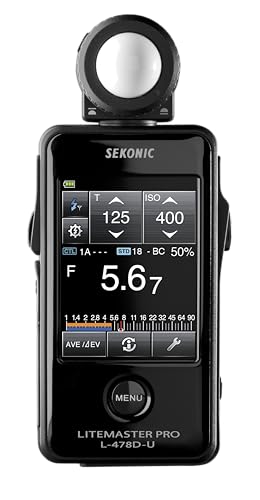
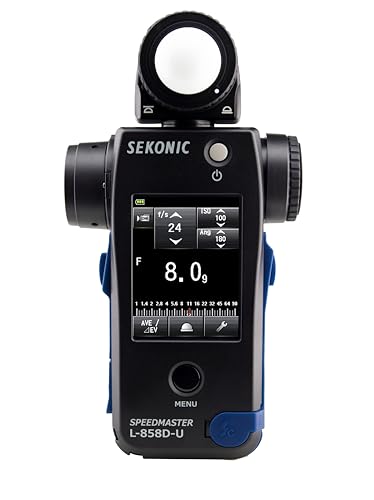
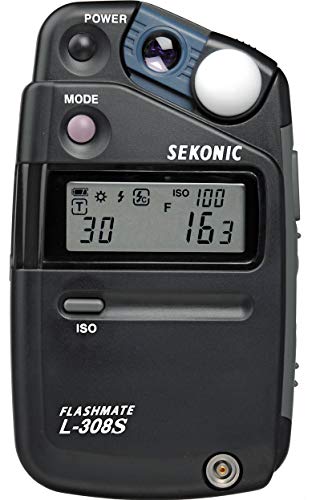
Manufacturer specifications and hardware features show clear distinctions across these models, separating compact pocket tools like the L-308 series from advanced spot-metering units like the L-858D-U with wireless radio triggering. Some photographers need simple incident readings for outdoor portraiture, while others require high-speed sync measurements or cine frame rate timing. Even when you are balancing general ambient brightness similar to setting up a light for living room environment, repeatable illuminance measurements provide complete lighting control. Selecting the right meter depends on whether your workflow calls for wireless strobe triggering, spot metering, or battery-free analog operation.





Frequently Asked Questions
How do incident and reflected readings differ on Sekonic light meters?
Incident metering measures the light falling directly onto your subject, while reflected metering reads the light bouncing off surfaces back toward the lens. In-camera meters rely strictly on reflected light, which easily misinterprets very dark or light backgrounds. Using an incident retractable dome on sekonic light meters for photography provides absolute exposure values independent of subject color or surface reflectance.
Which Sekonic Light Meters For Photography models support high-speed sync and flash duration analysis?
The Sekonic L-858D-U Speedmaster directly supports flash duration measurements and high-speed sync (HSS) exposure tracking. Standard meters capture total burst volume, but the L-858D-U tracks t0.1 and t0.5 pulse speeds to help photographers freeze fast-moving action. This feature prevents motion blur when firing studio strobes at rapid shutter speeds.
Does the Sekonic L-398A Studio Deluxe III require batteries?
No, the Sekonic L-398A Studio Deluxe III operates entirely without batteries. It uses an amorphous photocell sensor that generates its own electric current from ambient illumination to drive the mechanical needle. This makes it a reliable mechanical backup meter for field shoots and continuous lighting setups where power outlets are unavailable.
Can Sekonic Light Meters For Photography trigger studio strobes wirelessly?
Yes, specific Sekonic models feature built-in or modular radio transmitters for wireless flash triggering. The Sekonic L-478DR-U includes built-in PocketWizard triggering, while the L-858D-U accepts optional radio modules for systems like Godox, Elinchrom, and Phottix. These wireless connections let you fire flashes and adjust power levels directly from your metering position.
Why use a handheld meter instead of camera auto-exposure?
Handheld meters provide consistent manual exposure control by eliminating the guesswork of reflective camera sensors. When working with complex accent sources or dynamic backdrops like a creative Christmas lights setup, camera sensors often underexpose the scene. A handheld incident meter guarantees correct subject skin tones regardless of surrounding highlights.
What is the difference between the Sekonic L-308X-U and older L-308S models?
The Sekonic L-308X-U Flashmate adds dedicated Cine and HD Cine modes alongside standard still photo metering. It also incorporates an illuminated LCD backlight that turns on automatically in low-light environments. Older models like the L-308S focus primarily on traditional still photography shutter speeds without cinema frame rates.




Write Your Review
No reviews yet. Be the first to share your experience!