


Deep cobalt and rich navy lamp bases introduce a grounding, sophisticated presence to side tables, nightstands, and living room credenzas. Yet, figuring out what colour shade for navy blue lamp fixtures require can completely change how light disperses across a living space. A stark visual contrast can brighten an entire seating perimeter, whereas a softer, warm undertone softens harsh shadows and establishes a restful ambiance. Pairing the fixture with appropriate transparent filament bulb choices ensures that the shade material diffuses direct diode glare without muting the lamp’s natural sculptural lines.
The ultimate choice hinges on whether the fixture serves as a primary source of ambient reading light or an evening decorative focal point. Crisp white linen shades bounce illumination upward and outward, making them practical for reading nooks and active family rooms. In contrast, choosing tone-on-tone dark blue fabric creates a focused, dramatic pool of directional light suited for moody credenzas and relaxed bedrooms. By assessing shade translucency, lining hues, and proportional dimensions, homeowners can easily achieve balanced illumination that flatters both the lamp base and surrounding furniture.


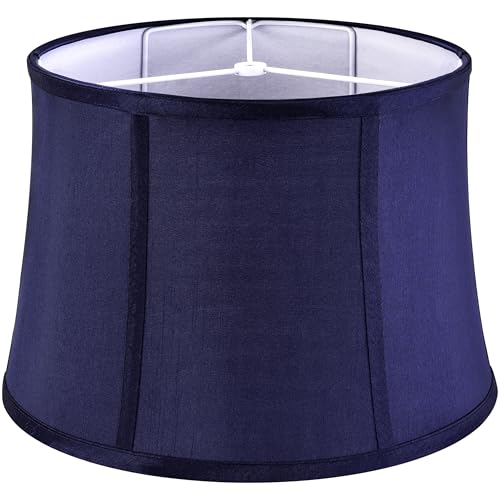
The Definitive Guide to Lamp Shade Colors for Navy Blue Bases
Selecting the right lampshade color for a navy blue lamp base depends on your room’s color palette and the specific lighting role the fixture fulfills. A deep navy base provides a classic, grounding foundation that pairs naturally with crisp whites, warm neutrals, metallic accents, and monochromatic dark blues. Because lampshades act as optical diffusers, the hue you select dictates not only daytime aesthetics but also color temperature, lateral beam spread, and total lumen output in the evening. Understanding how different fabric tones interact with your lamp base allows you to achieve balanced illumination and refined interior styling.
Crisp White and Off-White Shades for Maximum Ambient Brightness
Crisp white and clean off-white shades remain the most popular pairing for navy blue bases because they offer striking contrast and superior light transmission. When an illuminated white shade sits atop a dark navy ceramic or painted metal base, the stark boundary highlights the lamp’s silhouette while maximizing usable lumens across the room. Translucent white fabrics allow light to pass through the shade walls laterally, illuminating nearby seating surfaces and brightening darker corners. This high-contrast pairing works particularly well in coastal, nautical, and modern classic living rooms where clean lines and airy aesthetics dominate.
Pure bright white can sometimes produce a slightly cool glare if paired with higher color temperature bulbs. Opting for a soft white, chalk, or gentle cream shade introduces enough warmth to prevent eye fatigue during evening leisure activities. If your space features warm wood tones, creamy walls, or brass hardware, an off-white linen or silk shade bridges the dark navy base with surrounding room elements. When configuring a fixture for reading or close visual tasks, pairing a bright white shade with dedicated study desk lighting ensures optimal lux levels across your work surface without casting odd color tints.
Warm Beige, Oatmeal, and Natural Linen for Relaxed Textures
Natural beige, oatmeal, and raw linen shades create an earthy, grounded dynamic when resting on a rich navy blue fixture. These neutral tones soften the formal tendencies of dark blue, making the lamp feel relaxed, approachable, and organically textured. The coarse weave of unbleached linen or textured burlap introduces subtle tactile interest that catches ambient daylight. When the lamp is switched on, the natural fibers warm the light output, transforming standard 2700K bulb glow into a gentle, inviting golden cast.
This color combination is especially well suited for transitional, rustic, and modern farmhouse interiors that favor muted, nature-inspired materials. A sandy beige drum shade on a navy stoneware base balances visual weight effectively without demanding total attention in the room. Warm neutral fabrics also do a remarkable job of mitigating harsh bulb glare by diffusing light evenly through their textured surface. Homeowners seeking a cozy, low-glare reading corner often find that oatmeal linen provides the ideal balance between functional brightness and soothing visual comfort.
Monochromatic Navy and Tone-on-Tone Dark Blue Shades for Dramatic Mood
Matching a navy blue shade directly to a navy blue lamp base delivers an undeniably bold, dramatic design statement. Options like the GO&SO Dark Blue Velvet Drum Lamp Shade or the FenchelShades.com 14″ Top Diameter x 14″ Bottom cylinder drum shade create a monolithic column of rich color that feels custom-tailored. When you select a dark blue fabric, the shade walls become substantially more opaque than traditional white or ivory diffusers. Rather than projecting light outward across the entire room, a dark shade concentrates illumination strictly through the top and bottom openings.
This directional beam pattern produces dramatic pools of uplight against your ceiling and localized downlight on the tabletop below. Styling a dark shade works exceptionally well on living room sideboards, library desks, and bedroom nightstands where moody accent lighting takes priority over general illumination. A hardback silk profile, such as the Urbanest Hardback Silk Empire Lamp Shade 5-inch, provides a clean, tailored finish that prevents light leaks through the fabric body. To keep the look cohesive, consider choosing a shade with contrasting white trim, like the Urbanest French Drum With White Trim 12x14x10″, which frames the fixture with architectural precision.
Warm Metallics and Gold Inner Linings for Radiant Accent Glow
Shades featuring gold, brass, or copper reflective inner linings represent one of the most sophisticated pairings for navy blue fixtures. Navy and gold are natural partners on the color wheel, frequently seen in classic regency, art deco, and upscale contemporary interiors. When a lamp is fitted with a metallic-lined shade, the inner foil acts as a warm mirror that reflects bulb rays downward in a rich, amber hue. This internal reflection dramatically enhances warmth, transforming standard soft white bulbs into a candlelight-style ambient glow.
Metallic-lined shades are typically fully opaque on their exterior, whether the outer material is matte navy, black, or textured charcoal fabric. Because zero light penetrates the exterior walls, all available lumens project directly onto the tabletop surface and upward toward the ceiling. This optical behavior eliminates seated eye-level glare entirely while generating a striking architectural focal point in dimly lit conversation rooms. If your room already incorporates brass floor fixtures or brushed gold cabinet hardware, a gold-lined shade creates a cohesive decorative bridge across your lighting scheme.
Playful Contrasts: Blush Pink, Mustard Yellow, and Scalloped Prints
Introducing unexpected accent colors through your lampshade allows a navy blue lamp base to serve as an eclectic, personalized centerpiece. Mustard yellow and ochre shades produce a dynamic, high-energy contrast against navy bases, echoing the classic harmony of warm solar tones and deep oceanic blues. Soft blush pink and dusty rose offer a gentler contrast, softening the visual weight of dark navy with subtle warmth and romantic charm. These colorful pairings work exceptionally well in creative home offices, welcoming guest bedrooms, and vibrant mid-century modern spaces.
Patterned and decorative silhouettes, such as the GO&SO Lamp Shades 1Pc,6″ x 13″ x 10.6″,Scalloped shade with blue petals, inject personality into an otherwise static tabletop arrangement. Scalloped edges and botanical prints soften rigid furniture lines, directing the eye toward the lamp’s unique craftsmanship. When incorporating patterned or colored shades, ensure the background fabric maintains adequate translucency so the bulb does not create dark, irregular shadows. Aligning the secondary colors of the print with existing throw pillows or wall art helps ground the playful design within the wider room.
Shade Material and Fabric Weave: Silk, Velvet, Pleated, and Parchment
The texture and construction of your chosen lampshade profoundly influence how light diffuses and how the navy base is perceived. Smooth silk and faux silk fabrics, found on models like the eTeckram Softback Bell Lampshade, Faux Silk, impart a lustrous, formal elegance that complements glossy ceramic or lacquered navy lamps. In contrast, heavy velvet shades absorb ambient room light during the day, projecting a plush aesthetic that feels luxurious in formal sitting rooms. The dense pile of velvet also ensures zero lateral light bleed, creating sharp, dramatic downward illumination cones.
Pleated fabrics add structural depth and traditional character, casting distinct linear shadow patterns when illuminated from within. The Aspen Creative 33170, Mushroom Pleated Traditional dark blue shade demonstrates how closely spaced mushroom pleats catch light along their folds, elevating classic design sensibilities. Much like the timeless charm seen on vintage antique cut glass lamps, pleated and tailored softback shades introduce artisanal texture that modern drum shades cannot replicate. Hardback parchment shades, by comparison, deliver crisp modern silhouettes and uniform diffusion, making them ideal for contemporary or minimalist settings.
Fitter Types and Hardware Compatibility: Spider, Uno, and Harp Selection
Before finalizing your shade color, verifying the structural mounting mechanism is essential to ensure proper mechanical stability. The three primary lampshade fitter styles include spider fitters, uno fitters, and bulb clip-on assemblies. Spider fitters are the most common standard in North American table lamps, featuring three or four metal spokes that rest atop a removable harp and secure with a decorative screw-on finial. Fixtures designed for spider shades allow you to easily swap harps of varying heights to fine-tune how low the shade sits relative to the lamp base.
In contrast, uno fitters, such as the one used on the Melloway SMALL Lampshade 9″x10″x7.5″ for Small shade, attach directly to the threaded socket shell beneath the light bulb. Uno fitters are common on compact accent lamps and European-style fixtures where harp hardware is absent. Clip-on fitters clamp directly onto the glass envelope of standard A19 or candelabra bulbs, making them best suited for lightweight miniature fixtures or small wall sconces. Matching the fitter style of your replacement shade to your navy lamp base guarantees a level, secure installation that resists accidental wobbling.
Proportion, Sizing, and Sightline Glare Rules
Achieving visual harmony requires adhering to established furniture and lighting proportion guidelines when selecting your shade size. As a general rule of thumb, the height of your lampshade should measure roughly one-third of the total height of the fixture from base to finial. Furthermore, the bottom diameter of the shade should be approximately twice the width of the lamp base at its widest point. Adhering to these dimensional ratios prevents top-heavy instability while ensuring the shade does not look undersized or awkwardly perched on a substantial navy ceramic urn.
Sightline ergonomics are equally critical for daily visual comfort, especially when placing lamps beside living room sofas or bedroom beds. When you are seated on your couch or reclining in bed, the bottom rim of the lampshade should align right around eye level. If the shade sits too high, the bare bulb casts blinding direct glare straight into your line of sight. If the shade sits too low, usable downward illumination is severely restricted, leaving books and tabletop surfaces shrouded in shadow. Adjusting your harp height by half an inch can quickly resolve glare problems while preserving ideal physical balance.
Bulb Selection, Kelvin Temperatures, and Diffuser Strategy
The light bulb you install inside your lampshade fundamentally alters how the fabric color appears in your living space. Standard LED bulbs rated at 2700K soft white produce warm, golden illumination that flatters ivory, cream, and beige linen shades beautifully. If your navy base is topped with a crisp white drum shade, a 3000K warm white bulb maintains clean clarity without tilting into cold, institutional hues. Avoid pairing cool 4000K or 5000K daylight diodes with dark blue or opaque shades, as the stark blue-heavy light spectrum creates an uninviting, muddy glow through colored textiles.
Selecting bulbs with a high Color Rendering Index (CRI 90+) ensures that both the rich navy finish of the base and the exact shade undertones render true to life. For larger cylinder or drum shades, such as the GO&SO Medium Blue Lamp Shade Set, incorporating a top or bottom acrylic diffuser plate can drastically improve comfort. Diffusers soften the upward glare on tall ceilings and eliminate bare bulb hotspots when looking downward onto low end tables. Always verify your lamp socket’s maximum wattage rating to ensure safe thermal clearance between the bulb surface and fabric shade lining.
Styling Navy Blue Lamps Across Different Living Spaces
Where your navy blue lamp resides dictates which shade color and silhouette will perform best day after day. On a living room console or sofa end table, an off-white French drum shade balances ambient room fill with crisp architectural elegance. The broad bottom aperture casts a wide light pool across tabletop decor while the white fabric keeps surrounding seating areas well lit. Positioning identical navy lamps with matching neutral shades on flanking console tables creates symmetrical visual grounding that anchors large open living spaces.
In the bedroom, personal relaxation takes priority, making warm beige, pleated fabric, or dark blue velvet drum shades excellent options for bedside nightstands. A darker shade softens evening light levels, signaling your body to wind down before sleep without bathing the bedroom in stark brightness. In dedicated home offices, pairing a navy base with a crisp white empire shade maximizes directional desk illumination without cluttering computer screens with reflections. Tailoring the shade’s color and translucency to the specific demands of each room guarantees both functional utility and cohesive decorative harmony.
Finding the ideal shade for your navy blue lamp ultimately comes down to balancing contrast, fabric translucency, and the functional role of the fixture. Crisp white and soft cream shades deliver dependable ambient illumination, whereas warm linen, metallics, and tone-on-tone navy create moody, tailored elegance. Take the time to measure your base height, verify your harp and fitter mechanism, and select an LED bulb with the appropriate Kelvin temperature. With the right shade in place, your navy blue lamp will serve as a balanced, comfortable, and visually striking centerpiece in your home.




Write Your Review
No reviews yet. Be the first to share your experience!