


Power blackouts and remote outdoor trips quickly expose the limits of standard battery torches. Dead alkaline cells leave you stranded in pitch darkness right when you need reliable illumination the most. Securing the best solar flashlight solves this dilemma by turning ambient sunlight into dependable power for trail navigation or household emergencies. Modern solar gear pairs integrated photovoltaic cells with secondary manual dynamos or direct cables, ensuring continuous readiness without repeated trips to the store for disposable cells. Reviewing manufacturer data and user feedback reveals that having multiple off-grid power backups delivers genuine peace of mind during severe storms.
Balanced beam output and sturdy weatherproofing make off-grid torches indispensable for bug-out bags and vehicle consoles. Stated specifications highlight how models like compact dynamo units deliver instant emergency runtimes, while larger lantern-style spotlights project beams across broad outdoor spaces. Understanding these capabilities helps you select an illumination tool that handles harsh conditions without unexpected power drainage. Exploring varied flashlight charging options shows why hybrid systems incorporating solar panels remain a top safeguard for off-grid lighting readiness.

Pros
- Dual power options eliminate the need to purchase, store, or replace alkaline batteries.
- Fast hand-crank generation delivers over 10 minutes of light from roughly 60 seconds of cranking.
- Integrated quick-snap carabiner makes attaching to bags or emergency gear simple and secure.
- Lightweight 86-gram pocket-sized build is easy to pack into storm kits or vehicle consoles.
Cons
- Manufacturer does not list specific lumen output, beam distance, or LED color temperature ratings.
- Manual cranking requires physical effort to replenish power during prolonged electrical blackouts.
- Lacks a formal IP waterproof or dustproof rating, so full submersion or heavy rain exposure should be avoided.
The Simpeak 2-Pack Hand Crank Solar Powered Flashlight is an emergency handheld LED torch designed specifically for household blackouts, vehicle breakdown kits, and off-grid outdoor recreation. For homeowners, renters, and outdoor enthusiasts who dread finding dead alkaline batteries inside their flashlights during a severe storm or power failure, this dual-power LED survival light offers an autonomous backup lighting solution.
Illumination is provided by an integrated LED emitter configuration built for close-range visibility and immediate emergency task lighting. While the manufacturer does not specify an exact lumen output, beam angle, or Kelvin color temperature rating, the unit is engineered to provide functional illumination when primary light sources fail. A key operational advantage is the mechanical efficiency of the internal dynamo, which generates over 10 minutes of continuous LED light from a single minute of steady manual cranking at two revolutions per second.
In terms of build and construction, the flashlight features a compact, army green casing engineered with an ergonomic, textured shape that provides a secure hand grip. Weighing approximately 86 grams (under 0.19 pounds) and measuring 124 by 45 by 32 millimeters (roughly 3.9 by 2.0 by 0.8 inches), it remains exceptionally portable. The top housing integrates a built-in quick-snap carabiner clip, allowing users to hook the light directly onto a backpack strap, utility belt, or hanging loop inside a tent without needing supplemental mounting hardware.
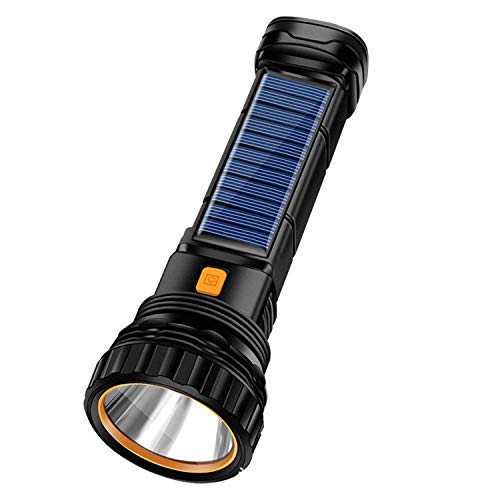
Managing and recharging the internal battery is completely cord-free and straightforward. When primary sunlight is available, the built-in solar panel passively absorbs direct sunlight, medium daylight, or even ambient indoor lamp light to replenish the internal rechargeable cell. If daylight is unavailable during an unexpected night-time outage, swinging out the hand-crank arm and rotating the dynamo quickly restores usable illumination, making the unit ready for immediate grab-and-go handling.
Potential buyers should keep realistic expectations regarding performance boundaries and environmental limitations. Because the product does not carry a certified IP waterproof rating or a listed water-resistance level, it should be protected from downpours and never submerged in water. Additionally, the lack of published lumen ratings means it is intended for practical proximity lighting and pathway orientation rather than high-output, long-distance search operations.
For budget-conscious shoppers and safety-minded households seeking reliable backup illumination, the Simpeak 2-Pack offers exceptional practical utility. Placing one unit in a home emergency storm kit and clipping the second to a hiking pack or keeping it in a vehicle glove compartment provides dependable, battery-free LED lighting whenever standard electrical infrastructure is unavailable.
This emergency LED flashlight utilizes two independent off-grid energy sources to power its internal rechargeable battery. The primary manual mechanism is an integrated dynamo hand crank that produces more than 10 minutes of usable LED lighting after only 60 seconds of cranking at a steady rhythm of two rotations per second.
A secondary solar panel built into the top surface absorbs ambient light to provide continuous trickle-charging. The manufacturer notes that this panel responds to strong sunlight, medium daylight, and standard indoor artificial lamp light, allowing the light to passively maintain charge when left on a windowsill or near household light sources.
Simpeak backs this 2-pack emergency LED flashlight set with a 2-year worry-free manufacturer warranty. This coverage provides long-term protection against factory defects and functional failures under normal emergency and outdoor usage.
In addition to the warranty period, the manufacturer provides access to 24-hour customer service support to assist buyers with operational inquiries, replacement guidance, or product issues.
Frequently Asked Questions
How long does it take for a solar flashlight to charge fully in the sun?
Charging times typically range from 8 to 20 hours depending on sunlight intensity and panel dimensions. Small integrated solar panels absorb light gradually, making them ideal as continuous trickle-chargers rather than rapid fuel sources. Pairing solar charging with supplemental USB connections ensures your battery reaches total capacity before major excursions. Evaluating practical steps for recharging torches effectively helps users maximize battery lifespan in fluctuating outdoor weather.
Can a solar flashlight charge on cloudy days or under indoor lights?
Yes, solar panels can generate small amounts of current under overcast skies or beneath household lamps. Photovoltaic cells respond to ambient indoor light and diffuse solar rays, although power collection happens much slower than under direct sun. Hand-crank generators provide a faster manual alternative when sunlight remains weak during emergency situations. Keeping the unit near a bright windowsill maintains steady passive charging throughout the year.
What makes the best solar flashlight suitable for outdoor camping?
Dual-power charging, weather-resistant casing, and versatile light modes make the best solar flashlight essential for outdoor camp tasks. Handheld spotlights with side lanterns provide concentrated distance beams for trail spotting along with diffuse flood lighting inside tents. Protective features like IPX5 water resistance safeguard internal electronics against sudden rain showers and damp conditions. Built-in carabiner clips and molded handles allow quick attachment to packs for effortless sun exposure while hiking.
Are solar flashlights durable enough for severe emergency conditions?
Yes, high-grade engineering plastics and shock-resistant housings protect emergency solar torches from rough impacts. Enclosed chassis designs prevent dust infiltration while maintaining functional seals around charging ports and switches. Preventing common switch and battery contact problems starts with checking seals and keeping connections dry after wet weather use. Storing these tools in a vehicle console or emergency kit guarantees reliable light when standard grid power cuts out.
How does hand crank power compare to solar charging in an emergency?
Hand cranking produces rapid emergency power within minutes, whereas solar charging provides slow, hands-free replenishment over hours. A single minute of cranking can yield over ten minutes of usable LED illumination during sudden dark conditions. Solar panels operate best for passive storage replenishment when you can leave the unit resting outdoors or on a window ledge. Combining both systems offers the most resilient lighting setup for unpredictable emergency scenarios in 2026.
What is the difference between lumens and beam distance on solar spotlights?
Lumens quantify total light emitted, while beam distance reflects how tightly that light focuses toward a distant target. A high-lumen rating with a wide reflector illuminates broad campsites, whereas a narrow parabolic reflector throws illumination hundreds of meters ahead. Handheld spotlights often balance intense center hotspots with stepless dimming to conserve stored power when high output is unnecessary. Checking both manufacturer specifications ensures the beam geometry matches your intended nighttime tasks.


Write Your Review
No reviews yet. Be the first to share your experience!